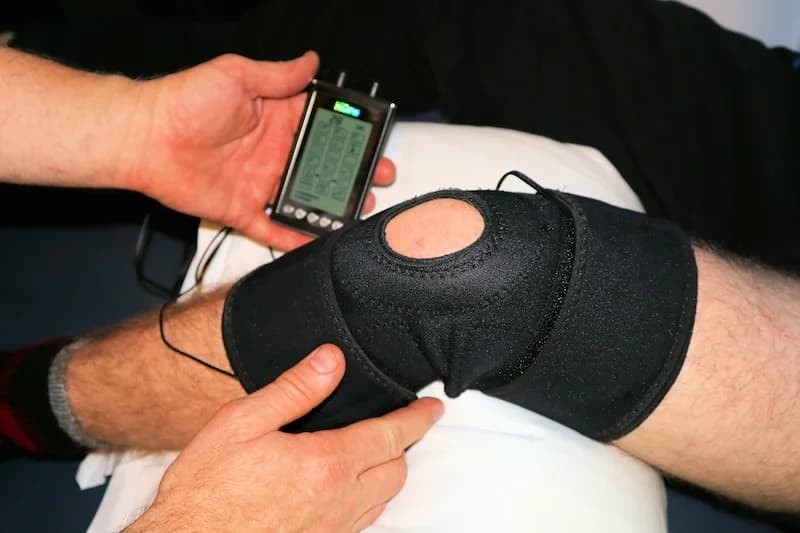
Walking can be a good activity for many people with knee pain, but “bad knees” is too broad to answer with a universal yes. Knee pain may follow an injury, arise with osteoarthritis, come from the hip or back, or be linked to other conditions. The useful question is: what amount and type of walking can you tolerate, and what response tells you to modify or get help?
For a mild, familiar ache with a normal gait, a short level walk may be a sensible test. For a suddenly swollen knee, a knee that locks or gives way, a new limp, or pain after a significant injury, a walking challenge is not the place to start. Get individualized assessment.
Why movement is often part of knee care
The National Institute of Arthritis and Musculoskeletal and Skin Diseases includes low-impact activity such as walking among possible components of an osteoarthritis exercise program. The CDC also lists brisk walking as a joint-friendly activity. That does not make every walk safe in every situation; it means complete rest is not automatically the answer for persistent, non-emergency knee symptoms.
Walking contributes aerobic activity and keeps daily movement familiar. It does not replace strength work. The muscles around the hip and knee help control movement, and a clinician or physical therapist may recommend specific strengthening, balance, or mobility work based on your presentation. The best plan usually has more than one tool.
Begin with a four-part check
Before choosing a distance, take a minute to notice four things.
| Check | Why it matters | A practical response |
|---|---|---|
| Pain quality | A mild familiar ache differs from sharp or catching pain. | Keep a mild, stable sensation under observation; stop for sharp or escalating pain. |
| Swelling or heat | A swollen or hot joint may need a different plan. | Skip the planned progression and seek advice if this is new or marked. |
| Gait | A limp changes load across the knee and elsewhere. | Shorten or pause the walk; do not practice through a new limp. |
| Next-day response | The dose can look fine during a walk but not afterward. | Use later and next-morning symptoms to decide whether to repeat, reduce, or progress. |
You do not need to assign a perfect pain number. Clear observations are enough: “stiff for the first five minutes, then comfortable,” “fine on flat ground but sore after stairs,” or “more swollen that evening.” Those details are also useful if you see a clinician.
Make the first walk easy to interpret
Choose a flat, predictable route that you can shorten. A quiet paved loop, treadmill at zero incline, or indoor track removes some variables that a steep trail or crowded pavement adds. Wear shoes that feel stable and comfortable; there is no single shoe model that works for every knee.
Walk slowly for five minutes and reassess. If your gait remains normal and symptoms are not increasing, continue for another five minutes. Stop before the sensation becomes a test of willpower. The first goal is information, not fitness.
If the response later that day and the following morning is no worse than your usual baseline, repeat the same dose a few times. Then add one change: two to five more minutes, one additional day, or a slightly different route. Do not add speed, hills, and distance in the same week.
Build duration before speed and incline
Brisk walking, hills, and stairs can all be useful activities for some people, but they increase demand. For a knee that is still unpredictable, duration on flat ground is usually the cleaner variable. A small increase in time is easier to understand and reverse than an ambitious walk with multiple new challenges.
Here is an example progression for someone whose clinician has not provided different restrictions:
- Walk 5–10 easy minutes on three days.
- Repeat until the response is predictable.
- Add two to five minutes to one or two walks.
- Add a fourth day only if the added time has been comfortable.
- Consider a modest pace change only after easy walks are routine.
Progress can be non-linear. Weather, sleep, work demands, and a flare in another joint can change what is tolerable. Returning to last week’s amount is a normal adjustment, not lost progress.
What to do on a more symptomatic day
When a knee is more irritable than usual, use the least demanding useful option. That might be a five-minute flat walk, gentle clinician-approved range-of-motion movement, water exercise, or rest from weight-bearing activity while you seek advice. Avoid treating a painful day as a reason to either do nothing indefinitely or force a long walk to “loosen it up.”
The Arthritis Foundation notes that activity should be adjusted when pain is moderate to severe or worsening. A trained professional can help identify whether you need a different route, a strength program, an assistive device, or a period of rehabilitation instead of another mileage target.
Do not ignore these signs
Arrange prompt medical assessment for a knee that is newly very swollen, red or hot, cannot bear weight, locks, repeatedly buckles, or causes a sudden change in walking. Seek urgent care after a significant injury, with fever plus a hot swollen joint, or for other symptoms that feel emergent. Those situations need more than online activity advice.
People with a recent operation, joint replacement, inflammatory arthritis, a history of falls, or a diagnosed condition with specific restrictions should follow their care team’s plan. A generic step goal cannot account for those details.
Use walking data as a pattern record
If you use a step tracker, pair the count with a short note about surface, duration, and your response. A count alone can make a lower-activity day look like failure when it may have been a wise modification. A pattern record can show that two short flat walks were better tolerated than one long outing, or that your comfortable total is gradually increasing.
Stepsly (opens in a new tab) is an iPhone app that uses Apple Health data to show steps, goals, history, and widgets. It can help you see activity patterns, but it cannot diagnose knee pain or determine a safe rehabilitation dose.
For related, careful guidance, read walking with arthritis, walking vs. elliptical, and walking after 50. If you have established a comfortable baseline, the daily step-goal tool can help you plan a modest increase.
A simple weekly decision rule
At the end of the week, compare the sessions rather than judging a single bad day. If your pain, swelling, and walking pattern were steady or improving, keep the same amount for another week or add a very small amount of time. If symptoms were clearly worse after more than one session, go back to the last comfortable dose and arrange advice if that does not settle. This keeps progress grounded in your actual response rather than a generic target.
You can also choose a route by its likely load. Flat and smooth is usually the lowest-variable choice. A route with a small hill, long descent, stairs, uneven ground, or a heavy backpack is a different session even if it has the same step count. Write that down when you are testing tolerance. It prevents the common mistake of thinking that “ten minutes” is always the same exercise.
How to make a plan more realistic
Set a minimum version and a full version. The minimum might be five easy minutes on level ground. The full version might be 15 minutes on the same loop. On a busy or more symptomatic day, doing the minimum preserves the routine without turning the walk into a flare trigger. On a comfortable day, the full version gives you an opportunity to move more without needing a new plan.
If you want company, choose a walking partner who is happy to turn around when you do. Social pressure is an overlooked reason people go farther than their knees tolerate. A short loop with a bench or a coffee stop can make it easier to finish at the right time.
Sources, notes & disclaimers
-
Planning doses use the Physical Activity Guidelines for Americans (opens in a new tab): 150–300 moderate weekly minutes plus strength work on 2 days for most adults who can safely do so.
-
NIAMS: osteoarthritis diagnosis, treatment, and steps to take (opens in a new tab) describes low-impact activity and gradual exercise progression.
-
CDC: Self-Care for Arthritis (opens in a new tab) describes joint-friendly activity choices.
-
Arthritis Foundation: working out with pain (opens in a new tab) discusses when to adjust or stop activity.
-
This article is general education, not medical advice. Knee pain has many causes. Seek urgent evaluation for severe injury, a hot swollen joint with fever, inability to bear weight, or other emergency symptoms.