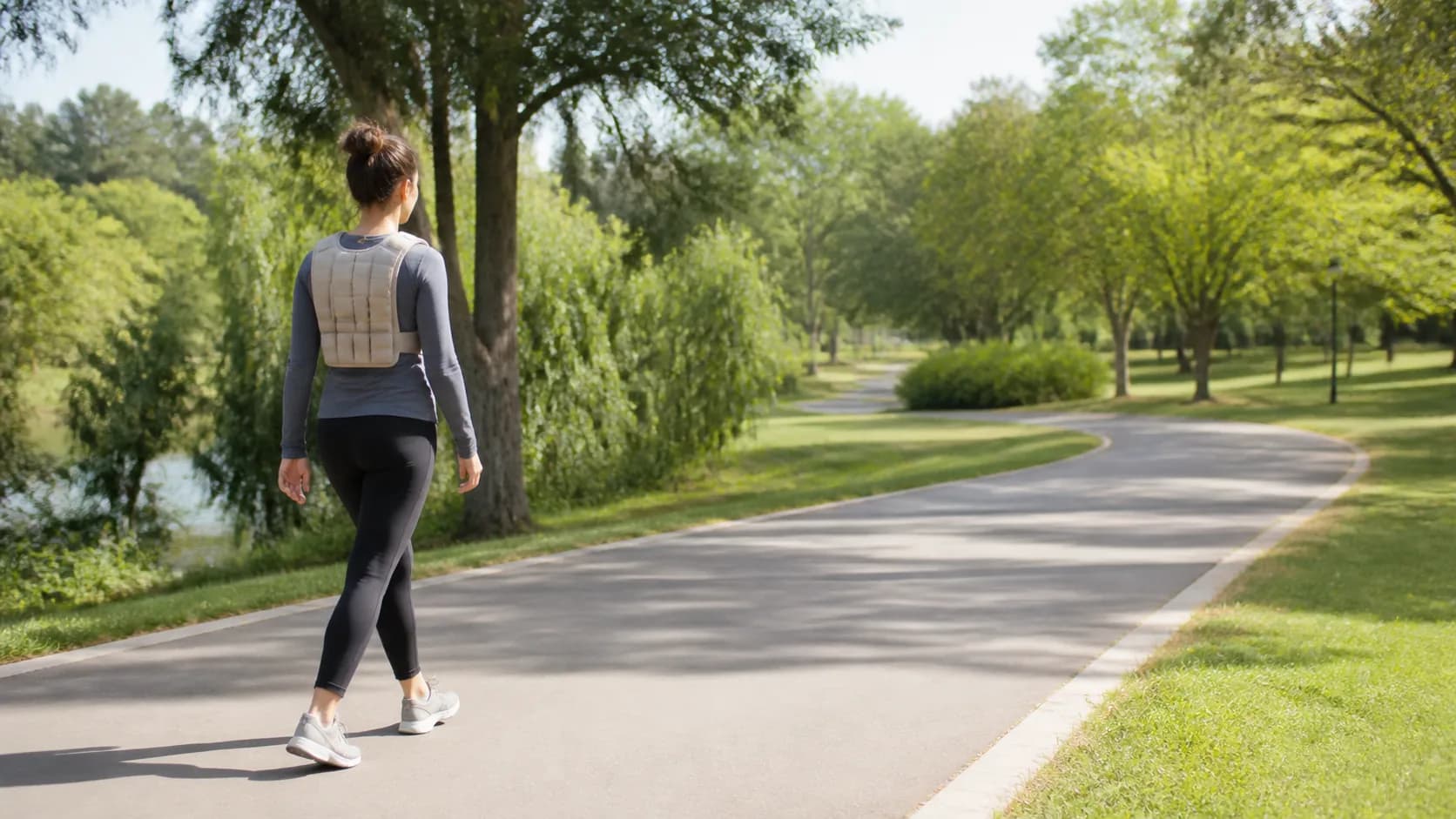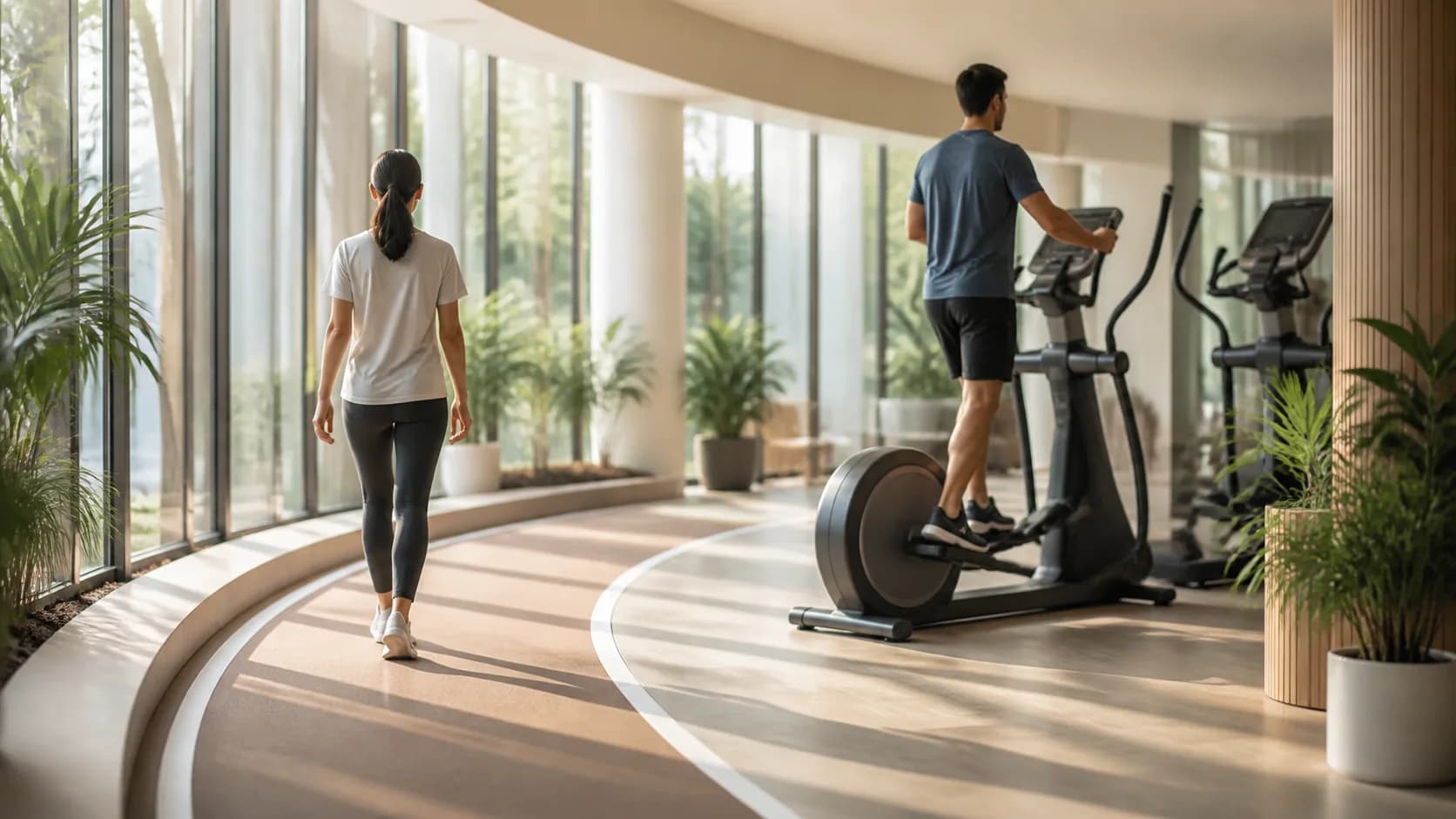
Walking and the elliptical can both support aerobic fitness. Walking is available almost anywhere and naturally contributes to daily movement. An elliptical offers a stable indoor option with adjustable resistance and no need to navigate weather or traffic.
The better option is the one you can use consistently and comfortably.
| Consideration | Walking | Elliptical |
|---|---|---|
| Access | Often free and available outdoors or indoors. | Requires a machine or gym. |
| Daily steps | Directly contributes to step totals. | Usually does not translate cleanly into steps. |
| Impact | Depends on surface and pace. | Often feels lower impact for many users. |
| Variety | Routes, hills, company, errands. | Resistance, incline, programmed sessions. |
| Learning curve | Familiar movement pattern. | Requires a few sessions to find a comfortable rhythm. |
Choose walking when
You want an activity that fits commuting, breaks, errands, and everyday life. Walking can also be easier to make social and may help you spend more time outdoors.
Choose the elliptical when
You need a climate-controlled option, prefer stable handholds, or want a machine that can raise resistance without running. Still, use the machine settings and your perceived effort—not a calorie display alone—to judge a session.
A mixed routine works too
Use an elliptical for two planned indoor cardio sessions and walking for daily movement. The combination can reduce boredom and make bad-weather weeks less disruptive.
Stepsly is designed to make iPhone movement visible through Apple Health-based steps, goals, history, and widgets. It is most useful for walking consistency; do not assume elliptical strides will appear as equivalent step counts.
See walking versus running for weight loss, walking for people who hate exercise, and the Walking Calorie Calculator for related planning.
Compare the real friction of each option
The exercise that looks ideal on paper can be the one you skip most often. Walking requires shoes, a safe route, or enough indoor space; an elliptical requires access to a machine, setup time, and a willingness to use it. Weather, childcare, commute, cost, noise, and confidence all influence which activity survives a normal week.
| Real-life constraint | Walking may fit when… | Elliptical may fit when… |
|---|---|---|
| Weather | You can use a safe route or indoor laps. | Outdoor conditions make routes unpleasant or unsafe. |
| Time | You can walk as part of errands, a break, or commute. | A planned 20-minute machine session is easier to protect. |
| Space | You have a neighborhood, hallway, or stairs. | You have home equipment or gym access. |
| Joint comfort | Normal walking is comfortable on chosen surfaces. | The machine’s smooth path feels more manageable. |
| Motivation | Scenery, company, and destinations help. | Programs, resistance changes, or indoor routine help. |
Intensity without guesswork
Both can be easy, moderate, or hard. A gentle walk and a low-resistance elliptical session may be recovery activity. A brisk hill walk or a higher-resistance elliptical session may feel vigorous. Use breathing and perceived effort instead of assuming the machine’s level or the number of steps predicts the intensity.
For moderate effort, many people can talk but not sing. If you can only speak a few words, reduce pace, resistance, or incline. If you are new to either activity, start with a duration you can repeat two or three times a week before turning it into interval training.
A simple trial week
If you have access to both, do not choose based on a single session. Try two easy-to-moderate walks and two easy-to-moderate elliptical sessions in one week, with recovery days or gentle activity between them. Note comfort during the workout, whether you enjoy it, and how your feet, knees, hips, and back feel the next day.
| Question after the week | Why it matters |
|---|---|
| Which one did I start with less resistance? | Habit friction determines consistency. |
| Which one left me comfortable the next day? | Recovery supports frequency. |
| Which one fit my schedule during bad weather or busy days? | A backup option protects the routine. |
| Which one made me want to do it again? | Enjoyment is a legitimate training variable. |
Use the numbers appropriately
Walking adds steps; elliptical strides may not. That does not mean the elliptical “does not count.” It means steps are not a universal unit for every kind of movement. If your goal is a daily step target, walking has a direct relationship to that number. If your goal is aerobic time, both can contribute.
Machine calorie displays and wearable estimates remain estimates. Do not select an activity only because it reports a higher number. Choose one that matches your comfort and goals, then consider time, effort, and regularity across the week.
When one choice needs individual guidance
Use a stable handhold on an elliptical only for balance, not to lean through the entire workout. If you need constant support, reduce intensity or get guidance. Choose walking routes with clear surfaces and a pace that preserves stability. Stop for chest symptoms, fainting, severe shortness of breath, new joint swelling, or pain that changes normal walking. A clinician or therapist can help select a safer form of activity after injury, surgery, a fall, or a significant mobility change.
Stepsly remains most useful for the walking portion of a mixed plan because it presents Apple Health step data, goals, history, and widgets. It is not an elliptical-training tool and should not be expected to make machine strides equivalent to steps.
Practical questions before you choose
Which burns more calories? The answer depends on pace, resistance, duration, body size, and device assumptions. A higher estimate does not make one option inherently better. Use a range for education, not a food allowance.
Is the elliptical always lower impact? Many people find the supported, smooth motion more comfortable, but comfort is individual. Machine fit, resistance, foot position, and existing pain matter. A level walk on a good surface may be more comfortable for another person.
Can the elliptical replace steps? It can contribute to aerobic activity but does not reliably translate to a step total. If steps are your chosen habit metric, include walking too; if time and effort are the goal, both activities can count.
Do I need both? No. Use both if variety solves a real scheduling or enjoyment problem. One familiar activity done regularly is better than a complex rotation you abandon.
Build a weather-proof movement plan
Walking can be the default for errands, breaks, and outdoor time, with an elliptical as a backup during heat, cold, heavy rain, darkness, or poor air quality. Or the machine may be the predictable weekday option and walking the enjoyable weekend activity. Keep the minimum plan small: two 20-minute sessions plus a few short walks can be a reasonable start for someone rebuilding activity.
When increasing time or resistance, select one change. The next-day response tells you whether the increase fit. If feet become numb, hips hurt, knees swell, or you need to lean heavily on the handles, reduce intensity and seek appropriate advice if symptoms persist. A comfortable sustainable rhythm is the comparison that matters.
Use either activity with ordinary caution
Warm up at an easier setting, especially if the route, machine, or resistance is new. Wear stable footwear on both an elliptical and a walking route. Keep water available for longer sessions and adapt to heat or indoor ventilation. Do not use a machine while distracted by a phone or task that makes balance less secure.
Afterward, ask whether you feel more energized, neutral, or overly depleted. That simple response can help you decide the next session better than an equipment display. If activity consistently brings pain, dizziness, chest symptoms, or a major change in mobility, pause the plan and get individualized guidance.
The healthiest choice may also change by season. A flexible mix gives you a safe option without requiring every session to look the same.
Keep an easy alternative available: a five-minute room walk, gentle mobility, or a shorter machine session. This prevents one closed gym, storm, or busy day from becoming a reason to abandon movement entirely. Consistent options beat a perfect but fragile plan.
For additional planning context, see walking versus cycling and walking for arthritis.
Sources, notes & disclaimers
-
Planning doses use the Physical Activity Guidelines for Americans (opens in a new tab): 150–300 moderate weekly minutes plus strength work on 2 days for most adults who can safely do so.
-
Adults can accumulate activity through a range of moderate and vigorous activities: U.S. Physical Activity Guidelines (opens in a new tab).
-
This article is general education. Select equipment and intensity appropriate to your balance, comfort, and health needs, and seek individualized advice if a condition or injury affects exercise safety.