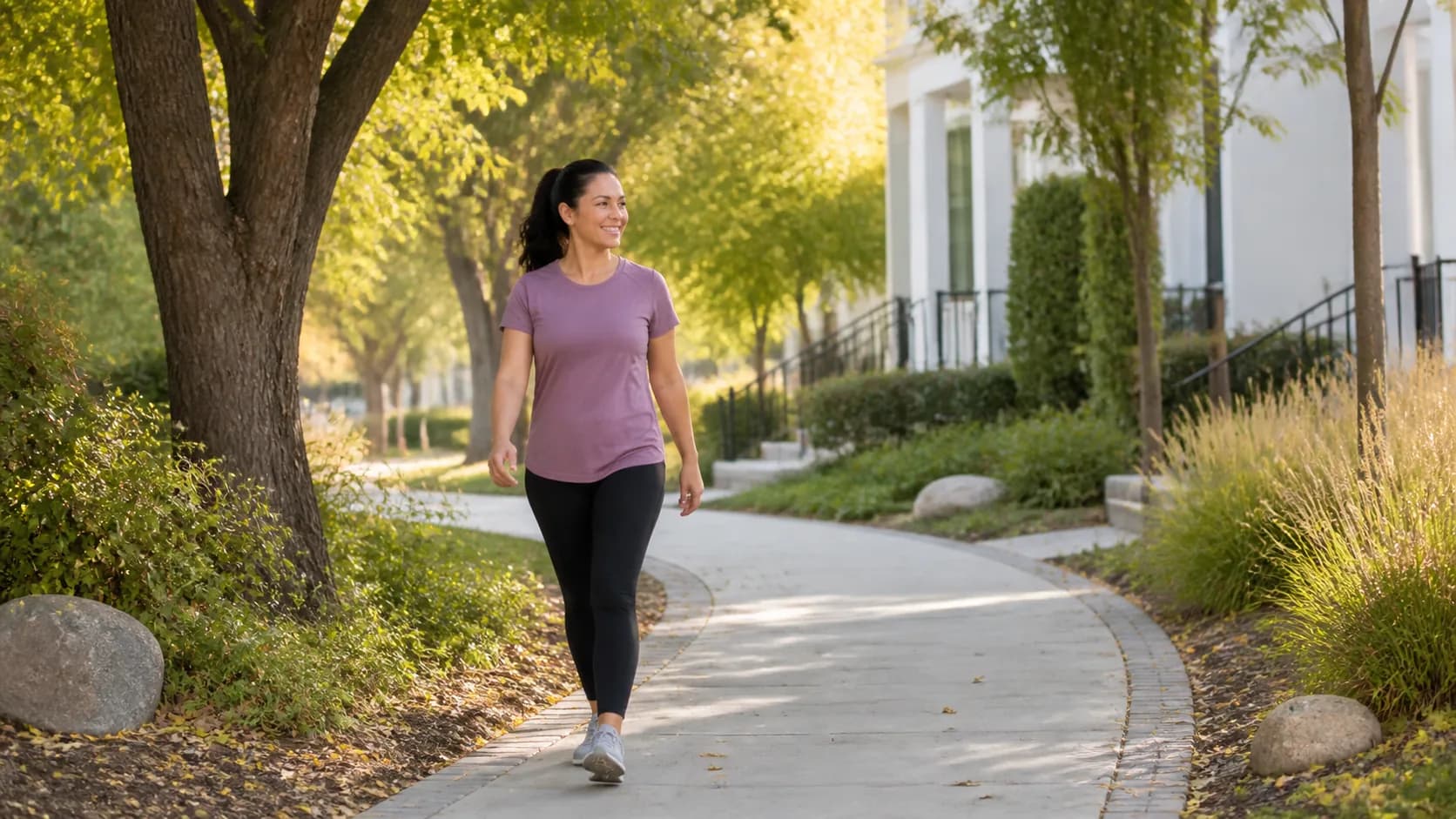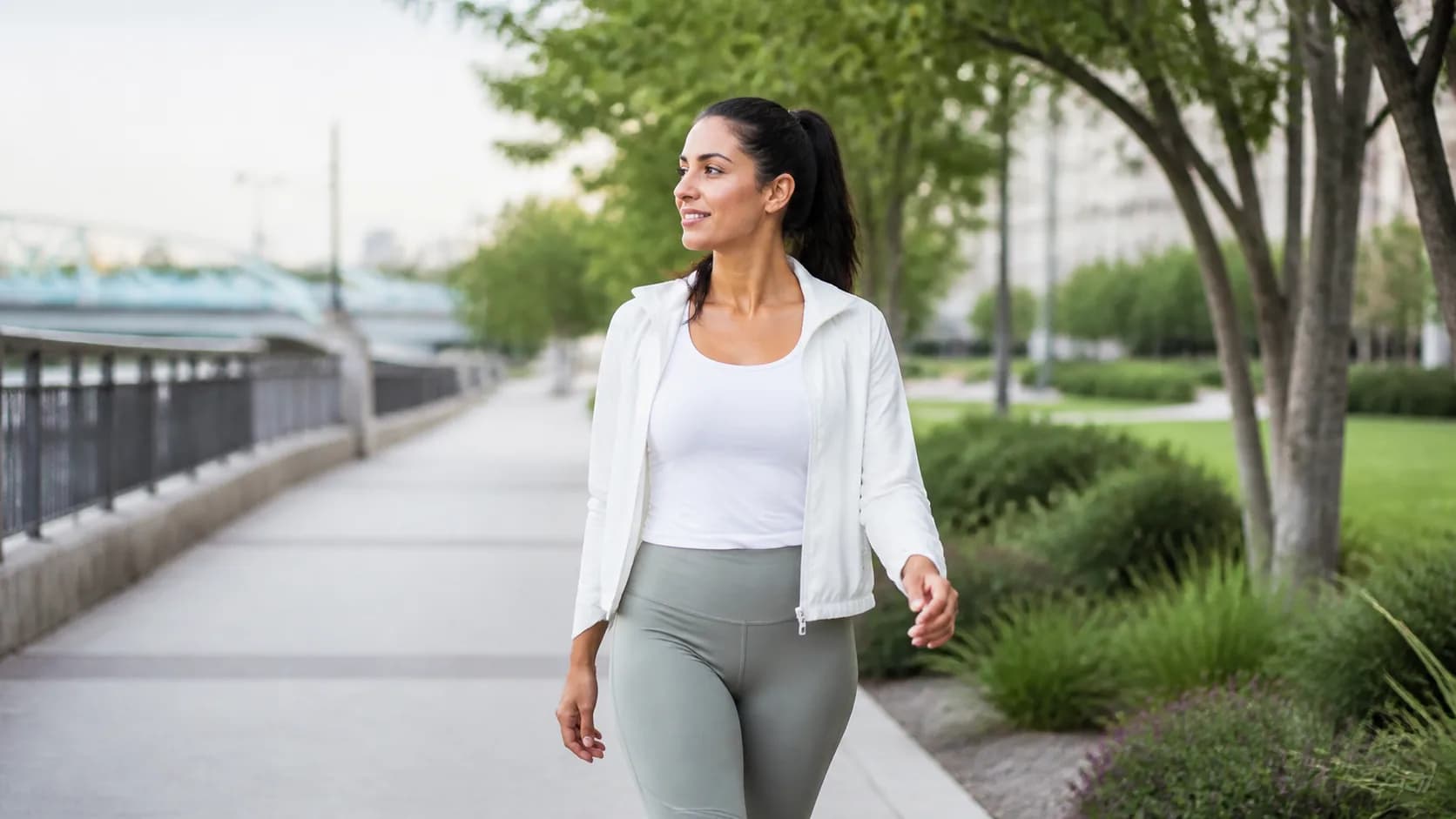
There is no single number of steps in a mile “for a woman.” Many women will land somewhere around 1,900 to 2,500 walking steps per mile, but the useful number belongs to an individual, not a sex category. Height, leg length, pace, terrain, age, mobility, footwear, and walking pattern can all matter more than the label on a conversion chart.
If you want a number to use for a walking routine, measure your own mile. It is more accurate and avoids the unhelpful idea that women should chase one supposedly standard total.
Why broad ranges beat a “women’s average”
Generic calculators often start with height because longer legs can be associated with a longer average step. But height does not tell the full story. Two people of the same height can walk with different stride lengths, turn frequency, speed, joint comfort, and balance needs. Their miles can produce different step totals without either person doing anything wrong.
| Example pattern | Approximate steps in one mile |
|---|---|
| Longer stride / brisk, direct route | about 1,700–1,950 |
| Common rough-planning range | about 1,900–2,300 |
| Shorter stride / slower or interrupted route | about 2,300–2,500+ |
The range is deliberately wide. It protects against treating an average as an evaluation. More steps per mile does not mean less fit; fewer does not mean more fit. Step count is simply a way to describe movement.
The simplest personal-mile test
Find a route whose mile is verified by a map, track, or local marker. Then use this repeatable check:
- Record your step total before you start.
- Walk the mile at the pace you normally use.
- Record the step total at the end and subtract the starting number.
- Repeat on another day, ideally on similar terrain.
- Use the average for planning that type of walk.
For example, 2,180 steps on one mile and 2,220 on the next suggest a realistic personal estimate of about 2,200. It is okay if a different route produces 2,350. A mile with hills or many turns is not the same movement pattern as a flat straight path.
If you use a phone, keep it with you in the same place. A phone-based count cannot reflect steps while it is on a table or in another room. Wrist-based counters may also respond differently to arm movement, pushing a cart, or holding a rail.
Pace, cadence, and intensity are separate ideas
It is tempting to think that a certain number of steps per mile tells you how hard you exercised. It does not. Cadence is steps per minute, while steps per mile reflects how many steps covered a distance. A faster walk may combine a faster cadence with a longer stride, so the two measures can move in different directions.
For many adults, 100 steps per minute is used as a broad heuristic for moderate-intensity walking. It is not a universal target; individual fitness and ability change how hard a pace feels. A simple talk test may be more practical: moderate activity often allows conversation but not singing. If the effort feels wrong for you, slow down regardless of what a chart says.
Use the walking pace calculator when you want to compare time and distance. Use your personal step count when you want to understand your daily movement. They are complementary, not interchangeable.
Make the number serve your goal
If you want to add movement, choose a goal based on your current baseline rather than on an average for women. A person who averages 3,000 daily steps may start with one more short walk; a person already walking several miles may be better served by recovery, strength work, or varying terrain.
The U.S. Physical Activity Guidelines focus on moving more, reducing sitting, and accumulating activity across the week. They do not require women to hit a fixed number of steps per mile or per day. In pregnancy, after childbirth, during menopause, or with a health condition, individualized comfort and clinical guidance matter more than a generic conversion.
Avoid turning a demographic label into a target
Searches for a “woman’s” step count often reflect a sensible wish for a more personal estimate. But sex alone cannot supply the personal detail people need. Height, walking history, route surface, shoes, disability, pregnancy status, pain, and device placement all affect the data and what is comfortable. A broad range is more respectful and more accurate than saying every woman should land on the same number.
If you see a conversion chart based on height, treat it as a starting hypothesis, not an assessment of how you should walk. Changing your gait to force a predicted count is not useful. The natural, comfortable way you walk on a route you use is the relevant information.
| Goal | Better metric than a gender-based conversion |
|---|---|
| Plan a familiar mile | Your own average from two or three similar walks. |
| Build an activity habit | Minutes or a modest increase from your baseline. |
| Improve aerobic effort | Your personal talk test and recovery, not steps per mile. |
| Track a health change | A clinician-relevant measure plus symptoms and function. |
| Compare routes | Duration, surface, elevation, and how the route felt. |
Make the personal-mile test practical
Choose a safe route that is genuinely one mile and has a clear start and finish. Use the device you ordinarily carry, not a setup that you will not repeat. Record the step difference, then try the same route again another day. If your first mile contains construction delays, a stroller, or a new walking surface, include that information rather than treating the result as a failure.
Use a range if the totals vary. For example, 2,100 to 2,250 steps on a familiar mile is more useful than pretending the answer is exactly 2,176. The range helps plan longer routes while leaving room for normal device and walking variation.
Match the route to the day
The same personal mile can be a short transition walk, a moderate session, or too much on a day when pain, fatigue, weather, or work demands are high. Build an option to turn around early, choose an indoor route when safety conditions worsen, and avoid late catch-up walks solely to hit a total. The goal is repeatable movement, not a streak maintained at any cost.
If you want more challenge, establish comfort with the route before adding it. Change one variable at a time: perhaps a few short brisk segments on a flat route, or a longer walk at the usual pace. Keep other days easy and keep rest, strength work, and non-step activity in the week.
Respect health transitions without losing the habit
Pregnancy, postpartum recovery, menopause symptoms, injury, surgery, and chronic conditions can all change the appropriate walking plan. A personal mile count is not a substitute for individualized advice. When you have new pain, bleeding during pregnancy, dizziness, chest symptoms, a recent procedure, or clinician-set limits, follow professional guidance rather than a conversion article.
On ordinary days, flexibility still helps. A shorter, comfortable walk can protect the habit when the full mile does not fit. Over time, that flexible routine is more informative than chasing an average built from other people’s bodies.
Use the same calm approach with tracking: view a weekly pattern, notice genuine changes in function, and avoid comparing a personal route total with someone else’s. The information belongs to you and should support choices that feel safe and sustainable.
Stepsly is an iPhone app that uses Apple Health data to display steps, goals, history, and widgets. It can help you learn your own usual range and see changes over time. It cannot infer stride length perfectly, diagnose gait changes, or replace professional advice. View Stepsly on the App Store (opens in a new tab).
For related reading, see the average steps per day for women, how many steps are in half a mile, and how many steps a 20-minute walk may contain. The daily step-goal tool can help turn a baseline into a gradual plan.
Sources, notes & disclaimers
-
Planning doses use the Physical Activity Guidelines for Americans (opens in a new tab): 150–300 moderate weekly minutes plus strength work on 2 days for most adults who can safely do so.
-
Step counting: measurement considerations and health-related applications (opens in a new tab) reviews why device placement and walking context affect step measurement.
-
Walking cadence and moderate intensity: systematic review (opens in a new tab) supports 100 steps per minute as a broad moderate-intensity heuristic for many adults, not an individual prescription.
-
Physical Activity Guidelines for Americans, 2nd edition (opens in a new tab) provides general activity guidance.
-
This article is general education, not a medical assessment or gender-specific exercise prescription. Seek individual advice for pain, new gait changes, pregnancy-specific concerns, or conditions that affect safe walking.