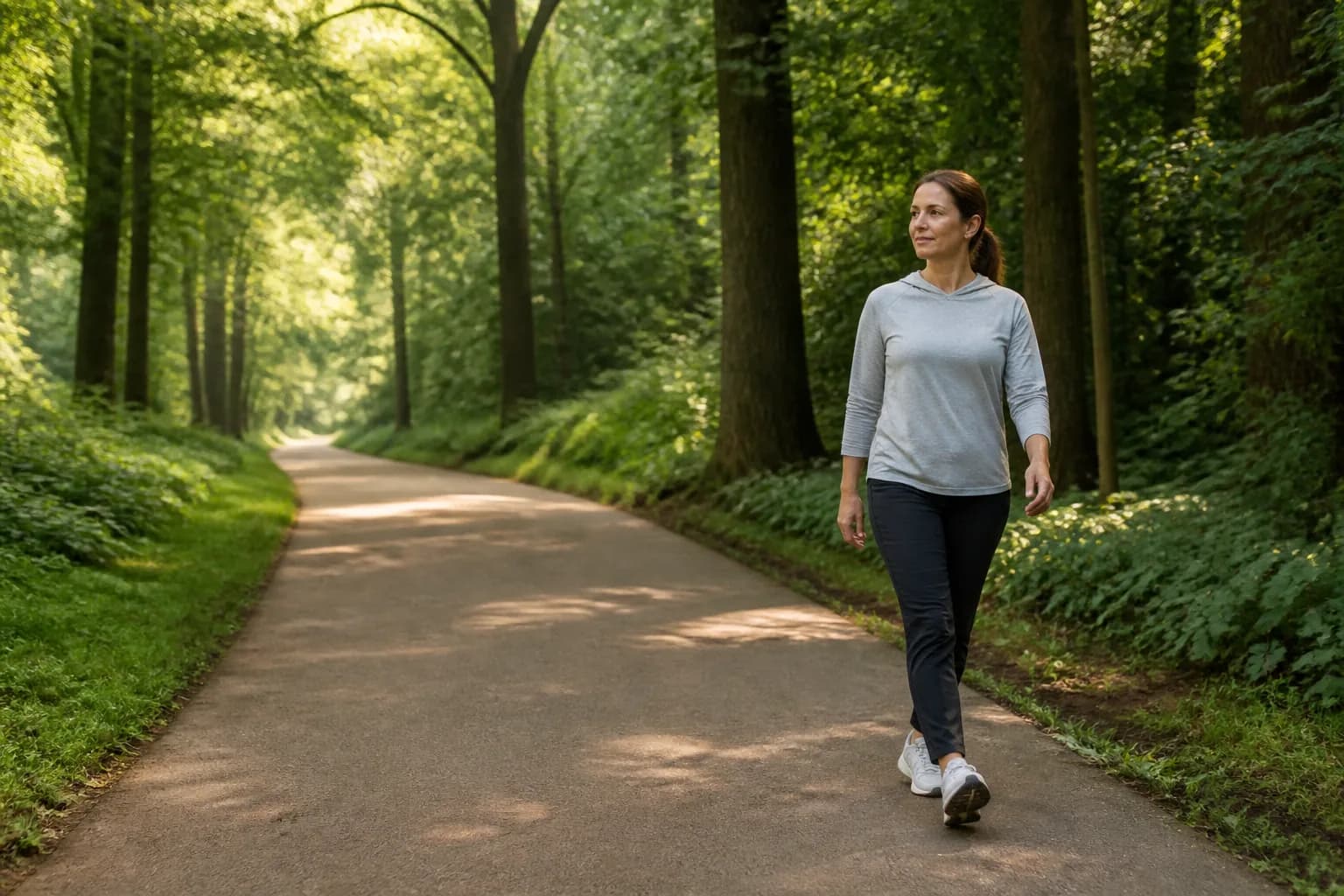
Walking three miles a day can be a satisfying routine if it fits your schedule, joints, and current fitness. The same three miles can feel completely different depending on pace, hills, weather, footwear, and whether you are beginning from very little activity. It is a route idea, not a health requirement.
For many adults, three miles will take somewhere around an hour at an ordinary walking pace, but that is only a rough planning range. Use your own comfortable pace rather than a generic promise about time, steps, or calories.
Why three miles appeals to many walkers
Three miles is long enough to feel like a deliberate outing and short enough that it can often fit before work, at lunch in two pieces, or after dinner. It can contribute meaningfully to weekly aerobic activity if the pace is moderately challenging for you. It also offers a predictable structure: one familiar loop, a there-and-back route, or several smaller walks.
It is not automatically better than 30 minutes, 7,000 steps, cycling, or a different activity. The better option is the one you can repeat while still making room for strength, rest, and ordinary life.
Estimate time using pace, not wishful thinking
Walking pace changes with terrain, traffic crossings, walking partner, stroller or dog, footwear, and energy. Use a few familiar outings to see your actual pace. The walking pace calculator can help estimate a route, but build in extra time for water, bathroom stops, heat, and crossings.
| Route type | Planning consideration |
|---|---|
| Flat paved loop | Easier to repeat and compare from day to day. |
| Hilly route | More demanding; keep the first sessions shorter or slower. |
| Treadmill | Predictable surface and weather, but use a comfortable incline and pace. |
| Errand route | Useful for accumulating distance, but crossing and carrying loads change the effort. |
| Split route | Two 1.5-mile walks may fit better and feel easier to recover from. |
Build toward three miles if needed
If you already walk two to three miles comfortably, the main task may be frequency and route variety. If you currently walk ten minutes at a time, begin there. Add five to ten minutes every few sessions or add a second short walk. There is no advantage in reaching the distance quickly if doing so creates pain or makes you dread the next outing.
A flexible weekly plan might look like this:
- Two or three days: the full three-mile route at an easy or conversational pace.
- Two days: a shorter walk, mobility work, or another activity.
- One day: strength work plus a short easy walk.
- One day: genuine rest or a very light stroll.
Adjust the days to your life. If your job already involves miles on your feet, a separate three-mile walk may not be the best use of recovery time.
Vary pace only after the distance feels easy
Once three miles is a comfortable routine, you can add variety without adding distance. After a gradual warm-up, try a few 30- to 60-second brisk segments with easy walking between them. Or choose a gentle hill once a week. Keep the other walks easy so every session does not become a test.
The talk test works well: at moderate intensity, you can talk in sentences but cannot sing comfortably. If you cannot recover easily when you slow down, reduce the pace. A faster route is optional, not proof that the walk is more valuable.
Support the routine with basics
Comfortable shoes, socks that do not rub, and a route that feels safe matter more than elaborate gear. Carry water in heat or on a longer route as needed. Indoor routes are a sensible weather backup, not a second-best choice.
Track foot, knee, hip, and back response as you build. A small amount of ordinary muscle fatigue can be different from sharp pain, swelling, a new limp, or symptoms that worsen from walk to walk. Scale back and get individual advice for persistent or significant symptoms.
Make three miles fit a real week
Rather than declaring three miles mandatory every day, decide which days truly have room for it. A long workday, a physically active shift, travel, poor air quality, or a family commitment can make a shorter option more sensible. Create a primary route, a half-distance version, and an indoor fallback before you need them. This removes the pressure to improvise when conditions are not ideal.
A route plan can also reduce practical barriers. Check crossings, lighting, bathrooms, water access, traffic, dog policy, and where you will turn around. If you walk with a stroller, a pet, or another person, include their needs in the expected pace. A route that is pleasant and easy to leave early is more repeatable than the most scenic route that leaves you stranded far from home.
| Route version | When it helps |
|---|---|
| Full three-mile loop | An ordinary day with adequate time and comfortable conditions. |
| Out-and-back | You want control over the distance and an easy turnaround. |
| Two shorter walks | Work, heat, or energy makes one session inconvenient. |
| Indoor backup | Weather, darkness, air quality, or safety changes the outdoor plan. |
| Social route | Conversation makes the duration more enjoyable, while pace stays comfortable. |
Use route data carefully
Maps, phones, and treadmills can all provide distance estimates, but they will not match perfectly. GPS can drift around tall buildings or tree cover; a treadmill depends on calibration; and a phone left in a bag may miss steps. Pick one reasonable method for planning and avoid treating small discrepancies as a problem to solve. The value of the route is its repeatability, not decimal-place accuracy.
If you are using the walk for aerobic activity, note effort separately from distance. On a hilly or hot day, three miles may be quite demanding even at a slower pace. On a flat, easy day, it may be restorative. The same distance can belong in different parts of your training week.
Review the outcome beyond distance
After two or three weeks, ask whether the plan improves something you value. Maybe it creates a reliable workday boundary, helps you see friends, gives you quiet time, or makes neighborhood errands easier. If it merely creates a recurring rush to finish miles, reduce the frequency or choose a shorter base route. Consistency comes from a routine that has a place in your life.
Do not feel obliged to add speed, weights, or hills simply because three miles became familiar. You can enjoy a stable, easy walking habit. If you choose a new challenge, change one variable and return to the earlier version if your body does not tolerate it well.
Include strength and rest on purpose
Three miles of walking is not a complete exercise program. Keep space in the week for muscle-strengthening work, balance practice if relevant, and rest. The day after a longer or hillier route may be a good time for an easier walk or a different low-impact activity. A varied plan is often more durable than measuring every day by the same route.
Walking with another person can add accountability, but it should not pressure either of you to continue through discomfort. Agree on a turnaround point and a pace that allows conversation. If you walk alone, tell someone your route when appropriate, carry what you need, and keep attention on your surroundings. The best routine is one that feels both physically and practically safe enough to repeat.
Review local weather alerts and route conditions before leaving. Choosing to postpone or shorten the walk when conditions are unsafe protects the long-term habit.
Stepsly (opens in a new tab) is an iPhone step counter that uses Apple Health data to show steps, goals, history, and widgets. It can help connect your three-mile habit to a weekly activity pattern, but it does not measure route safety, pace quality, or medical readiness.
See walking 4 miles a day, walking 45 minutes a day, and how many steps are in 5K? for related planning. The walking-time calculator is useful for a first route estimate.
Sources, notes & disclaimers
-
Planning doses use the Physical Activity Guidelines for Americans (opens in a new tab): 150–300 moderate weekly minutes plus strength work on 2 days for most adults who can safely do so.
-
U.S. Physical Activity Guidelines (opens in a new tab) provides the population framework for weekly aerobic activity and muscle strengthening.
-
Daily steps and health outcomes in adults (opens in a new tab) summarizes associations between step volume and health outcomes across populations.
-
This article is general education, not medical advice. Build distance gradually and seek individual guidance for pain, injury, symptoms, or activity restrictions.