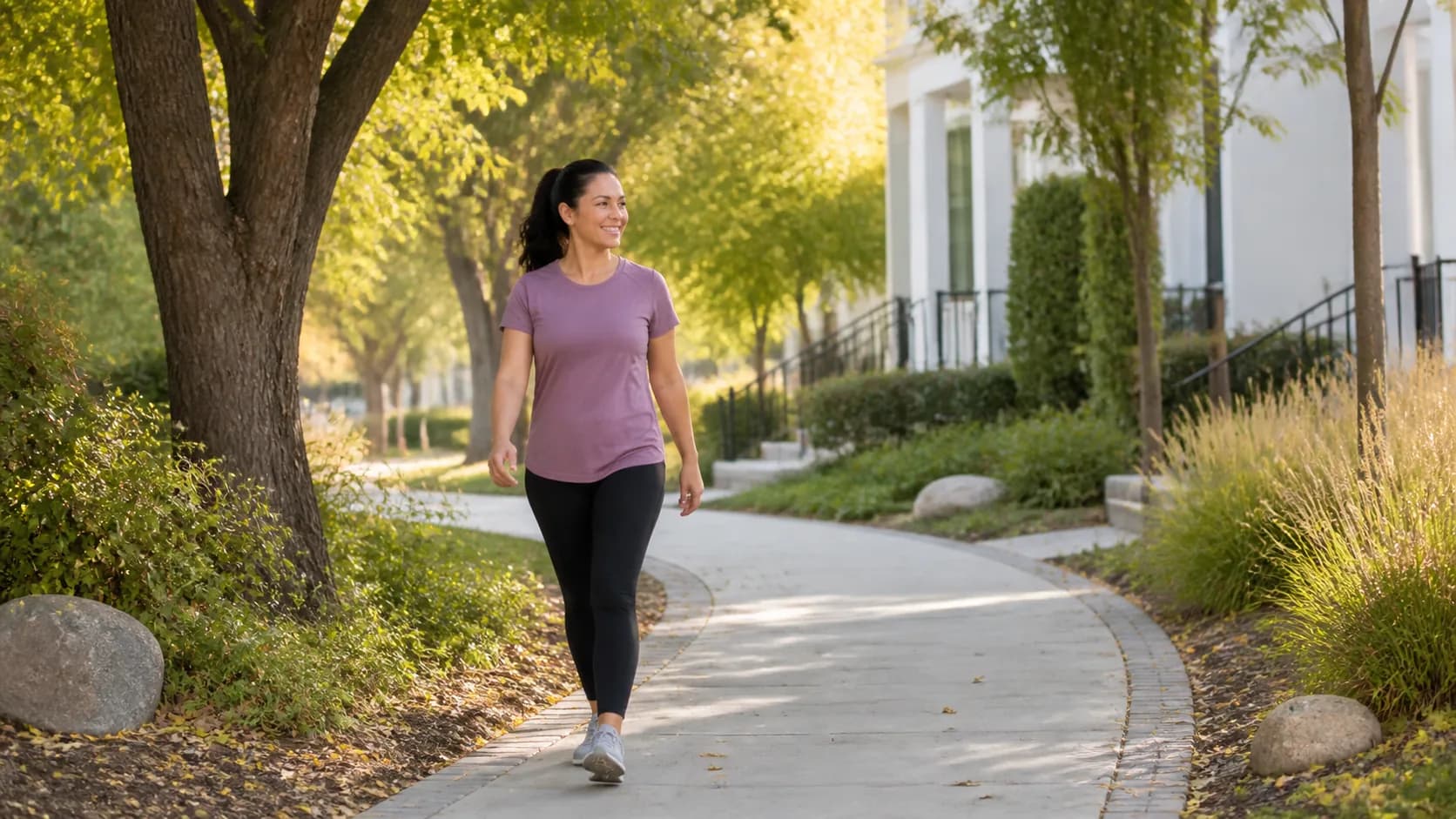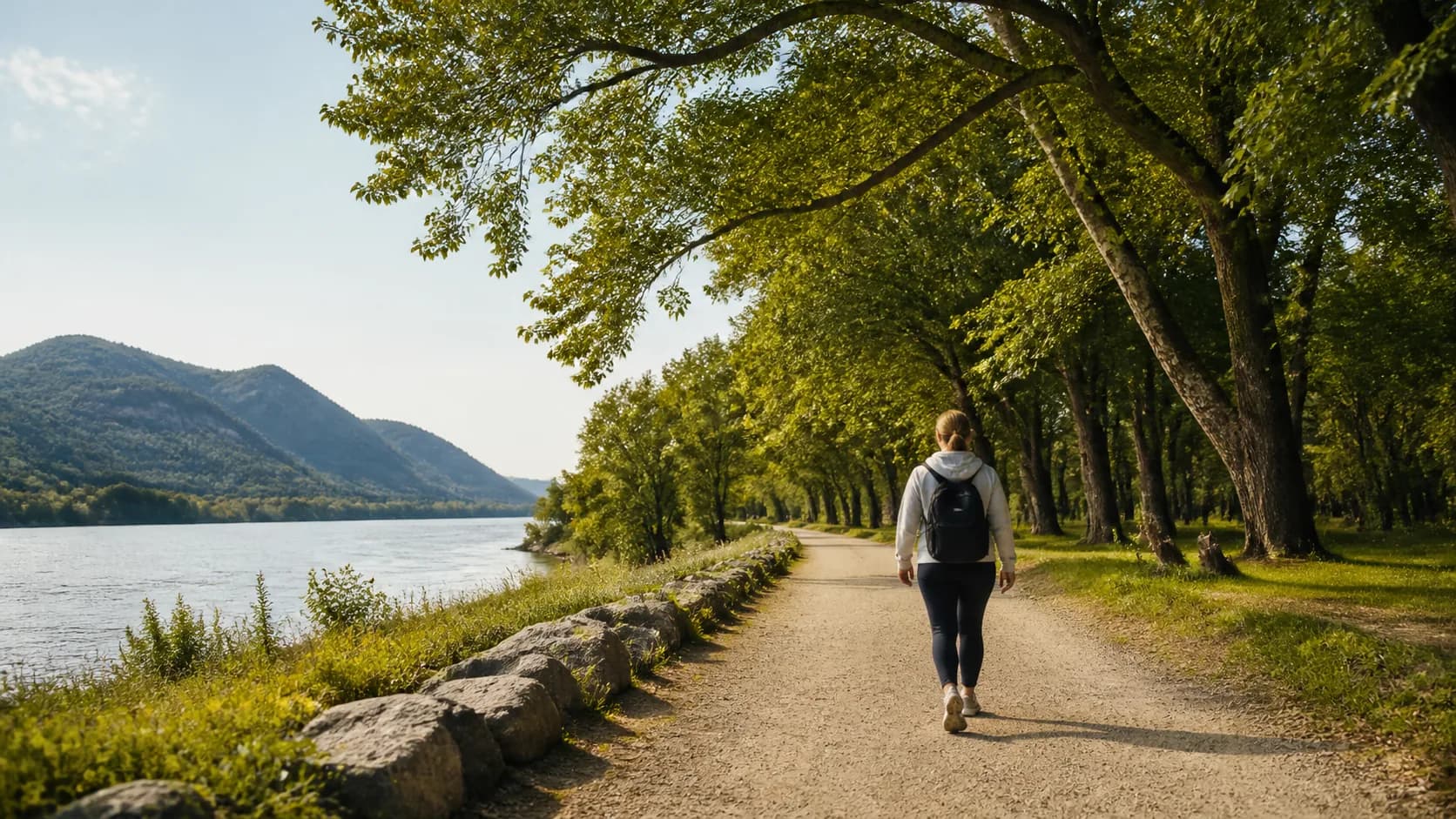
Walking 12 kilometres often takes about 2 to 3 hours of moving time. At a steady 5 km/h pace, it is about 2 hours 24 minutes. Real walks can be faster or slower because terrain, elevation, traffic, weather, breaks, mobility, and the purpose of the outing all matter.
Twelve kilometres is about 7.5 miles, so it is a long walk for many people. Plan the day around time on your feet and your current comfort level, not just a calculated arrival time.
12 km time estimates by pace
| Average pace | Moving time for 12 km |
|---|---|
| 4 km/h, easy pace | about 3 hours |
| 5 km/h, steady pace | about 2 hours 24 minutes |
| 6 km/h, brisk pace | about 2 hours |
Add a buffer for real life. A scenic route, hills, street crossings, a companion, a stop for water, or unfamiliar terrain can turn a two-hour moving estimate into a much longer outing. That is not a failure of fitness or math; it is the difference between a spreadsheet and a day outside.
How many steps is 12 km?
There is no exact answer, but 12 km can be roughly 15,000 to 19,000 walking steps for many people. The range is broad because stride length changes from person to person and within a long walk. Do not use the step count to force a pace. If your device records a different total on a known 12 km route, use that as your personal reference.
The walking pace calculator can help compare pace and distance, and the walking-time calculator can help you choose a departure time. Both should be treated as planning tools, not safety guarantees.
Before you make 12 km your next walk
Ask whether your current routine supports the duration. Someone who regularly walks an hour may be ready to extend gradually; someone whose usual walk is 15 minutes will generally have a better experience building up over weeks.
Consider:
- Route: shade, pavement or trail condition, crossings, bathrooms, water, cell coverage, and an exit route.
- Conditions: heat, cold, rain, air quality, daylight, and whether you will be alone.
- Comfort: shoes you have already used, a layer for weather, water, fuel if needed, and any medication or mobility support you normally rely on.
- Recovery: an easier following day if the walk is a new distance.
If the route is an out-and-back, pick a turnaround time rather than waiting until you are overly tired. If it is an event, check course support and cut-off details from the organizer rather than relying on an average walking pace.
Build the duration gradually
The exact progression depends on your starting point. A simple principle is to add a little time to one weekly walk, then allow the body to adapt before adding more. Two shorter walks on different days may be a better stepping stone than one sudden large jump.
| If you comfortably walk… | Consider first building to… |
|---|---|
| 20–30 minutes | Several repeatable 30-minute walks each week |
| 45 minutes | One 60-minute walk with a planned easy route |
| 60–90 minutes | A 90–120 minute route with water and turnaround options |
| 2 hours | A 12 km trial on familiar terrain before an unfamiliar route |
The adult physical-activity guidelines advise moving more and sitting less, with general weekly recommendations based on duration and intensity. A 12 km outing can contribute a lot of time, but it is not required for health. Strength work, balance, rest, and ordinary daily movement also matter.
Let your data be a guide, not a judge
Plan for elapsed time as well as movement
The 2–3 hour range is moving time. A real 12 km day can also include map checks, crossings, water, food, photos, toilets, breaks, and a slower companion. Plan the departure from the full day rather than a bare calculation. Leave enough buffer for daylight, changing weather, transport home, and the rest of your schedule so the pace estimate does not become pressure to hurry.
| Scenario | More realistic approach |
|---|---|
| First 12 km | Use familiar terrain, a clear turnaround, and no tight arrival deadline. |
| Hilly or trail route | Expect slower movement and greater effort at the same distance. |
| Social walk | Let conversation and pauses set the rhythm. |
| Challenging conditions | Reduce, postpone, or move indoors when weather or air quality warrants it. |
| Event route | Check official support, access, cut-offs, and exit points ahead of time. |
Keep the route adjustable
An out-and-back route can have planned turning points; a loop can have a shorter branch; a trail can have a known safe exit. Carry a way to communicate and the ordinary essentials conditions require. Test a new bag, shoes, extra hills, or uneven ground separately rather than adding every new variable to the longest route.
Review recovery the following day. If usual stairs, errands, or gait are uncomfortable—or if you notice rubbing, swelling, persistent pain, or unusual fatigue—reduce the next session and seek appropriate advice for persistent symptoms. Even if you recover well, the next goal does not have to be farther. Twelve kilometres may remain an occasional scenic walk while shorter sessions support the rest of the week.
Treat the step total as a range
Steps across the same 12 km can vary with stride, turns, slope, fatigue, and device carry position. Use a range from similar routes for future logistics, not as a score of worth or fitness. Distance, moving time, and comfort each tell a different part of the story.
Use the first attempt as a planning baseline
The first 12 km outing should teach you what is realistic, not prove a pace. Note moving time, total elapsed time, weather, surface, what you carried, breaks, and how you felt afterward. This can show whether the next version needs a bigger time buffer, a different route, an extra layer, or a shorter distance.
| Observation | Useful adjustment |
|---|---|
| Distance was fine but timing was rushed | Keep the route for a day with more unstructured time. |
| One surface caused discomfort | Use a more forgiving or familiar surface next time. |
| Breaks improved the experience | Plan by elapsed time rather than continuous movement. |
| Recovery lasted longer than expected | Lower the next distance or use a low-impact/recovery day. |
| Steps differed from the estimate | Keep a personal range; do not change gait to match a chart. |
There is no need to progress farther after 12 km. It may remain an occasional scenic day, while shorter walks support the rest of the week. The best maintenance version leaves room for sleep, strength work, obligations, and enjoyment.
Respond early to body and environment signals
Long walks make small concerns more visible. Hot spots, rubbing, worsening pain, altered gait, swelling, and unusual fatigue are cues to reconsider footwear, surface, timing, or distance. Persistent or significant symptoms need individual guidance. Chest pressure, fainting, severe shortness of breath, or sudden severe pain require prompt attention rather than a decision to finish the route.
Weather and route safety are also part of the activity decision. A shorter indoor route, another form of movement, or rest can be the right substitute when heat, storms, ice, darkness, or air quality make 12 km unsuitable. Protecting the routine matters more than checking off distance.
Stepsly is an iPhone app that uses Apple Health data to display steps, goals, history, and widgets. It can help you look back at how long walks fit your week and what totals are typical for you. It cannot identify a safe route, replace medical clearance, or verify an estimated pace. View Stepsly on the App Store (opens in a new tab).
For related planning, see how many steps are in 10K, how many steps may occur in a two-hour walk, and walking 5 miles a day. Use the daily step-goal tool to set a gradual target rather than a one-day leap.
Sources, notes & disclaimers
-
Planning doses use the Physical Activity Guidelines for Americans (opens in a new tab): 150–300 moderate weekly minutes plus strength work on 2 days for most adults who can safely do so.
-
Physical Activity Guidelines for Americans, 2nd edition (opens in a new tab) provides general guidance about aerobic activity and individual variation in intensity.
-
Outdoor walking speed systematic review (opens in a new tab) summarizes walking-speed variation in apparently healthy adults.
-
Step counting: measurement considerations and health-related applications (opens in a new tab) explains limits of translating steps, distance, and device data.
-
This is general education, not a route-safety or medical plan. Get personalized advice before a large increase in activity if you have symptoms, relevant medical conditions, recent surgery, a new injury, or concerns about safe mobility.