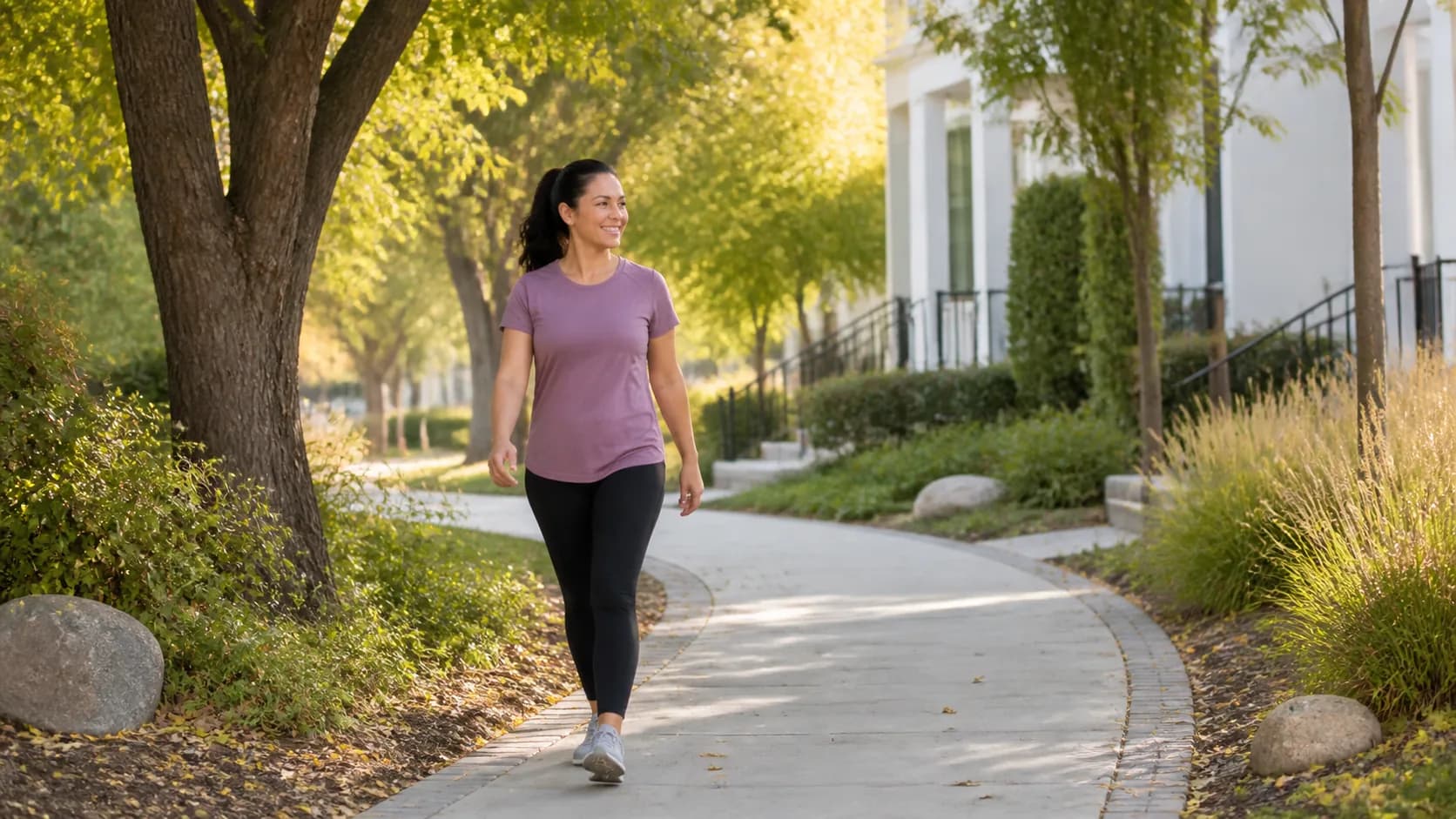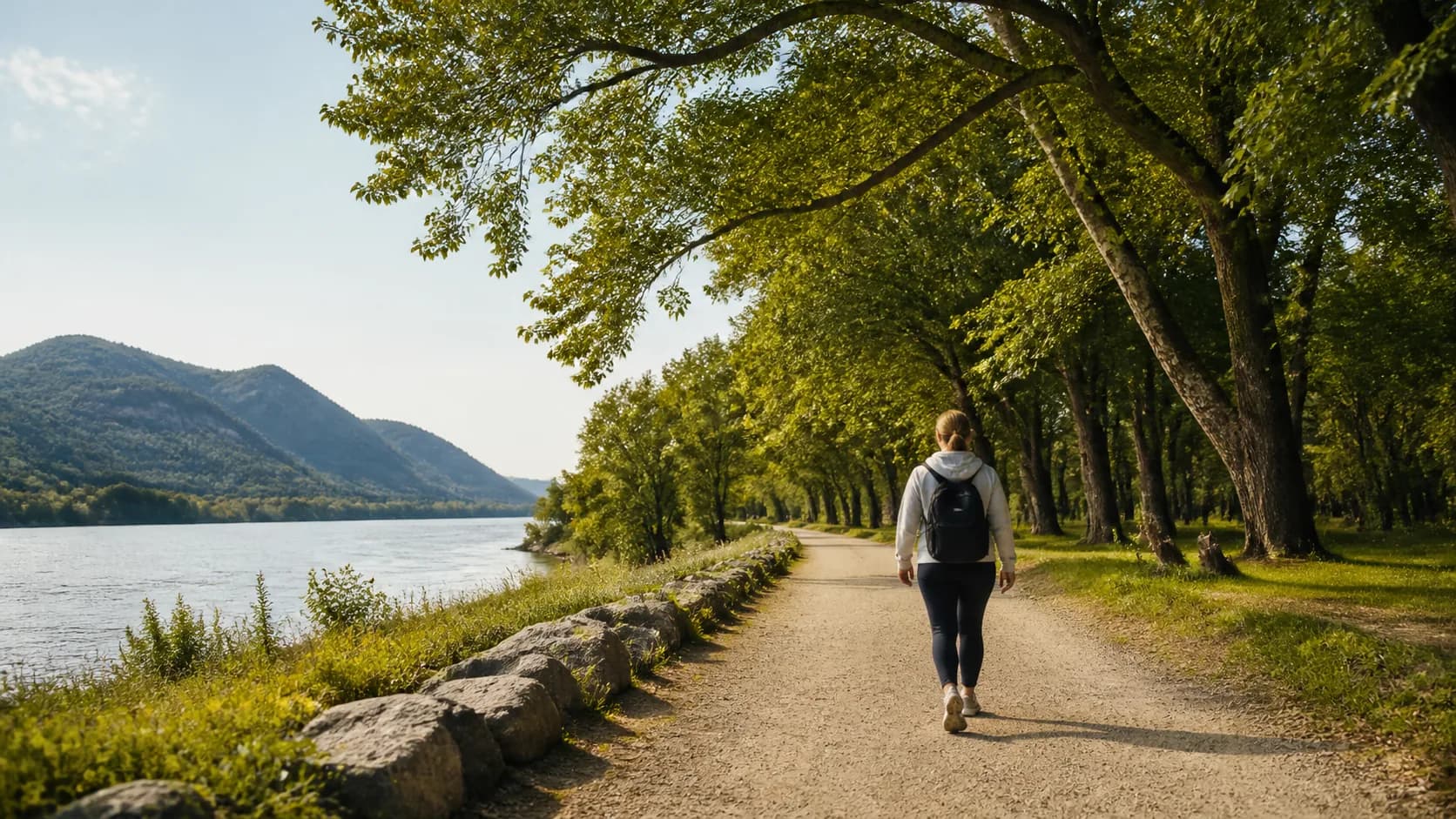
A two-hour walk can be roughly 9,600 to 14,400 steps if your average rhythm sits between 80 and 120 steps per minute. That broad spread is intentional: a two-hour outing makes room for hills, traffic lights, a coffee stop, terrain, weather, fatigue, and the way you naturally walk.
The best answer is the number your usual device records on your usual route. Use the ranges below to plan a day, then calibrate with a real walk rather than treating any universal total as a requirement.
The math behind a two-hour estimate
Two hours is 120 minutes. Multiply your average cadence by 120:
| Average walking rhythm | Example calculation | Two-hour estimate |
|---|---|---|
| Comfortable or interrupted: 80 steps/min | 80 × 120 | about 9,600 steps |
| Purposeful: 100 steps/min | 100 × 120 | about 12,000 steps |
| Brisk and continuous: 120 steps/min | 120 × 120 | about 14,400 steps |
The table is not a ranking. A person with a shorter stride may take more steps than someone with a longer stride over the same distance. A relaxed social walk can also have more pauses than a continuous park loop. Both are valid walks.
Plan for moving time, not just elapsed time
“Two hours walking” can mean two very different things:
- Two hours elapsed: includes photos, traffic lights, bathroom stops, conversations, and rests.
- Two hours of moving time: the clock runs only while you are walking.
If your question is about steps, moving time generally predicts better. If you are planning a day out, elapsed time is more practical. Keep the distinction visible so an estimated 12,000-step outing does not become a surprise when it includes a long lunch break.
One simple method is to check your step total at the start and end, then note the route and whether it was mostly continuous. After two or three outings, you will have a dependable personal range for that kind of day.
A safer way to build toward a long walk
Two hours can be a substantial session, especially if it is a new amount of walking for you. Build it from your current routine instead of using the estimated step total as a challenge.
| Current comfortable walk | A possible next progression |
|---|---|
| 15–20 minutes | Add five or ten minutes to one walk each week. |
| 30–45 minutes | Add a second short walk before making one route much longer. |
| About an hour | Test a 75–90 minute route with water and a planned turnaround. |
| Regular long walks | Vary terrain and include easier days, rather than increasing distance every time. |
Shoes, heat, route access, water, bathroom breaks, medication timing, and a way home matter more as duration grows. Carrying a phone is also useful for safety and for ensuring your phone-based step count actually travels with you.
Stop and get urgent help for symptoms such as chest pressure, fainting, or severe shortness of breath. For persistent new pain, a recent procedure, pregnancy-specific concerns, or a condition that affects exercise tolerance, get individualized advice before a major increase in duration.
How it fits into a weekly activity pattern
For adults, U.S. guidance generally suggests 150 to 300 minutes of moderate-intensity aerobic activity each week, alongside muscle-strengthening activity on two or more days. A two-hour walk may cover a meaningful portion of that time, but it does not need to be the only way to be active.
For many people, two 30-minute walks plus a 60-minute weekend route are more repeatable than one huge session. Others enjoy a weekly long walk for scenery, errands, or social time. The useful plan is the one that does not leave you too sore, rushed, or depleted to move on subsequent days.
Do not assume 12,000 steps has the same intensity for everyone. Cadence research uses 100 steps per minute as a population-level marker for moderate intensity in many adults, but age, fitness, and ability change the relationship. The talk test and your own exertion are often more helpful than chasing a number.
Make your estimate personal in ten minutes
Before planning a long walk, take a ten-minute sample at the pace you expect to use.
- Wear or carry the same device you will use on the long route.
- Walk for ten minutes on similar terrain.
- Divide recorded steps by ten.
- Multiply by 120 for a starting estimate.
- After the actual outing, compare the estimate with the recorded total and revise it for next time.
For example, 1,050 steps in ten minutes equals 105 steps per minute. A continuous two-hour walk at that rhythm would be around 12,600 steps. The actual number can still change when you add climbs or stops—and that is normal.
Prepare for the duration, not just the total
Two hours asks more of your logistics than a quick neighborhood loop. Check route access, turning points, water, toilet options, daylight, weather, communication, and transport home before you leave. An out-and-back route with an early turnaround is often more flexible than a fixed loop. If you are walking in heat, cold, smoke, rain, or on unfamiliar trails, adjust the duration or route rather than trying to honor the original plan at all costs.
| Planning question | Why it matters |
|---|---|
| Is the two hours moving time or elapsed time? | It determines how much time, water, and daylight you need. |
| Can I shorten the route halfway through? | It lets you respond to fatigue, weather, and symptoms. |
| What surface will I be on? | Hills, trails, and pavement create different loads. |
| What does tomorrow require? | A demanding workday may make an easier option more appropriate. |
| Is someone aware of my route if needed? | Long solo walks deserve ordinary safety planning. |
Shoes that feel fine for 20 minutes can behave differently after an hour. Test socks, layers, and any bag on shorter outings. If you add hills, a pack, speed, or uneven terrain, reduce another demand first. The aim is to learn what makes a long walk comfortable, not to create the most difficult possible version.
Use a long walk as one part of the week
A two-hour outing can be enjoyable, but it does not need to become a daily standard. Some people prefer one long weekend walk plus several shorter weekday walks. Others split the time across two days. Either pattern can support an active lifestyle while leaving room for strength work, family life, and recovery.
Review the next-day response. Are ordinary stairs and errands comfortable? Did a small hotspot or ache appear? Did the walk interfere with sleep or leave you too fatigued to enjoy the rest of the day? A longer duration may be fine, but these answers determine whether you repeat, shorten, or space it farther apart. A lower step count on the following day can be an appropriate recovery choice, not lost progress.
Keep the estimate in perspective
The purpose of estimating steps is planning, not proving that a long walk is more virtuous than another activity. A two-hour cycle, swim, adapted workout, or day of needed rest can be equally appropriate depending on your body and circumstances. Track the kind of movement that fits you personally in most ordinary weeks, and use step totals only where they provide useful feedback.
Stepsly is an iPhone app that uses Apple Health data to display steps, goals, history, and widgets. It can make the difference between your planned and actual long walks easier to notice. It cannot verify route safety, measure medical fitness, or guarantee the accuracy of a step estimate. See Stepsly on the App Store (opens in a new tab).
Related guides: the benefits and considerations of 15,000 steps, what a 5-mile walk can involve, and how long it may take to reach 5,000 steps. Use the walking-time calculator to compare route-duration estimates.
Sources, notes & disclaimers
-
Planning doses use the Physical Activity Guidelines for Americans (opens in a new tab): 150–300 moderate weekly minutes plus strength work on 2 days for most adults who can safely do so.
-
Physical Activity Guidelines for Americans, 2nd edition (opens in a new tab) sets the general adult activity guidance and explains that equivalent effort can occur at different step rates.
-
Walking cadence and moderate intensity: systematic review (opens in a new tab) supports 100 steps per minute as a general heuristic for many adults, with important individual variation.
-
Outdoor walking speed systematic review (opens in a new tab) summarizes how walking speeds vary across apparently healthy adults.
-
These estimates are for general education only. They are not a personalized exercise prescription, a distance measurement, or a safety assessment.