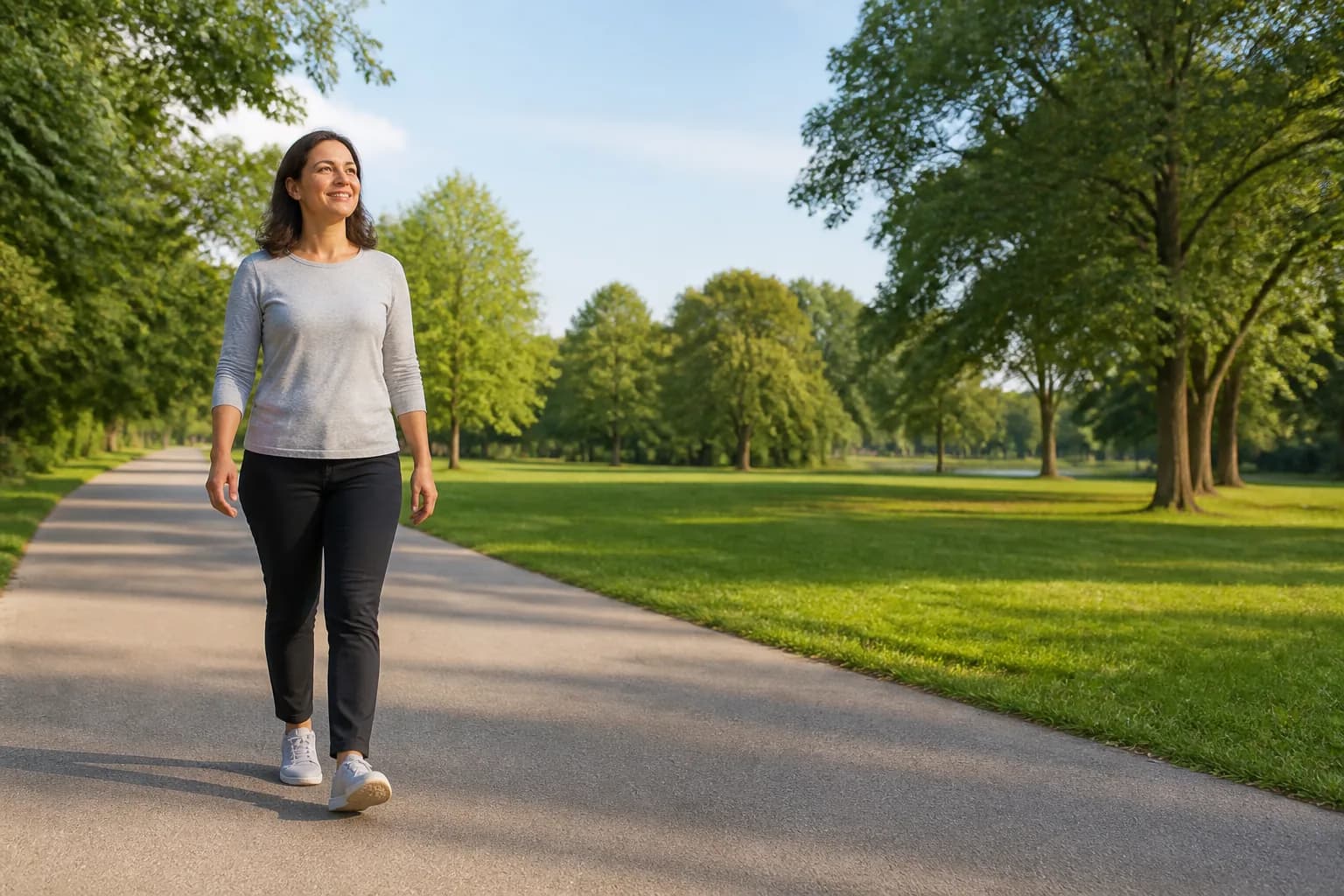
Walking for one hour a day for a month can be a substantial change—especially if you are starting from low activity. The most realistic “results” are often behavioral and practical: you learn which route fits your day, build comfort with a longer session, and see more consistent movement. Changes in fitness, mood, sleep, weight, or body composition vary too much to promise from a calendar challenge.
An hour is not automatically the right daily dose. If it creates foot pain, a flare of joint symptoms, persistent exhaustion, or conflict with medical advice, scale it down. The best result is a routine you can continue after the month ends.
What one hour actually adds up to
An hour a day totals seven hours of walking in a week. Depending on pace and stride, it can be a lot of steps, but the exact number varies. More importantly, it is well above the commonly cited 150 minutes of moderate-intensity activity per week if much of the walk is brisk enough to count as moderate for you.
That does not mean every hour needs to be brisk. An easy hour may be the right choice on some days, and a split session is completely valid. Two 30-minute walks can be easier to recover from, fit around work, and give you more than one break from sitting.
Realistic changes over four weeks
| Period | What you may notice | What not to assume |
|---|---|---|
| Days 1–7 | More awareness of footwear, route, time, and how your body responds. | That soreness proves the plan is “working.” |
| Days 8–14 | The logistics may get easier; a familiar route can feel less mentally demanding. | That you should immediately add hills or speed. |
| Days 15–21 | You may find a more natural pace and better routine cue. | That scale changes or sleep changes will follow a predictable pattern. |
| Days 22–30 | You have enough data to decide which version is sustainable. | That the 60-minute daily rule must continue forever. |
Fitness often improves through repeated activity, but the speed of adaptation is individual. If you already walked regularly, the difference may be small. If you were largely inactive, the biggest early result may be confidence that you can make time for a walk. Both are useful outcomes.
Do not begin with 60 minutes if it is a large jump
If one hour is much more than your current routine, build toward it. Start with 20–30 minutes and add five to ten minutes every few walks. Or use two short walks. The U.S. Physical Activity Guidelines encourage adults to move more and sit less, with a broad weekly aerobic target; they do not require one long daily session.
A sensible month can include easier days. For example:
- Three days: 45–60 minutes at a comfortable pace.
- Two days: 20–30 minutes easy or split into short breaks.
- One day: a longer social or scenic walk if you enjoy it.
- One day: rest, gentle movement, or a different low-impact activity.
That is not “failing” the headline. It is training in a way that respects recovery and makes the habit more likely to last.
Structure the hour with purpose
Give the walk a shape instead of forcing the same pace for 60 minutes. Start with five easy minutes. Settle into a conversational pace. If you are recovered and want more challenge, add a few brief brisk sections with easy walking between them. Finish easily. The talk test is more useful than copying another person’s speed: moderate effort usually allows conversation but not singing.
Choose a route you can shorten. Bring water or other essentials when conditions call for them, dress for the weather, and use stable shoes. Indoor walking is a real option when heat, air quality, darkness, or route safety is poor.
Track the things that show whether it fits
Step count is one record, but it is not the result. At the end of each walk, note:
- Duration and route surface.
- Whether the pace felt easy, conversational, or hard.
- Foot, knee, back, or hip response later that day and next morning.
- Energy, enjoyment, and whether the timing worked.
- Whether you would willingly repeat the session tomorrow.
If several days in a row leave you unusually sore, change your gait, disturb sleep, or make normal activity harder, reduce the volume and seek guidance if symptoms persist. More walking is not automatically better walking.
Make the month an experiment, not a streak contest
Before day one, write down a short reason for trying the routine. It could be time outdoors, a gentler return to activity, a screen-free break, or preparing for a walking holiday. A clear reason makes the plan easier to adjust when an hour is not possible. It also prevents the calendar from becoming the only measure of success.
Choose one consistent way to record the month. Note the start and finish time, a route name, and a one-sentence body check. You do not need a detailed training log. “45 minutes, park loop, feet comfortable” is enough to reveal patterns. A route that feels fine on flat ground may be too much on hills; an afternoon walk may suit you better than a dark early morning one. Those findings are results worth keeping.
| Situation | A workable adjustment |
|---|---|
| The full hour is unavailable | Split it into two shorter walks or choose the minimum version. |
| Your legs feel heavy after several days | Use an easier route or rest day rather than adding intensity. |
| A route becomes boring | Walk with a friend, change scenery, or listen to something that keeps attention on safety. |
| Weather makes the route unpleasant | Use an indoor loop, mall, stairs, or reschedule if it is safe to do so. |
| You miss a day | Resume the next day; do not double the duration to catch up. |
What to do at the end of 30 days
Review the pattern instead of assuming the next goal must be longer or faster. Which duration did you genuinely look forward to? Did a 35-minute route provide most of the benefit with less schedule strain? Did two shorter walks help you concentrate at work? Did one rest day make the other walks feel noticeably better? Keep the smallest routine that produced the outcome you wanted.
You might continue with an hour three or four days a week, alternate long and short days, or stay with a daily 20-minute walk. A sustainable plan has permission to evolve. The successful outcome is not a perfect 30-day screenshot; it is evidence you can use to build the next season of your routine.
Fuel, hydration, and environment matter
For a comfortable walk in ordinary conditions, many people simply need appropriate clothing, shoes, and attention to weather. Hot, humid, cold, icy, smoky, or poorly lit conditions change the calculation. Carry water or plan access when heat and duration warrant it, protect yourself from sun exposure, and select visible, familiar routes where possible. If you use headphones, keep enough awareness of traffic, cyclists, and surroundings.
The walk should fit your day rather than create an avoidable safety problem. When conditions are poor, indoor movement or a postponement is a valid training decision. Walking outside is optional; consistency does not require ignoring the environment.
Keep expectations about body changes honest
It is tempting to look for a dramatic before-and-after after 30 days. Bodies do not follow a simple timetable. Weight can fluctuate from hydration, food, hormones, and many other factors. Fitness improvements depend on starting point, intensity, total activity, and recovery. Mood and sleep can improve for some people but are not guaranteed and should not be the sole treatment plan for a health concern.
Notice functional changes instead: a familiar hill feels less daunting, you can finish a route without rushing, your afternoon break feels routine, or you have found a reliable way to be outdoors. These observations are specific, meaningful, and less likely to push you toward unsafe volume.
Stepsly (opens in a new tab) is an iPhone step counter that uses Apple Health data to show steps, goals, history, and widgets. It can make a month-long pattern visible, but it cannot judge recovery or guarantee a health outcome.
Related guides: walking 45 minutes a day, walking after 50, and how long does a 12 km walk take?. Use the walking-time calculator to plan routes.
Sources, notes & disclaimers
-
Planning doses use the Physical Activity Guidelines for Americans (opens in a new tab): 150–300 moderate weekly minutes plus strength work on 2 days for most adults who can safely do so.
-
U.S. Physical Activity Guidelines (opens in a new tab) provides the population activity framework referenced in this article.
-
Daily steps and health outcomes in adults (opens in a new tab) summarizes associations between device-measured daily steps and multiple health outcomes.
-
This article is general education, not medical advice. Build activity gradually and seek individualized guidance for pain, injury, medical conditions, pregnancy, or activity restrictions.