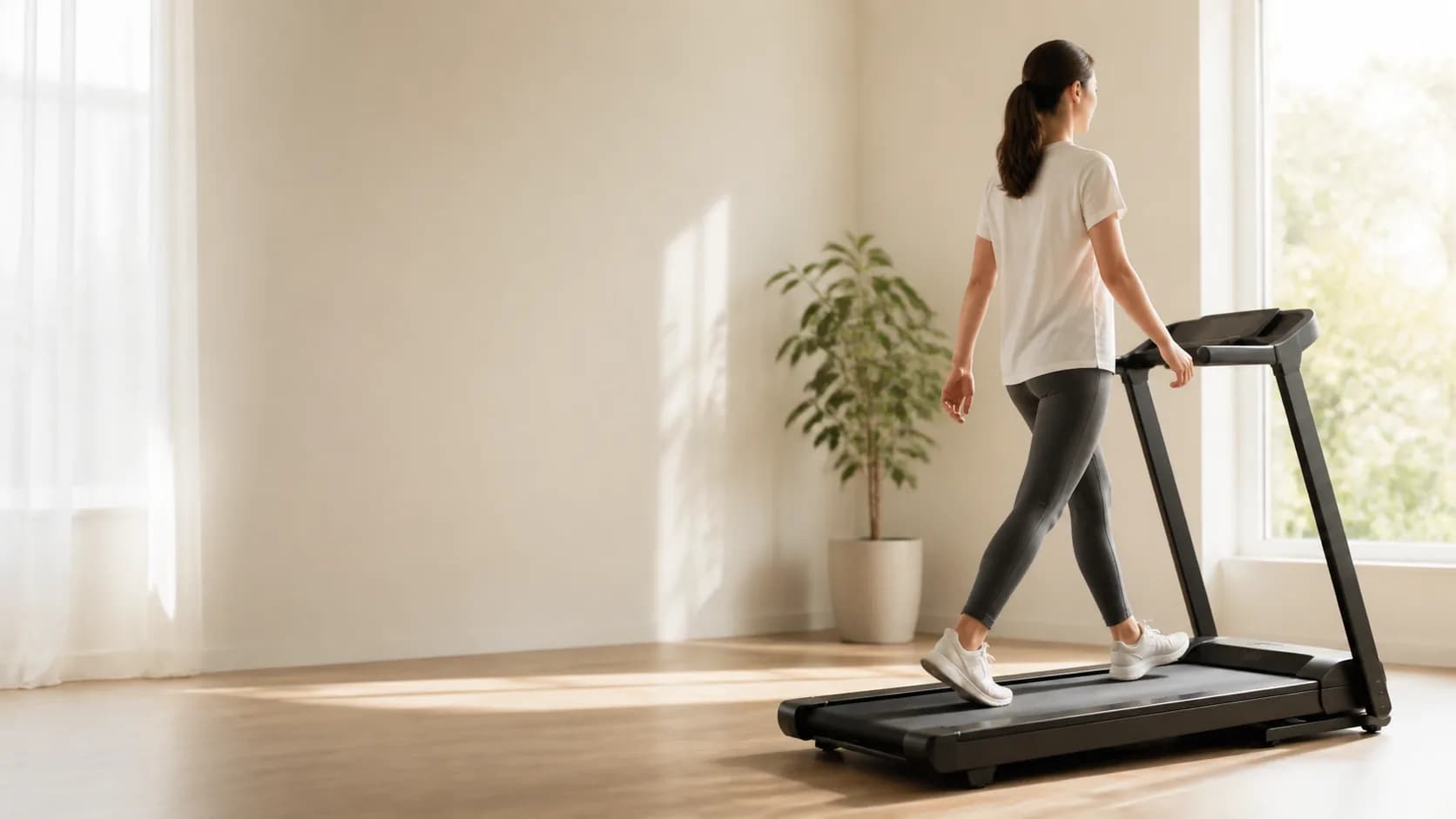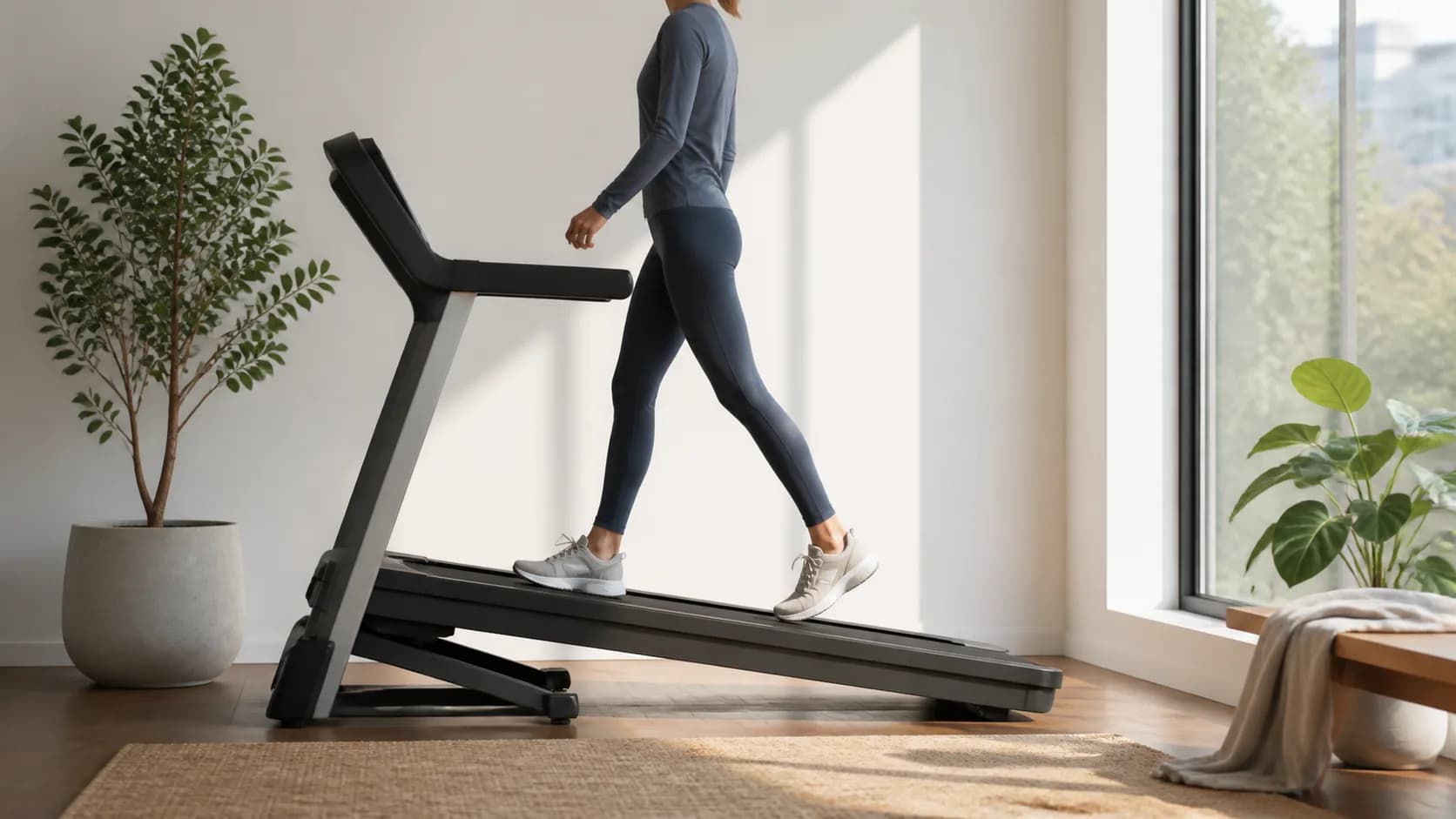
The 12-3-30 workout means walking on a treadmill at a 12% incline, 3 mph, for 30 minutes. It is popular because the settings are easy to remember and turn ordinary walking into a more demanding session without running.
It is also more intense than the name makes it sound. A 12% incline is steep enough to raise the load on calves, hips, and cardiovascular system. The best version is not necessarily the original settings—it is the version you can repeat with good form and without worsening pain.
What the numbers mean
| Setting | Meaning | Why it matters |
|---|---|---|
| 12 | 12% treadmill incline | The belt rises 12 feet for every 100 feet of horizontal distance. |
| 3 | 3 mph | A purposeful walking pace for many adults. |
| 30 | 30 minutes | A meaningful but manageable session length once you are conditioned for it. |
At 3 mph, you cover about 1.5 miles in 30 minutes. Incline changes the effort, but it does not make the distance itself longer. Calories vary substantially by body size, handrail use, treadmill calibration, and how much of your body weight your legs are actually carrying.
Why it feels hard
Uphill walking asks your calves and glutes to contribute more than level walking. It also raises breathing rate without the impact of running. That can be appealing for people who want a challenging walk, but "low impact" does not mean "low demand." A steep incline can irritate the Achilles tendon, feet, knees, hips, or low back when introduced too quickly.
Holding the handrails heavily changes the workout. Use them for balance when needed, but avoid hanging from them to make an unsustainable setting feel easier. Lowering the incline is a better adjustment.
Choose the version that matches your starting point
| Your current comfort level | Starting setup | Build toward |
|---|---|---|
| New to treadmill walking | 0–3% incline, comfortable pace, 15–20 min | Add time first. |
| Comfortable 30-minute walker | 4–6% incline, 2.5–3 mph, 20–30 min | Add 1% incline every 1–2 weeks if comfortable. |
| Regular incline walker | 6–10% incline, 2.8–3 mph, 25–30 min | Use occasional 12% blocks rather than every session. |
| Returning after injury or pain | Flat to gentle incline, easy pace | Follow clinician or physical-therapy guidance. |
Do not make pain the target. Burning muscles and heavier breathing can be normal during effort. Sharp pain, swelling, numbness, altered gait, chest symptoms, or dizziness are reasons to stop and reassess.
A four-week 12-3-30 progression
| Week | Incline | Pace | Time | Focus |
|---|---|---|---|---|
| 1 | 4% | Comfortable, up to 3 mph | 20 min | Learn treadmill posture and foot placement. |
| 2 | 5–6% | Comfortable | 25 min | Keep effort steady rather than chasing speed. |
| 3 | 7–8% | 2.7–3 mph | 25–30 min | Add a second incline session only if recovered. |
| 4 | 8–10%, optional short 12% blocks | Up to 3 mph | 30 min | Test the original format only if it feels controlled. |
Two incline sessions per week is plenty for many people. Add easy flat walks, strength work, or rest on other days. Recovery is part of the plan, especially if you are also running, cycling, or standing for long hours at work.
Does it work for weight loss?
It can contribute to a calorie deficit, but a treadmill setting is not a weight-loss guarantee. A useful plan pairs movement you can maintain with eating habits, sleep, stress management, and realistic expectations. The same workout can produce very different calorie estimates for different bodies, and exercise machines often provide broad estimates rather than precise measurements.
If your goal is to make walking more consistent, begin with a setting you look forward to doing again. A 4% incline routine completed three times weekly is more valuable than a 12% routine that leaves you too sore to walk for a week.
Form cues that make incline walking friendlier
- Stand tall with a slight forward lean from the ankles, not a bend at the waist.
- Take shorter steps as the incline rises.
- Let your arms swing naturally when balance allows.
- Keep your gaze forward instead of watching the moving belt.
- Step down carefully after the belt fully stops; calves may feel tired.
Stepsly can help make the broader habit visible through daily goals, trends, records, and widgets. It reads activity data through Apple HealthKit; it is not a treadmill-control app and should not be used to estimate the exact intensity of an incline workout.
Continue with treadmill versus outdoor walking for weight loss, walking speed versus calories burned, or the Walking Calorie Calculator.
Make the treadmill setting serve your goal
The original numbers can be useful as a reference, but they are not a minimum standard. Decide what you want the session to do. A person using a treadmill for a low-impact movement break may be better served by a flat 20-minute walk. A person who already tolerates hills may use a few moderate-incline blocks. A person training for a hilly event may need a separate, progressive plan. The machine’s display does not know the difference; you do.
| Goal for today | A better choice than forcing 12-3-30 |
|---|---|
| Recover after a hard week | Flat, easy walking with no pace target. |
| Rebuild a routine | A short steady session at a low grade. |
| Practice hills | Several gentle incline blocks with flat recovery. |
| Increase aerobic time | Add a few minutes at the same comfortable settings. |
| Avoid calf overload | Keep grade low and use a normal stride. |
A modification ladder
If the full 12% / 3 mph / 30-minute version does not feel controlled, reduce one variable. You could walk at 12% for one minute at a time with flat recovery, use 6–8% for the full session, keep 3 mph on a lower grade, or use 12% at a slower pace. Do not lower speed only to the point that you have to cling to handrails; lower the incline as well until your gait feels natural.
| Version | Example use |
|---|---|
| 3–3–20 | 3% incline, up to 3 mph, 20 minutes for a first habit session. |
| 6–2.5–25 | Moderate grade, gentler pace, 25 minutes for a controlled hill walk. |
| Hill intervals | 1–2 minutes at 8–12%, then 2 minutes flat, repeated four times. |
| 12–3–10 | Ten minutes of the original setting only after a warm-up, if it is comfortable. |
These labels are shorthand, not a challenge ladder. Repeat any version as long as it serves you.
Recovery tells you more than the console
After an incline walk, check how your calves, feet, Achilles tendons, hips, and low back feel later that day and the next morning. Mild unfamiliar muscle fatigue can happen. Pain that changes your stair use, causes limping, or persists should lead to an easier session and, when needed, individual guidance. Recovery also includes sleep, appetite, mood, and whether you can complete your normal daily movement.
Keep at least one easy or unloaded day between new incline sessions. If you also run, hike, play a sport, or stand long shifts, the total lower-leg load may already be high. A three-day treadmill plan is not automatically appropriate just because the sessions are “only walking.”
Avoid common setup errors
- Start at a low grade and warm up before raising the deck.
- Keep the safety key attached if your machine uses one.
- Do not use a desk, phone, or complicated task while walking steeply.
- Step down only after the belt stops completely.
- Check footwear and avoid using worn-out shoes for a new incline routine.
- Keep water nearby in warm conditions and stop if you feel unwell.
The workout is optional. If it starts to make you dread movement, return to a comfortable flat walk. Consistent activity is more valuable than loyalty to a social-media formula.
For additional planning context, see incline-walking benefits and treadmill walking speed.
Sources, notes & disclaimers
-
Planning doses use the Physical Activity Guidelines for Americans (opens in a new tab): 150–300 moderate weekly minutes plus strength work on 2 days for most adults who can safely do so.
-
The U.S. Physical Activity Guidelines recommend regular moderate-to-vigorous activity and muscle-strengthening activity across the week: ODPHP guidelines (opens in a new tab).
-
Relative intensity differs by fitness level, which is why the same treadmill settings can feel easy for one person and hard for another: guideline discussion of relative intensity (opens in a new tab).
-
This article is educational, not individualized medical or training advice. Consult a qualified clinician before starting a new exercise program if you have heart symptoms, balance concerns, a recent injury or procedure, or other conditions that affect exercise safety.