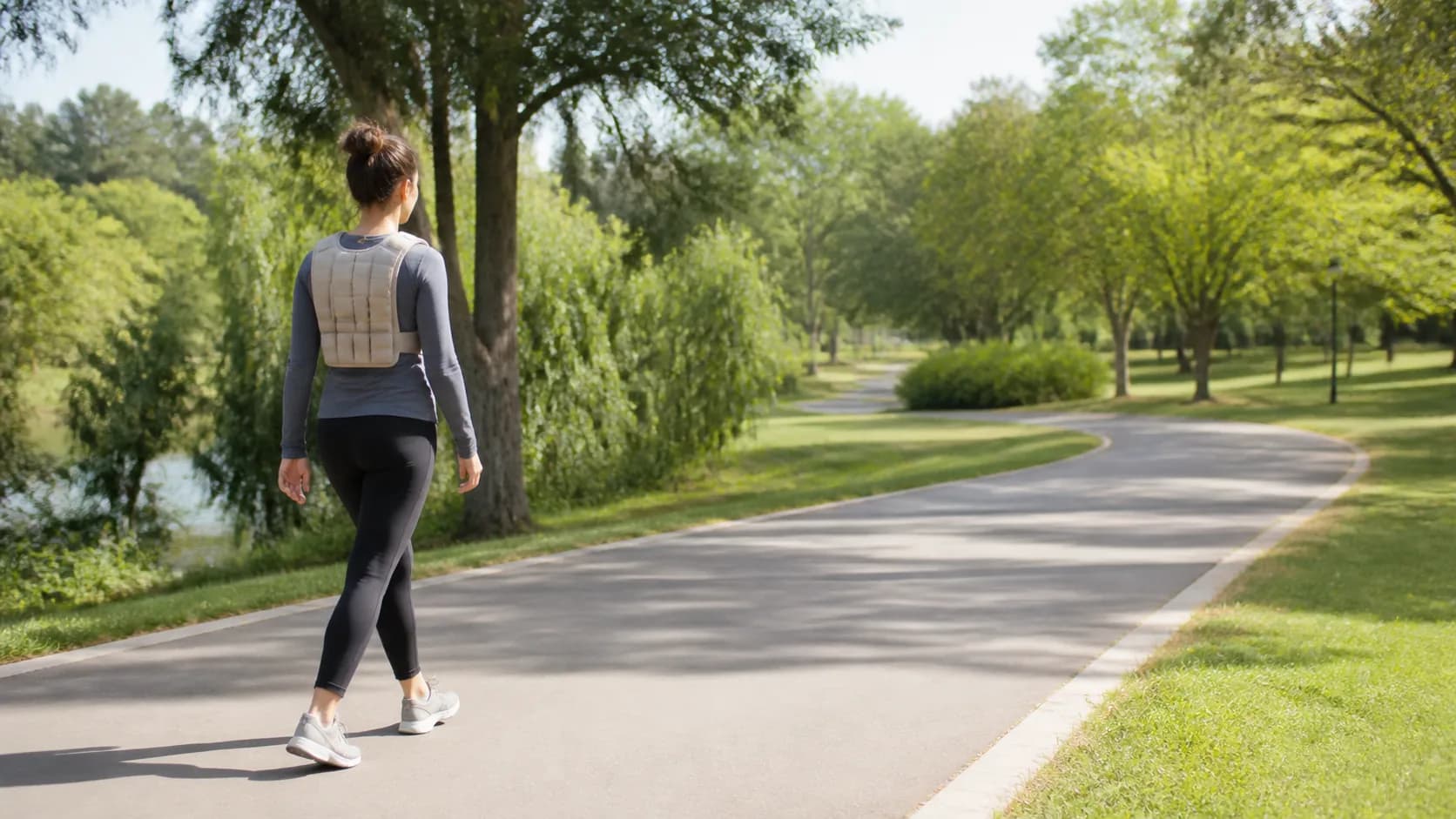
A weighted vest can make a walk feel harder by adding load close to your torso. It is not essential for fitness, weight loss, or bone health, and it is not the first progression most walkers need. More time, a modest hill, or a brisker pace are often simpler ways to increase challenge.
If you choose to use a vest, treat it as a gradual training tool—not an everyday test.
When it may make sense
| Reason | Better first question |
|---|---|
| Flat walks feel easy | Have you increased time or pace gradually first? |
| You want variety | Can you use a hill or interval walk instead? |
| You enjoy strength-oriented walking | Can you maintain normal posture with a very light load? |
If the answer to the last question is no, the vest is too heavy or the session is too long.
Conservative setup
Choose a vest that sits securely without bouncing and distributes load evenly front to back. Begin with a light load and a short flat route. There is no universal “right percentage” of body weight; joint history, balance, current fitness, and vest fit all matter.
| Stage | Session |
|---|---|
| Learn | 10–15 minutes, light vest, flat surface |
| Repeat | Two similar sessions with no lingering pain |
| Extend | Add 5 minutes or a small amount of load |
| Progress | Keep one unloaded walking day between loaded sessions |
Avoid adding hills until flat loaded walking is consistently comfortable. Do not use a vest while carrying a child, pushing a stroller, or walking on surfaces where balance is uncertain.
Form and recovery checks
- Keep your head stacked over ribs and hips rather than leaning forward.
- Maintain a normal walking stride.
- Check shoulders, neck, low back, knees, feet, and Achilles tendons later that day and the next morning.
- Reduce load when ordinary walking feels worse, not only when the vest walk feels hard.
Stepsly can help you see your overall walking pattern through goals, history, and trends. It does not know whether you are wearing a vest, so use your own notes to record load and how the session felt.
Before adding external load, review walking for bone and joint health, setting realistic walking goals, and the Walking Pace Calculator.
A vest changes the session, not your worth
The appeal of a vest is understandable: it makes a familiar route feel more demanding without requiring more speed. But it also changes the forces your feet, calves, knees, hips, shoulders, and back manage. A vest is not a “next level” every walker should reach, and it is not a shortcut to a body-composition result. Flat brisk walking, a modest hill, strength work, or simply more ordinary movement may be the better progression.
Start by wearing the empty vest at home to confirm the fit. It should not ride up toward the neck, restrict your ribcage, rub sharply, or shift when you turn. Add only enough load to keep the vest stable and your movement normal. A vest that requires you to brace constantly, grip straps, or shorten your stride is too much for that route.
| Observation | Adjust before the next session |
|---|---|
| Pressure at the neck or collarbone | Refit straps, redistribute load, or choose another vest. |
| Forward lean or low-back fatigue | Reduce load and duration; return to an unloaded route. |
| Calf or Achilles irritation | Remove hills and load; allow recovery before retrying. |
| Knee pain on descents | Use flat terrain and seek individualized advice if it persists. |
| Comfortable controlled walking | Repeat the same dose before changing anything. |
Progress one variable at a time
External load, duration, speed, grade, and route surface are separate variables. For the first several weeks, choose flat terrain and keep pace easy enough to speak normally. After two symptom-free repeats, you might add five minutes or a small amount of weight. Do not add both, and do not introduce hills in the same week.
| Phase | Aim | A sensible decision point |
|---|---|---|
| Familiarize | Short flat walk with very light load | Can you maintain normal posture throughout? |
| Repeat | Same session once or twice | Does ordinary walking feel normal the next day? |
| Extend | Slightly longer or slightly heavier | Do symptoms stay absent over 24–48 hours? |
| Vary | Add gentle terrain only after flat comfort | Can you descend without knee or back discomfort? |
Keep unloaded walks in the week. They offer a comparison point and reduce the temptation to make every session a loaded workout.
Think about the whole environment
Avoid a vest while carrying another load, pushing a stroller, walking a dog that pulls, using a phone while moving, or navigating a crowded/icy/uneven route. The extra load reduces your margin for sudden balance corrections. Choose shoes with a stable familiar fit, use daylight or well-lit routes, and carry water in a way that does not make the vest unstable.
Vests can also make heat feel harder to manage. In hot or humid conditions, reduce duration and load, use shade and water, and choose an unweighted walk if comfort deteriorates. There is no benefit to finishing a plan in conditions that are becoming unsafe.
Recovery is the real progress marker
After a loaded walk, note how your body responds during ordinary tasks: stairs, rising from a chair, and your next easy walk. Delayed soreness can be a sign you introduced more than your current routine supports. Scale back before it turns into a persistent issue. An iPhone step total will not capture that distinction, so add a short note outside the app if you are testing load.
Do not use a weighted vest in an attempt to “burn off” food. Device energy figures are estimates, and turning load into compensation raises risk without improving the quality of the routine. The right dose is the one that supports a stable, enjoyable activity week.
Frequently asked questions
Is a vest better than a backpack? A vest can distribute a modest load close to the torso, but “better” depends on fit, comfort, and the person. A poorly fitted vest can be worse than a light, secure backpack. Neither is required for a useful walk.
Can I wear a vest on every walk? That is rarely the best beginner plan. Keep most walks unloaded until you have a consistent history of symptom-free loaded sessions and a reason to add more.
Will it build bone or muscle? External load may add training demand, but it does not guarantee a bone or muscle outcome and should not be self-prescribed for those goals. Strength training and clinical advice may be more appropriate.
Should I walk faster with the vest? No. Preserve a controlled ordinary gait first. Faster pace, hills, and load are separate progressions.
A sensible off-ramp
If the vest stops being enjoyable, creates persistent soreness, or makes you avoid walking, stop using it. Return to a comfortable unloaded route for a week or two. You have not “lost progress”; you have protected the habit that matters most. A good tool is optional enough that you can put it away without losing your relationship with movement.
Pair loaded days with lighter movement
The day after a new vest session is a good time to choose easy movement: a flat walk without load, gentle mobility, or rest. This is not wasted training. It gives you a chance to see whether the last session fit your current capacity. If ordinary stairs, sitting and standing, or your usual easy walk feel noticeably worse, make the next loaded session shorter or lighter—or skip it.
Choose an off-ramp before starting: you can remove the vest, shorten the route, or turn around at any time. Having a plan makes it easier to respond to real feedback rather than forcing a session because the original plan looked ambitious on paper.
Finally, do not confuse a product’s maximum load rating with a recommended training load. A safety specification is not a personalized exercise prescription. Your movement quality and recovery set the useful limit.
For additional planning context, see rucking for beginners and walking 3 miles a day.
Sources, notes & disclaimers
-
Planning doses use the Physical Activity Guidelines for Americans (opens in a new tab): 150–300 moderate weekly minutes plus strength work on 2 days for most adults who can safely do so.
-
The U.S. Physical Activity Guidelines (opens in a new tab) recommend regular aerobic and muscle-strengthening activity; a weighted vest is optional, not required.
-
This article is general education. Ask a qualified clinician or physical therapist before adding external load if you have osteoporosis, back or joint pain, balance concerns, pregnancy-related restrictions, a recent injury/procedure, or a condition affecting safe exercise.