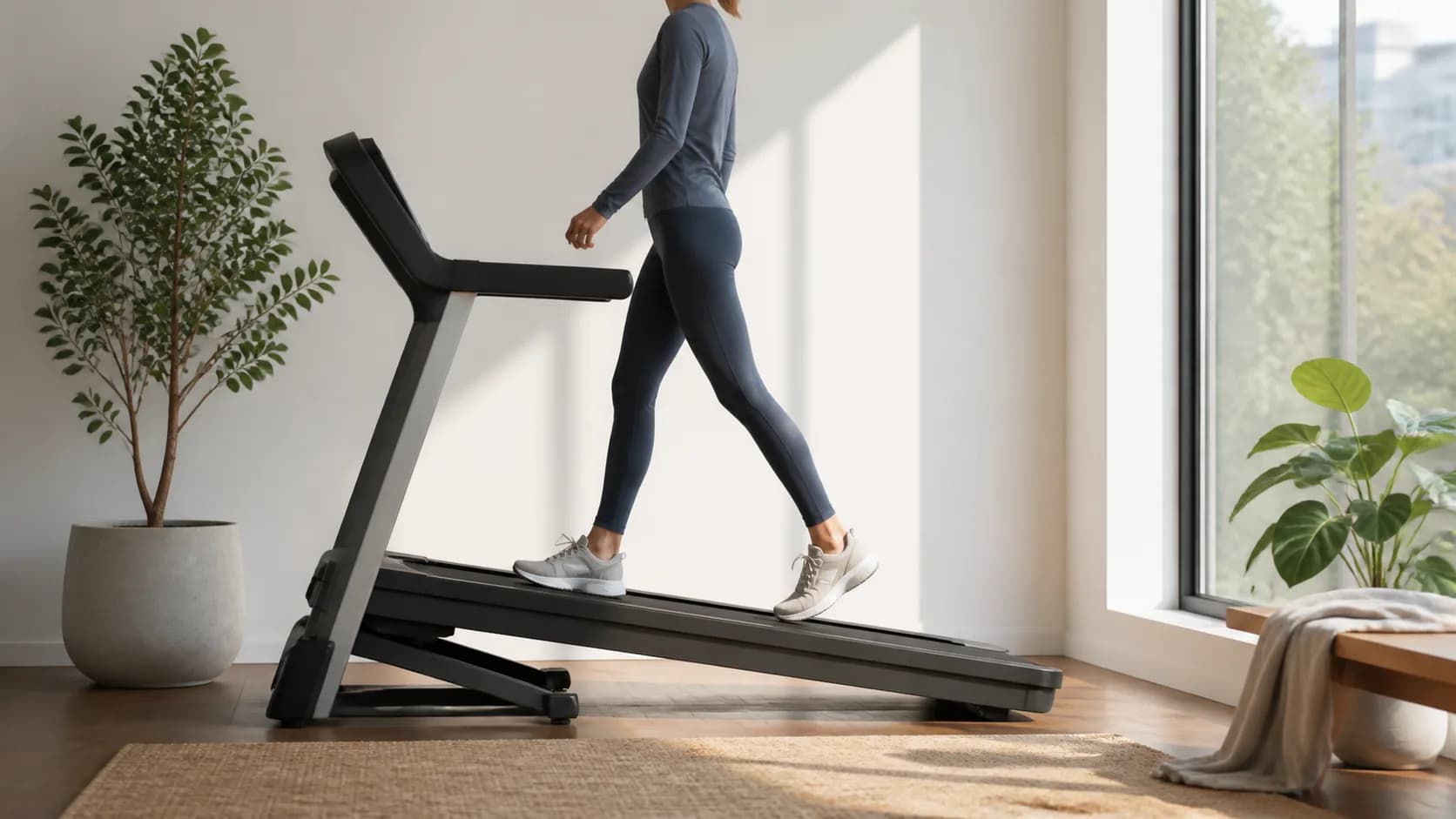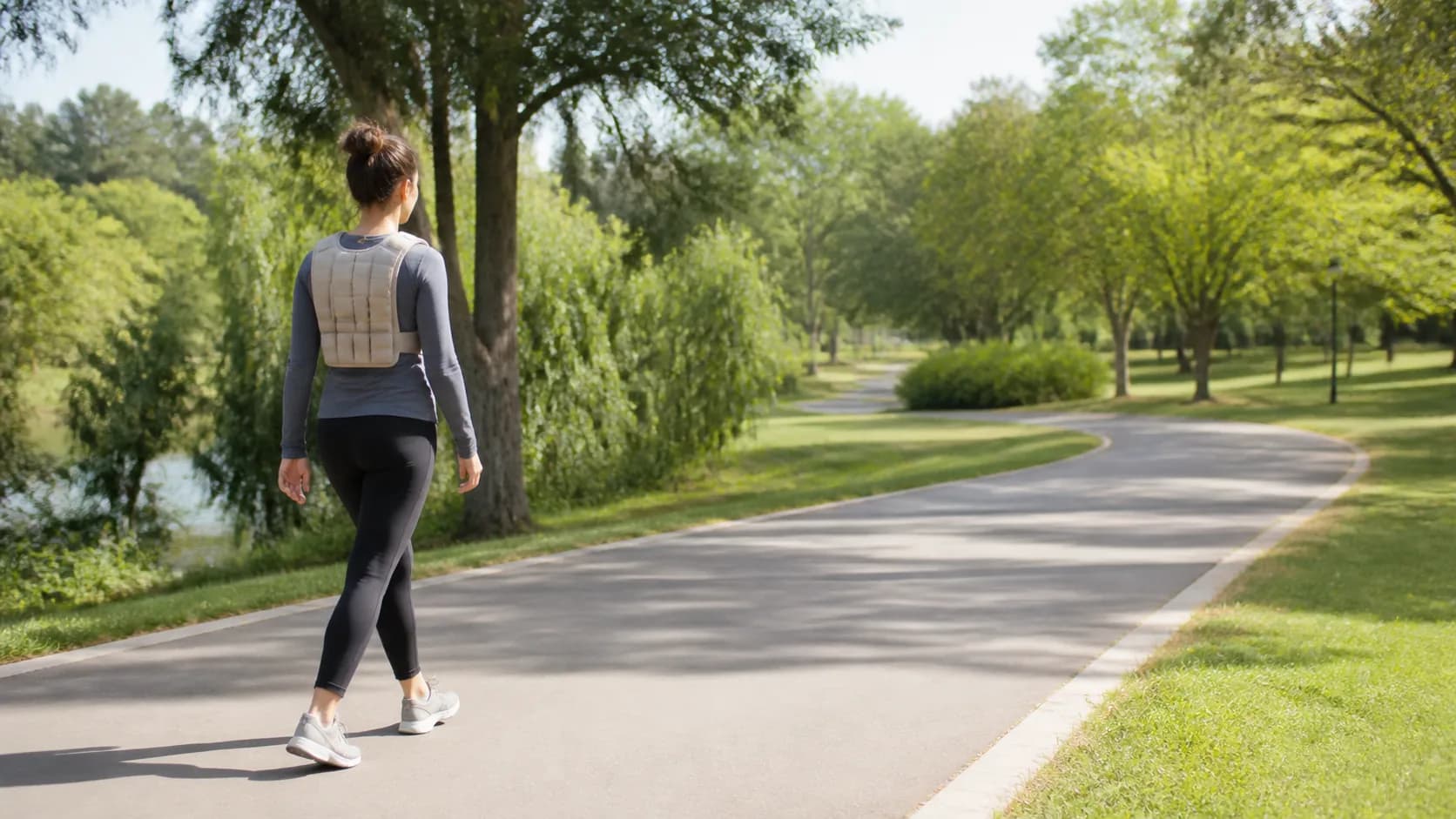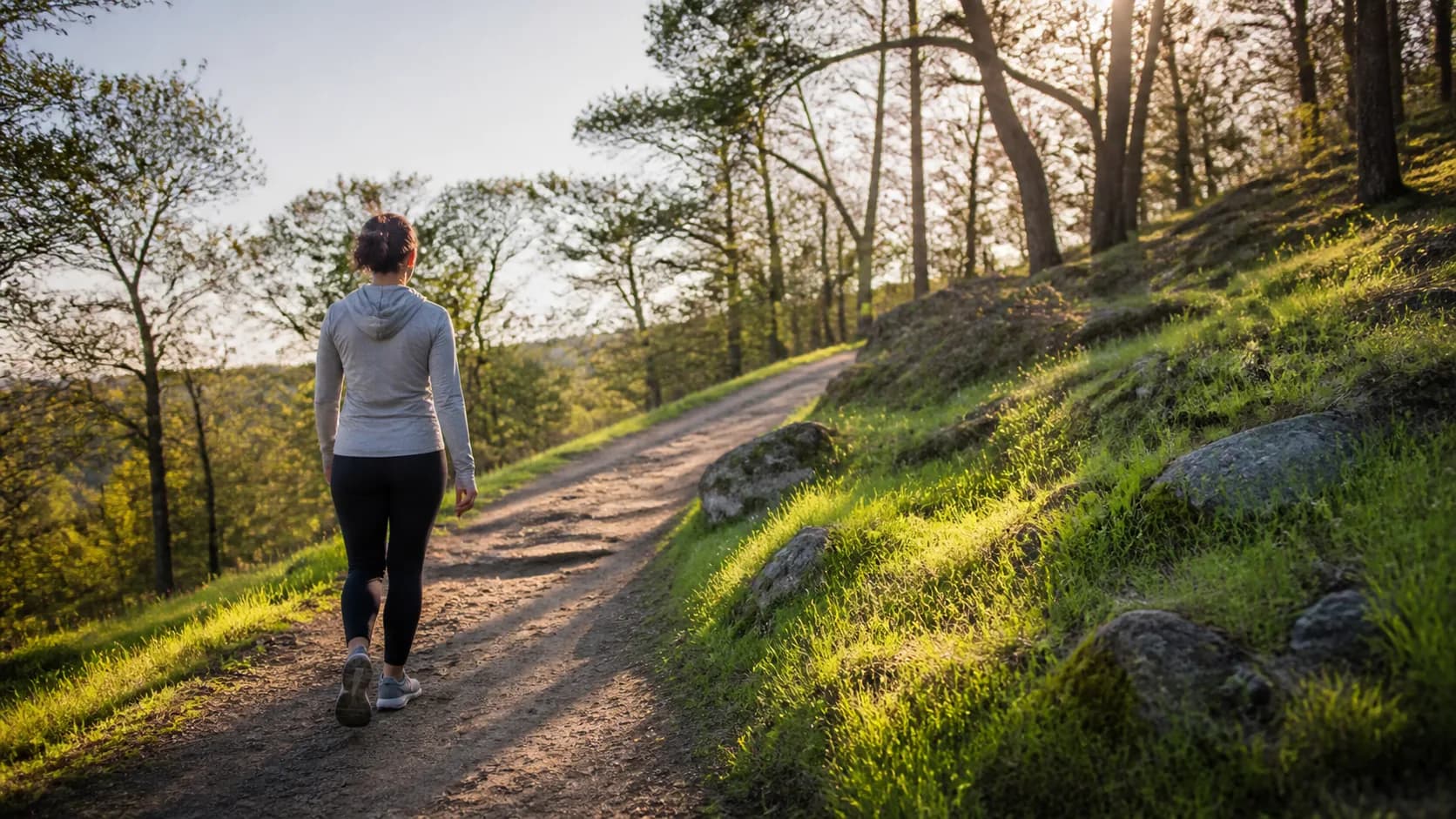
Incline walking makes an ordinary walk more demanding by asking you to move your body uphill. The payoff is simple: your heart rate and breathing can rise at the same walking speed, while your glutes and calves contribute more than they do on level ground.
The catch is equally simple: hills are a bigger load. They are not automatically better for every body, every day, or every injury history. The best incline is the one that makes your walk more purposeful without turning it into a recovery problem.
What changes when you walk uphill
| Change | What you may notice | Practical takeaway |
|---|---|---|
| Higher effort | Faster breathing and a stronger cardiovascular challenge. | Slow down before assuming you need to stop. |
| More posterior-leg work | Calves and glutes work harder. | Begin with short hills or low treadmill incline. |
| Shorter natural stride | Overstriding feels awkward uphill. | Let steps become shorter and quicker. |
| Greater ankle demand | Achilles and calf tissues work through more range. | Build gradually if you have foot or tendon history. |
An incline can make a walking pace feel moderate or hard without running. That can be useful for people who prefer low-impact movement, but it does not remove the need for progressive training.
Four benefits worth caring about
1. More challenge without running
For someone who is comfortable walking on flat ground, a hill can provide variety and a stronger aerobic stimulus. You can adjust grade in small increments on a treadmill or choose a route with a gentle rise outdoors.
2. A different muscle emphasis
Walking always uses the lower body, but uphill walking generally asks more from the calves and hip extensors. This is not a replacement for dedicated strength training, yet it can make walking feel more engaging and functional.
3. More route variety
Changing terrain can make routine walks less repetitive. That can support adherence, especially when you alternate hills with easy, level days instead of making every session a challenge.
4. A flexible pace option
If you cannot safely walk faster on a busy sidewalk or treadmill, a small incline may let you raise effort while retaining a manageable speed. Small is the key word.
How to start safely
| Current routine | First incline step |
|---|---|
| Mostly flat walks | Add one short hill or 2–3% treadmill incline for 5 minutes. |
| Comfortable 30-minute walker | Include 10 minutes at a gentle incline, then return to flat. |
| Regular hill walker | Alternate sustained gentle grades with short steeper blocks. |
| Tendon, foot, knee, hip, or back symptoms | Stay flat or follow individualized professional guidance. |
Avoid raising duration, speed, and incline in the same week. Pick one variable. If your calves are unusually sore for several days, reduce the grade or duration before your next session.
Form cues
- Lean slightly from the ankles, not by folding at the waist.
- Keep your chest relaxed and gaze forward.
- Use shorter steps rather than reaching ahead with the foot.
- Let your arms swing naturally when balance allows.
- On a treadmill, lower the grade rather than gripping the handrails to survive it.
A simple hill-walking session
Walk easily for five minutes, then repeat four times: three minutes at a gentle incline or hill, followed by two minutes easy and flat. Finish with five minutes easy. This creates a controllable introduction to hills and makes it easier to notice whether the grade is appropriate.
Use Stepsly’s walking pace calculator to plan pace-based sessions, and use Stepsly’s goals and history to see whether the routine is becoming consistent. An app can show the pattern; your comfort, form, and recovery tell you whether to progress.
Read treadmill versus outdoor walking for weight loss, walking for bone and joint health, and how many steps a beginner should aim for for a broader plan.
How much incline is enough?
There is no magic grade. A useful incline is one that noticeably changes your effort while preserving normal walking mechanics. On a treadmill, beginning at a small grade can be enough; outdoors, a gentle rise can be more than enough on a first hill day. If you have to pull on the rails, hunch forward, or shorten the session because your calves are burning early, reduce the grade before assuming you need more willpower.
The following is a progression example, not a prescription:
| Weeks of comfortable flat walking | Example hill exposure | Reason to hold steady |
|---|---|---|
| 0–2 | Five minutes of gentle incline inside a flat walk | Any new foot, calf, Achilles, knee, or hip symptoms. |
| 3–4 | Two or three short hill blocks with flat recovery | Soreness that changes your next walk. |
| 5–6 | Ten to fifteen total minutes of gentle incline | Form worsens or you need the rails. |
| Later | Vary hill length or grade, not both at once | You are no longer recovering between sessions. |
This table is deliberately conservative. A regular hiker may progress faster; a person returning after injury may need much less. The win is finding an amount that becomes a normal part of the week.
Uphill and downhill are different loads
People often focus on the climb, but downhills deserve attention too. Walking downhill can feel easier for breathing while still placing a different braking demand on the thighs and knees. On trails, loose ground and uneven steps add a balance challenge. A treadmill usually does not provide a true downhill walk, so outdoor routes need their own pacing plan.
If a descent bothers your knees, shorten the route, choose a gentler grade, slow down, use an appropriate support when advised, or select a flat route. Do not make the uphill “worth it” by forcing a painful descent. With recurring knee pain or instability, a physiotherapist or clinician can help tailor the choice.
Put hills beside strength and flat walking
Incline walking can support a varied routine, but it is not a substitute for all other movement. The general activity guidelines also recommend muscle-strengthening work on two or more days a week. Simple strength work, mobility, and flat easy walks can make hill days more sustainable because they give different tissues and skills attention.
One weekly pattern might include two comfortable flat walks, one short hill session, an easy recovery walk, and strength work on separate or paired days. If you love hills, still include occasional level routes; they are not a downgrade. Variety makes it easier to notice what changes in your body and what type of effort you can recover from.
A route and recovery checklist
Before an outdoor hill walk, check the weather, surface, light, footwear, turnaround point, and whether you have water for the planned duration. On a treadmill, check that the deck has fully changed grade before increasing speed. Afterward, pay attention to the next 24–48 hours: mild unfamiliar muscle awareness can happen, but pain that escalates, swelling, altered gait, or loss of balance is a cue to reduce load and seek advice.
For people with diabetes who have reduced foot sensation, a history of falls, Achilles or plantar-fascia symptoms, recent lower-limb surgery, or a condition that affects balance, hills deserve individualized planning. The benefit of more effort never overrides safety.
Keep the data in its place
An incline session may add fewer steps than a longer flat route, yet feel much more demanding. That is one reason a step total alone cannot describe the workout. Use a step app to notice consistency and daily movement, but pair it with a brief note about grade, duration, terrain, and recovery when you are experimenting with hills. Over a few weeks, the pattern can show whether a small incline makes walks more enjoyable or simply makes them harder to repeat.
If the goal is general health, an easy flat walk still counts. Incline is a tool for variety and progression, not a requirement for a worthwhile routine.
Record the grade only as a reference point. What matters most is whether the session remains comfortable, stable, and repeatable in your real week.
For additional planning context, see the 12-3-30 workout and incline walking versus running.
Sources, notes & disclaimers
-
Planning doses use the Physical Activity Guidelines for Americans (opens in a new tab): 150–300 moderate weekly minutes plus strength work on 2 days for most adults who can safely do so.
-
Adults can gain substantial health benefits from regular moderate activity, including brisk walking: U.S. Physical Activity Guidelines (opens in a new tab).
-
The same absolute activity can feel different depending on fitness; physical-activity guidance recognizes relative intensity: ODPHP guideline PDF (opens in a new tab).
-
This article is general education. Stop if pain, instability, dizziness, chest symptoms, or unusual shortness of breath develops, and seek individualized guidance when a health condition or injury affects activity safety.