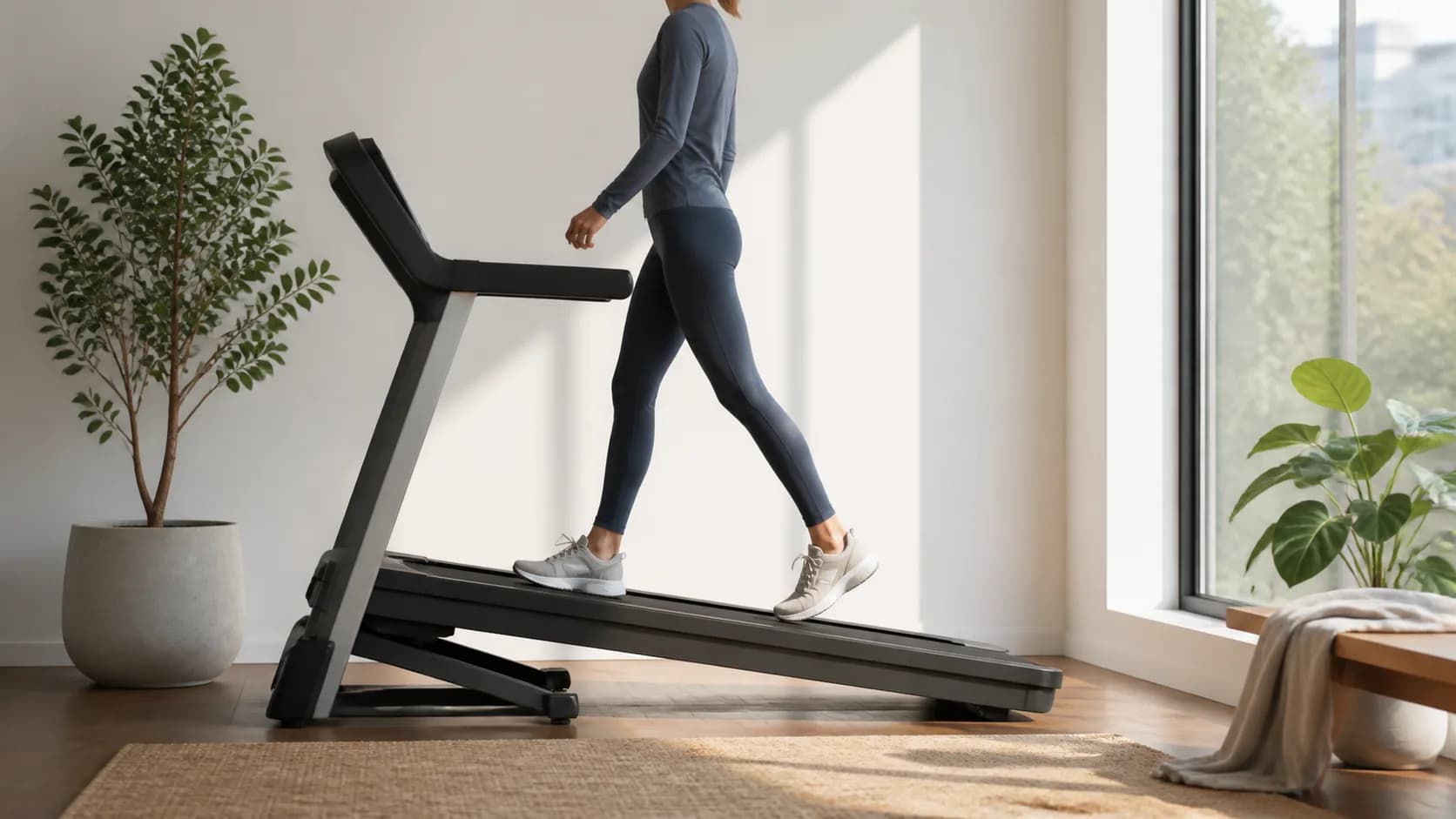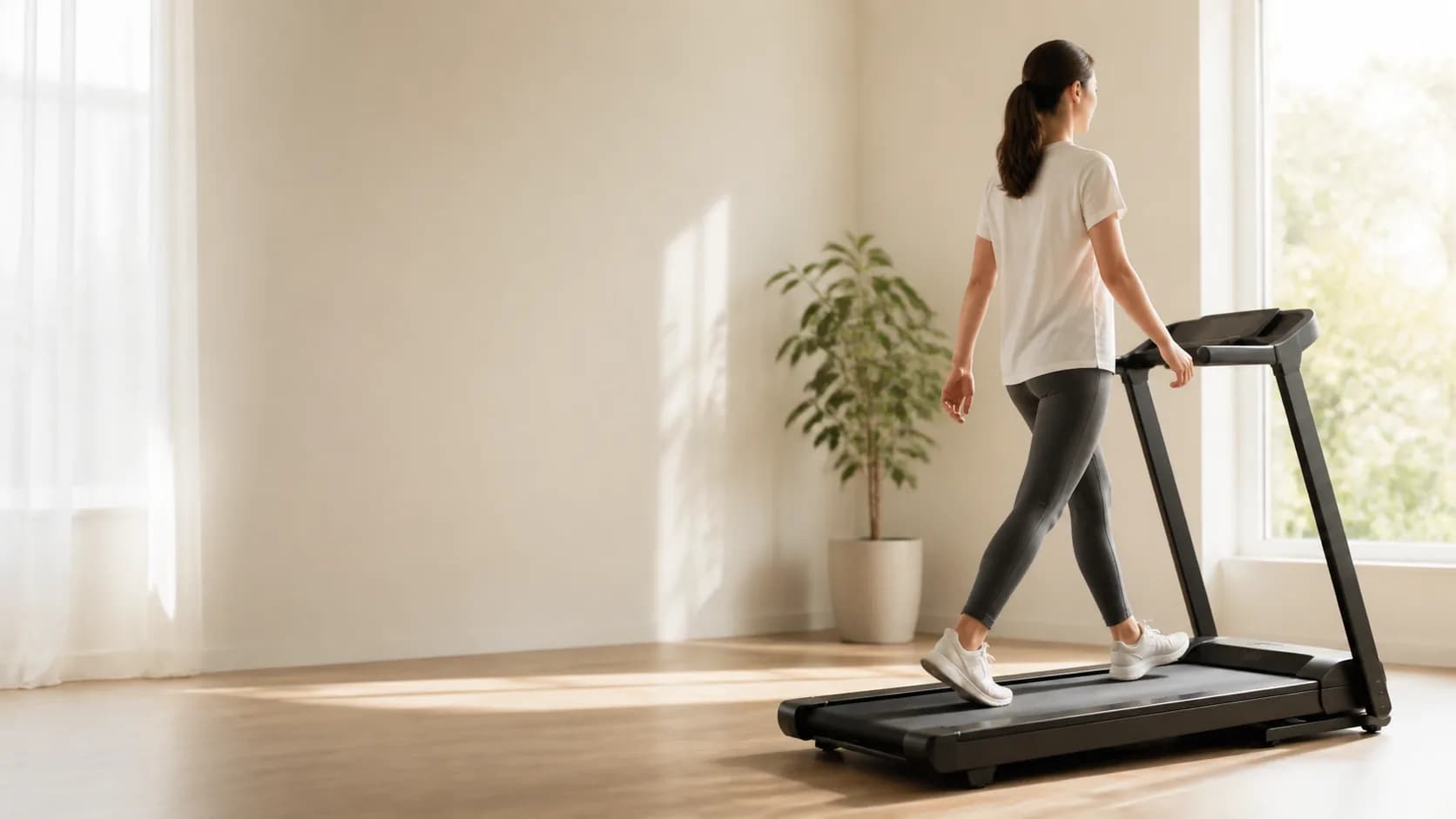
The best treadmill walking speed for weight loss is the fastest pace you can repeat with good form, recover from, and fit into your week. For many adults that lands somewhere between a comfortable walk and a brisk walk—not at one universal number on the display.
Speed matters, but it is only one lever. Time, incline, body size, current fitness, eating patterns, sleep, and how often you return to the treadmill all affect the bigger picture. A routine at 2.7 mph that you do four times a week can be more useful than a 4 mph plan you quit after three sessions.
Start with a pace you can describe
Use your breathing and posture to select an initial treadmill speed.
| Effort | What it feels like | Good use |
|---|---|---|
| Easy | You can sing and breathe normally. | Warm-ups, recovery walks, building confidence. |
| Steady | You can speak in full sentences. | Longer daily walks and habit-building. |
| Brisk | You can talk, but singing would be difficult. | A useful main pace for many structured walks. |
| Hard | You can only manage short phrases. | Short intervals for people already conditioned for them. |
For a new walker, begin at the speed that feels steady for 15–20 minutes. For an experienced walker, brisk segments can make a session more time-efficient. Neither choice is morally better; the goal is an appropriate training dose.
Speed or incline: which should you raise first?
Incline can increase effort without requiring a faster turnover. That can be helpful if a faster speed makes you feel unsteady, but a steep incline also increases the demand on calves, feet, and hips.
| If you need… | Try first | Avoid |
|---|---|---|
| More confidence | Add 2–5 minutes at the current pace. | Jumping to a speed that changes your gait. |
| A modest challenge | Add a small incline while slowing slightly. | Increasing speed and incline together. |
| A harder session | Alternate brisk and easy sections. | Holding handrails to force an unsustainable setting. |
| Less joint stress | Lower incline and speed, then build time. | Treating pain as proof the workout works. |
A repeatable 30-minute walk
Try this instead of chasing a display number:
- Walk easily for five minutes.
- Walk steadily for ten minutes.
- Complete three rounds of two minutes brisk and two minutes steady.
- Walk easily for three minutes.
Once the routine feels manageable, lengthen the steady section or add another round. Only after that should you consider a modest incline increase.
What calorie displays can—and cannot—tell you
Treadmill calorie estimates use assumptions. Two people at the same speed can have different energy expenditure because their body sizes, mechanics, and effort differ. Holding the railings also lowers the work your legs perform, even if the settings do not change.
Use the display as a rough consistency marker, not a calorie budget you have earned. For a broader estimate based on your own inputs, use the Walking Calorie Calculator. For weight-management goals, focus on sustainable activity and overall habits rather than trying to out-walk an unrealistic target.
Build a weekly plan, not a perfect workout
| Day | Session |
|---|---|
| Monday | 25–30 minute steady walk |
| Tuesday | Easy movement or rest |
| Wednesday | 20–30 minutes with brief brisk intervals |
| Thursday | Strength work, easy walk, or rest |
| Friday | Steady walk with a small incline if comfortable |
| Weekend | One longer easy outdoor or treadmill walk |
The U.S. physical activity guidance encourages adults to work toward 150–300 minutes of moderate aerobic activity weekly. You do not need to start at the top end. Begin where your schedule and recovery allow, then add time gradually.
Stepsly can make the consistency side easier to see: set a daily goal, check your streak, and review step and activity trends over time. It should support the habit, not pressure you to turn every day into a hard workout.
For related guidance, see walking 30 minutes a day for weight-loss results, the best time to walk for weight loss, and the Daily Step Goal Calculator.
Find your starting setting in one session
The number on a treadmill is an input, not a grade. A simple test can help you start without copying somebody else’s speed:
- Warm up for five minutes at an easy setting.
- Raise speed a small amount and walk for three minutes.
- Check your posture, breathing, and whether you can avoid gripping the rails.
- Keep that setting if you could repeat it tomorrow; lower it if your gait changes or you feel unstable.
- Write down the setting, incline, and how the walk felt.
The next session should be a chance to repeat—not a requirement to beat—the number. Once a speed feels reliably steady for several sessions, change just one variable: five additional minutes, a very small incline, or a short brisk interval. This gives your calves, feet, and confidence time to adapt.
Match the setting to the purpose of the session
Not every treadmill walk needs to target the same intensity. Giving sessions separate jobs can prevent the common pattern of making every workout a test.
| Session purpose | A useful setup | What success looks like |
|---|---|---|
| Restart after time away | Easy speed, flat deck, 10–20 minutes | You finish feeling able to walk again soon. |
| Daily movement break | Steady pace, flat or tiny incline | It fits the day without requiring recovery planning. |
| Brisk walk | A pace where talking is possible but singing is hard | You maintain natural form and do not hold the rails. |
| Gentle hill work | Slight incline with a slightly reduced speed | Calves and feet feel worked, not aggravated. |
| Recovery walk | Comfortable speed, flat deck | You leave feeling looser, not more depleted. |
This is more useful than declaring 3 mph, 3.5 mph, or any other setting “best.” A speed is only appropriate in the context of the person and the day.
What to do when the scale is not changing
It is understandable to look at a treadmill calorie display and expect a predictable change in body weight. But walking is not a switch that guarantees a particular outcome. Day-to-day scale changes include water, digestion, menstrual-cycle changes, muscle soreness, and ordinary measurement noise. Energy needs and appetite can also change as activity changes.
If weight management is your goal, watch trends over several weeks and focus on actions you can sustain: a regular walking slot, a realistic food pattern, sleep, and enough recovery to avoid the cycle of overdoing it and stopping. The NIDDK Body Weight Planner (opens in a new tab) is a better educational tool than a static “calories per pound” rule, but even it is not a personal medical plan.
It can help to track non-scale markers too: whether climbing stairs feels easier, whether you are taking more movement breaks, whether a 30-minute walk now feels routine, and whether your mood improves after the session. These are not substitutes for clinical outcomes, but they keep one delayed metric from deciding whether the habit has value.
Common treadmill mistakes that make speed feel harder
- Starting cold at the target speed. A five-minute warm-up often makes the main pace feel more natural.
- Leaning on the handrails. Lower the speed or grade instead; leaning can make the machine’s setting a poor reflection of the work you are doing.
- Looking down continuously. Keep your gaze forward when possible and use the console only for brief checks.
- Changing two or three settings at once. You will not know what caused soreness or fatigue.
- Trying to compensate for a missed day. Resume your normal plan rather than doubling duration the next day.
For people with a new or worsening limp, recurring calf/Achilles pain, significant foot numbness, uncontrolled blood pressure, chest symptoms, or dizziness, “push through” is not a treadmill strategy. Stop and get individual guidance. The same applies if you need a handrail for balance: choose a setting that preserves safety rather than increasing speed for a calorie estimate.
For additional planning context, see the 12-3-30 workout and incline walking versus running.
Sources, notes & disclaimers
-
Planning doses use the Physical Activity Guidelines for Americans (opens in a new tab): 150–300 moderate weekly minutes plus strength work on 2 days for most adults who can safely do so.
-
U.S. guidance recommends regular moderate activity, with adults generally working toward 150–300 minutes weekly: Physical Activity Guidelines (opens in a new tab).
-
Relative intensity differs by fitness level, so a treadmill speed should be adjusted to your own response: guideline discussion (opens in a new tab).
-
This article is general education, not medical advice. Ask a qualified clinician for individualized exercise guidance if you have heart symptoms, balance concerns, a recent injury, or a condition that changes safe activity levels.