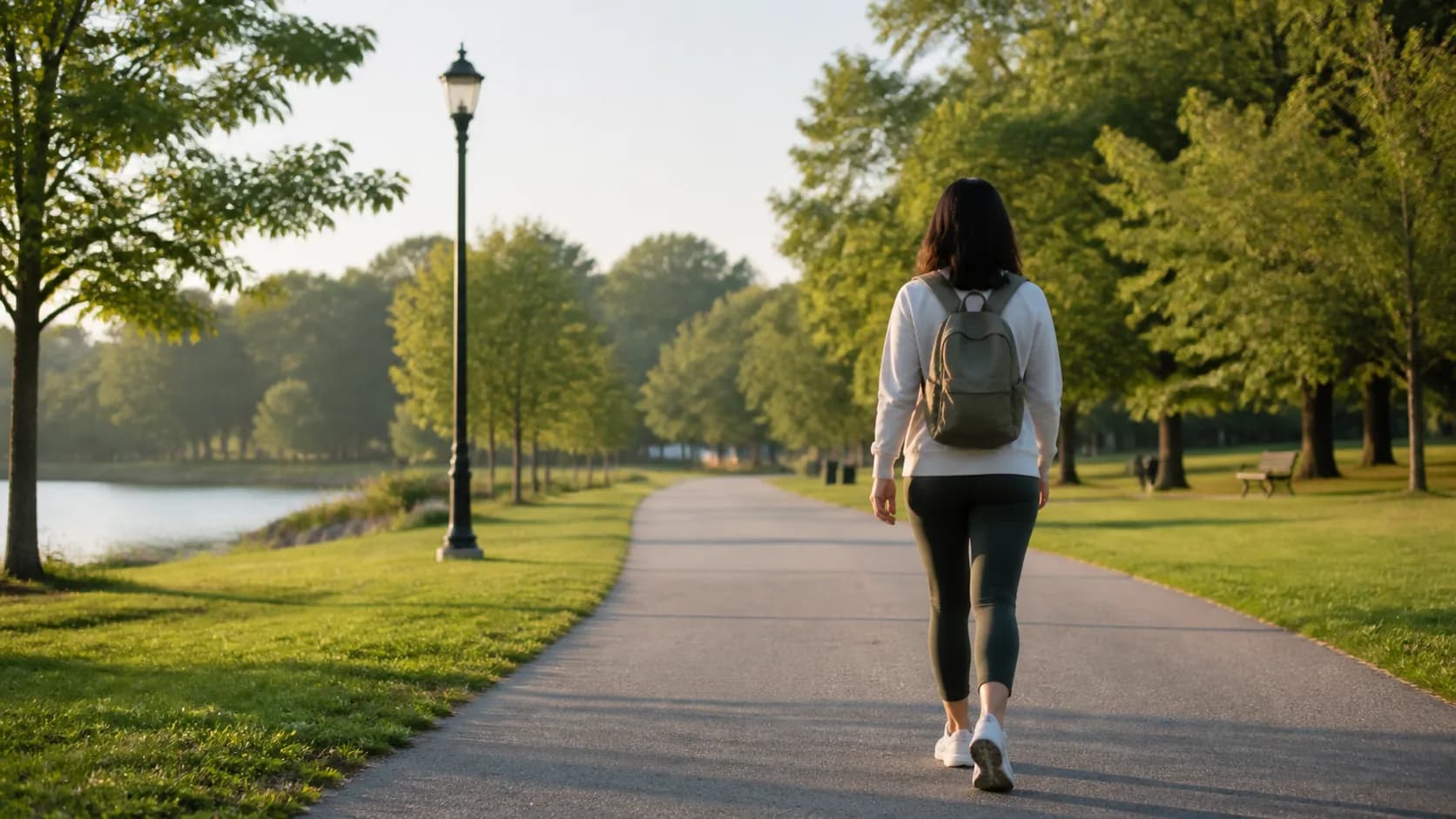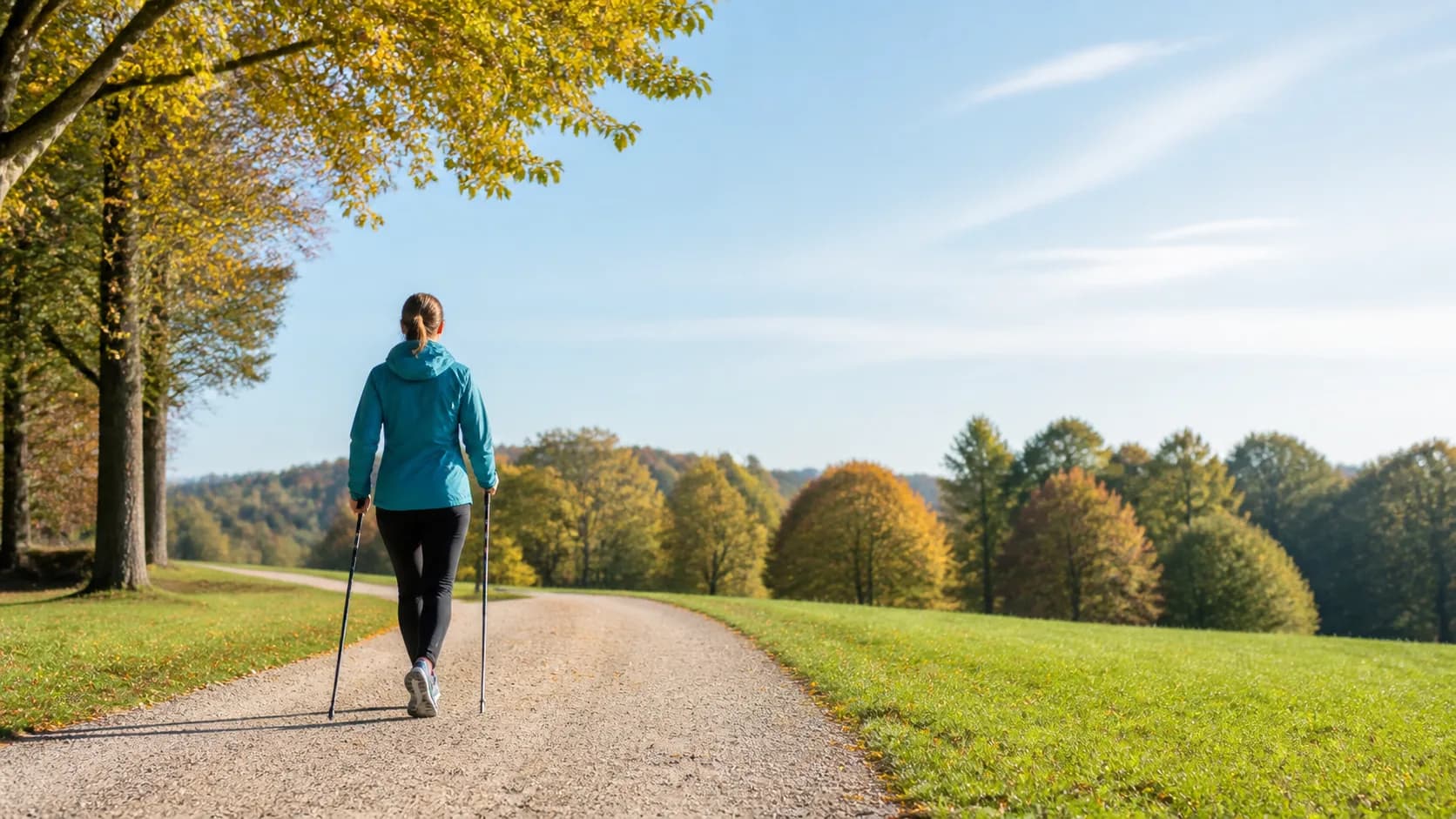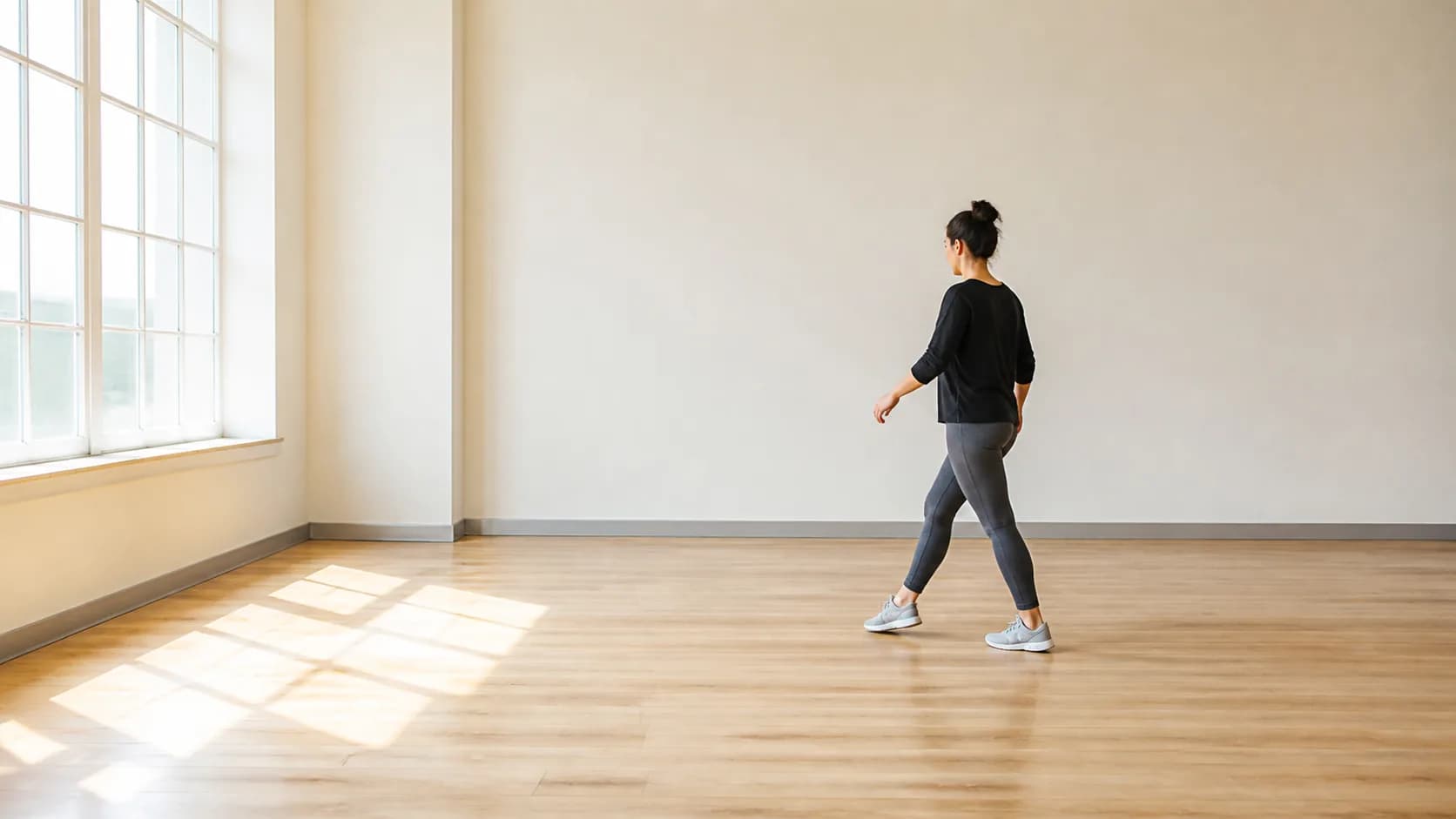
Backward walking changes a familiar movement pattern. It may feel novel and can challenge coordination, but it also removes your normal view of the path. That tradeoff makes environment and supervision more important than intensity.
Why people try it
| Potential reason | Sensible interpretation |
|---|---|
| Variety | A short new movement can make walking less repetitive. |
| Coordination | Moving differently asks for more attention and control. |
| Leg sensation | Muscles may feel different because the mechanics change. |
Backward walking is not a proven shortcut to weight loss, knee rehabilitation, or better posture. It is an optional movement variation, not a replacement for regular forward walking or individualized rehabilitation.
The safest first attempt
Choose a clear, flat indoor space or an empty track. Do not begin on a sidewalk, treadmill, hill, trail, crowded gym floor, or near traffic. Start with 10–20 slow steps, turn around, and return forward. Repeat only while you remain fully aware of your footing.
If you use a treadmill, get professional instruction or use a stable handhold at the lowest possible speed. A moving belt amplifies the consequences of a misstep.
Who should skip it
Avoid self-directed backward walking if you have a fall risk, dizziness, visual impairment, recent lower-body injury, neurological condition, significant joint pain, or balance concern. A physical therapist can decide whether it belongs in a supervised rehabilitation plan; a viral exercise trend cannot.
Keep it small
Try one or two minutes total after a normal forward walk. Do not add speed, incline, load, or distraction. The goal is controlled novelty, not fatigue.
For a more reliable walking habit, see how to start walking when unfit, benefits of walking in short bursts, and the Daily Step Goal Calculator.
What changes mechanically
Walking backward reverses familiar coordination. You cannot use visual information from the path in the usual way, and your feet, knees, hips, and trunk respond differently as you place each step. That novelty can make a very short amount feel surprisingly demanding. It is also why claims that it “fixes” knees, posture, or metabolism should be treated skeptically. A different sensation is not proof of a treatment effect.
| Part of the task | Why it deserves attention |
|---|---|
| Vision | You cannot continuously see what is behind you. |
| Foot placement | A small obstacle or uneven surface is harder to anticipate. |
| Turning | Quick turns can create a balance error, especially when fatigued. |
| Speed | Faster movement gives less time to correct a misstep. |
| Distraction | Phones, headphones, conversations, pets, and crowds reduce attention. |
For these reasons, backward walking belongs at the edge of an otherwise normal movement practice. It should not replace a forward walk, a strength plan, or a clinician-designed rehabilitation program.
A controlled beginner protocol
Use an uncluttered indoor area where you can see both ends before you begin. Wear stable footwear. Start with a forward walk to warm up, then turn so your back is toward an empty, known area. Take ten slow steps backward, pause, turn around carefully, and walk forward to the start. Rest briefly and decide whether your feet, knees, and balance feel normal.
| Round | Backward steps | Forward return | Decision |
|---|---|---|---|
| 1 | 10 | Walk forward normally | Stop if orientation or balance feels uncertain. |
| 2 | 10–15 | Walk forward normally | Repeat only if the first round was controlled. |
| 3 | 15–20 | Walk forward normally | Optional; do not add speed. |
This can be the entire practice. Two or three controlled rounds are sufficient for a first day. Leave at least a day before repeating if the movement is new, and keep all other walking normal.
Why environment matters more than motivation
Avoid public sidewalks, parking lots, stairs, curbs, moving treadmills, tracks with other users, wet floors, low ceilings, or routes with pets and children underfoot. A person looking over one shoulder is not truly able to monitor the path. A mirror may provide feedback in a studio setting, but it is not a substitute for a clear floor and supervision when appropriate.
If a physical therapist has prescribed backward walking, follow that specific setup. The clinician may use rails, a harness, a treadmill, or another controlled environment because the risk profile is different from a social-media challenge. Do not turn a supervised rehabilitation drill into an unsupervised outdoor workout.
Do not use it to chase steps or calories
Step counts and calorie estimates cannot tell you whether the movement was stable. A phone may also count differently when arm movement and direction change. If you try backward walking, track the exposure as minutes or rounds and how you felt—not as a reason to increase your daily total. Stepsly can still show broader Apple Health activity trends, but it cannot detect backward walking or assess fall risk.
Better options when the goal is variety
If you want a fresh walking stimulus with lower navigation risk, try a new forward route, a gentle hill, a short brisk interval, Nordic walking with appropriate instruction, or a walking game with safe environmental awareness. If you want balance improvement, a clinician or qualified trainer can help select supported exercises that match your history. The safest variation is the one that does not compromise your ability to see, react, and recover.
Stop immediately for instability, pain, dizziness, blurred vision, numbness, or any new symptom. A fall, near-fall, or repeated need to grab furniture means the activity is not appropriate in that setup. There is no achievement in continuing an optional drill when the safety margin is gone.
Frequently asked questions
Can backward walking help knee pain? It may appear in a clinician-supervised rehabilitation program, but that does not make it an at-home treatment. Knee pain has many causes. Choose a clinician-designed plan when pain, swelling, catching, giving way, or a change in normal gait is present.
Can I do it on a treadmill? A moving belt adds risk. Do not attempt it casually because a short video makes it look easy. If a professional has specifically instructed you, use the exact safety setup they recommend; otherwise choose a clear floor or do not include it.
How long should I do it? The first goal is not duration. Ten controlled steps may be enough. Stop while attention and posture are intact. If you cannot explain why you are adding more, keep it short.
Does it burn more calories? Any estimate is uncertain and should not be the reason to choose a movement with a higher fall risk. A safe forward walk is more valuable than an experimental drill done for a number.
A realistic place in a routine
If you enjoy this skill and can do it safely, put it after a forward warm-up once or twice a week, not at the end of a fatiguing workout. Keep most walking forward. Leave it out on days when the floor is wet, the space is occupied, attention is divided, vision is reduced, or you feel tired. The ability to skip a variation is part of good training judgment.
When you want to develop balance or coordination more seriously, seek an assessment and a structured plan. Targeted therapy can use exercises with a clear rationale and progressions; a generic backward-walking challenge cannot account for your medical history or home environment.
Check your response afterward
Because the pattern is unfamiliar, check how you feel later that day as well as during the drill. New muscle awareness can happen, but a painful knee, sore back, headache from turning your head, or discomfort that changes ordinary walking means the experiment was not a good fit. Resume normal forward movement and do not “practice through” a bad response.
Keep the first month intentionally boring: same clear room, same slow pace, same tiny number of steps. If it no longer feels controlled, stop adding it. A controlled decision to abandon a novelty is better than a preventable fall.
Forward walking remains the default. Choose it whenever there is uncertainty about the surface, other people, lighting, fatigue, or your own balance that day.
That choice protects confidence and mobility.
For additional planning context, see walking for arthritis and walking with bad knees.
Sources, notes & disclaimers
-
Planning doses use the Physical Activity Guidelines for Americans (opens in a new tab): 150–300 moderate weekly minutes plus strength work on 2 days for most adults who can safely do so.
-
General activity guidance supports regular movement but does not require backward walking: U.S. Physical Activity Guidelines (opens in a new tab).
-
This article is general education, not rehabilitation advice. Stop if you feel unstable or experience pain, dizziness, or new symptoms, and seek individualized guidance when balance or injury history is relevant.