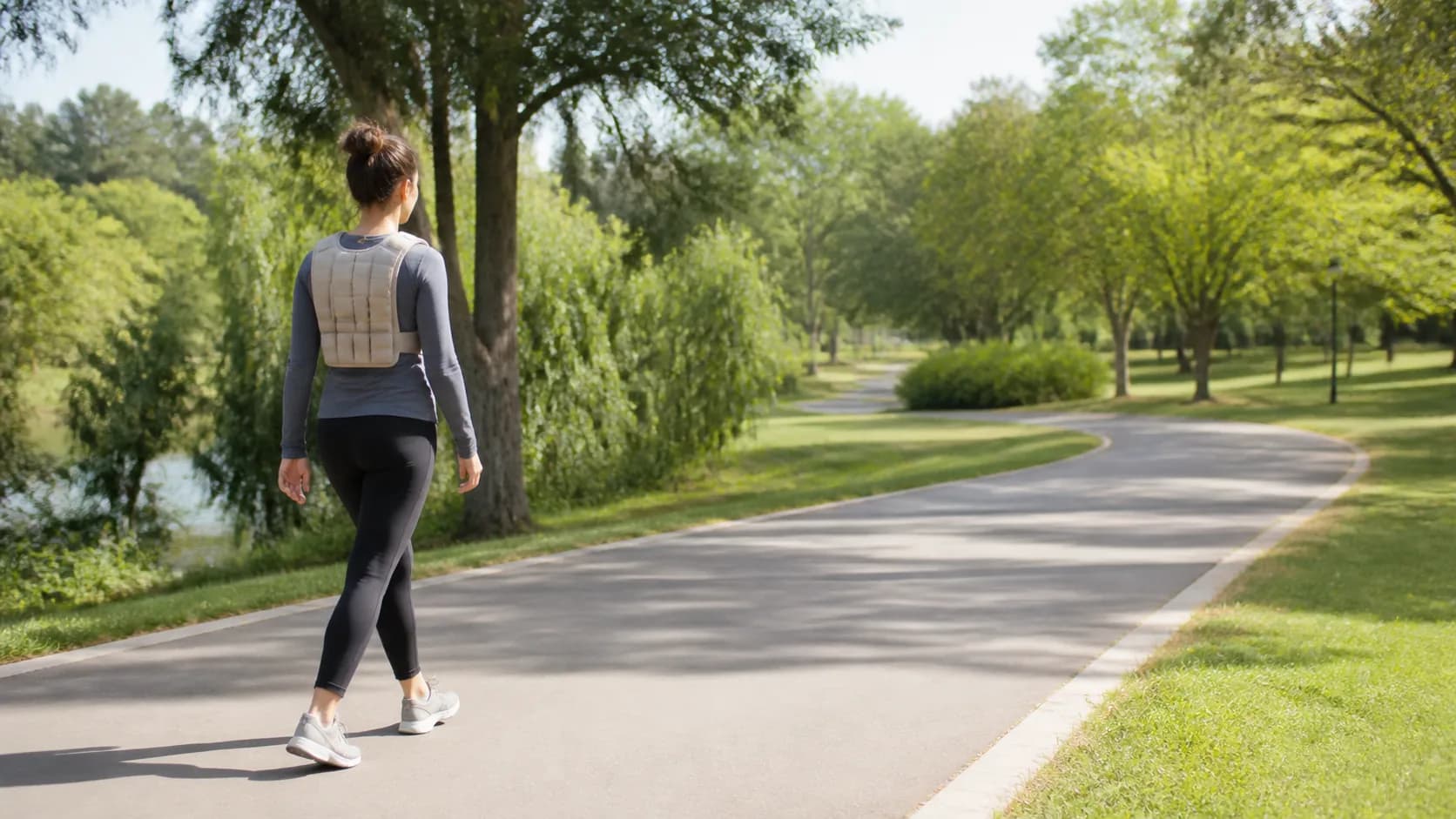
Zone 2 walking is a deliberately steady walk: hard enough that your breathing is clearly elevated, but easy enough that you could keep going without needing a recovery day afterward. For many people that means a brisk walk; for a very fit person it may mean hills, a treadmill incline, or a faster pace.
The useful part is not chasing a magic heart-rate number. It is learning to repeat a comfortably challenging effort often enough to build a durable walking habit.
What "zone 2" actually means
Training zones are labels for effort. They are not identical from one watch, app, or person to the next. In exercise physiology, the version of zone 2 that coaches usually mean sits below the first major breathing or lactate threshold: you are working aerobically, but you have not reached the point where conversation becomes broken and effort rises sharply.
That is why a single percentage is only a starting point. Age-predicted maximum-heart-rate formulas can be useful for a rough range, but medication, sleep, heat, fitness, and individual biology can move your real response substantially.
Start with feel, then use numbers as a check. A successful zone 2 walk feels purposeful, not punishing. If you finish feeling as though you need to lie down, the effort was probably too high for an everyday session.
The easiest way to find the right pace
Use the talk test before you use a formula.
| What you can do | Likely effort | What to do |
|---|---|---|
| Sing comfortably | Easy | Add a little speed or a small hill if you want a training stimulus. |
| Speak in full sentences, but notice your breathing | Moderate and sustainable | This is a practical target for most zone 2 walks. |
| Only say a few words at a time | Hard | Slow down or reduce the incline. |
| Feel dizzy, chest pain, unusual shortness of breath, or unwell | Stop | Seek urgent help when appropriate; do not try to train through warning signs. |
If you use heart rate, treat it as a second opinion. A common estimate puts moderate work around 50–70% of age-predicted maximum heart rate, but a heart-rate response is not a diagnosis and is not equally accurate for everyone. Beta blockers and some other medicines change the meaning of standard heart-rate targets.
Can walking get you there?
Yes—especially if you are new to structured exercise, returning after time away, older, carrying extra weight, or walking uphill. A flat 2 mph stroll may be very easy; a 3.5 mph walk or modest incline may be moderately challenging. The same route can feel different after a poor night's sleep, in hot weather, or as your fitness improves.
Try these levers one at a time:
- Increase cadence first. Take slightly quicker, shorter steps rather than reaching far in front of you.
- Choose rolling terrain. A gentle hill often changes effort more efficiently than trying to force a much faster pace.
- Use treadmill incline conservatively. Begin around a small incline and lower speed before increasing both.
- Lengthen the walk before making it harder. Consistency usually beats an occasional exhausting session.
Avoid adding a weighted vest simply to hit a number. Load changes joint and balance demands, and it is not necessary for a useful aerobic walk.
A four-week zone 2 walking on-ramp
This plan assumes you can already walk comfortably for 20 minutes. If you cannot, begin with 10 minutes and add time slowly.
| Week | Sessions | Main set | Goal |
|---|---|---|---|
| 1 | 4 | 20–25 minutes at a talk-test pace | Learn the feeling of steady effort. |
| 2 | 4 | 25–30 minutes | Keep the same effort, not necessarily the same speed. |
| 3 | 4–5 | 30–35 minutes | Add one gently hilly or inclined session. |
| 4 | 4–5 | 35–45 minutes | Keep one walk deliberately easy for recovery. |
The weekly target can eventually contribute to the general recommendation of 150–300 minutes of moderate activity. It is not necessary to begin there. A routine you repeat is more valuable than a perfect plan you abandon.
How to tell whether it is working
Do not judge progress only by a calorie number or one unusually good day. Look for trends over several weeks:
- The same route feels more controlled.
- You can walk a little farther at the same perceived effort.
- Your breathing settles more quickly after a hill.
- You complete more planned walks without soreness disrupting the next session.
Track the basics that matter to you: walks completed, minutes, route conditions, and how the effort felt. Stepsly can make the habit visible with daily goals, history, trends, records, and Home Screen or Lock Screen widgets. It is useful for seeing consistency; it does not replace a heart-rate monitor or clinical guidance.
When zone 2 is not the right goal
Zone language can make a normal walk feel unnecessarily technical. If your goal is stress relief, a short post-meal walk, returning from inactivity, or simply adding movement to a desk-bound day, an easy walk still counts.
People with a heart condition, new symptoms, a recent procedure, pregnancy-related restrictions, or medication that affects heart rate should ask a qualified clinician for an appropriate effort target. The most useful pace is the one that is safe for your circumstances.
A simple first walk
Pick a 20-minute route. Spend five minutes walking easily, ten minutes at a pace where you can talk in full sentences but would not want to sing, and five minutes easy again. Repeat it twice this week before changing anything. That gives you a baseline based on your own body rather than someone else's chart.
For next steps, read how walking improves heart health, compare walking speed and calorie burn, or use the Heart Rate Zones Calculator.
Use heart-rate data without becoming ruled by it
Heart-rate readings can be useful for noticing a pattern, but they are affected by device fit, wrist motion, ambient temperature, hydration, caffeine, stress, and normal day-to-day variation. Treat a surprising reading as a reason to check how you feel, not an instruction to force the number down or up. If your device has trouble during arm movement or a hill, the talk test and your ability to keep normal form are often more useful in the moment.
| If the number is… | First check… |
|---|---|
| Higher than usual at the same easy pace | Heat, illness, sleep, hydration, stress, and whether the device is seated correctly. |
| Lower than expected | Device contact, medication, and whether the route is actually easier. |
| Rising sharply on a hill | Whether you can slow down and still keep a controlled gait. |
| Creating anxiety | Whether you can take a few walks using only effort cues. |
Do not use a generic maximum-heart-rate formula to override symptoms or clinical advice. If medication changes heart-rate response, a clinician may recommend a different effort scale.
Make Zone 2 part of a varied week
Steady walking is one useful aerobic tool, not a complete program by itself. The adult guidelines also encourage muscle-strengthening activity on two or more days a week. Easy walks, errands on foot, short post-meal walks, and occasional higher-intensity work can coexist with longer steady sessions.
One simple template is two or three steady talk-test walks, one easy recovery walk, and strength work on separate or paired days. If you enjoy intervals or hills, use them sparingly at first rather than making every walk a zone test. If you are new to activity, the main progression is simply accumulating comfortable minutes.
Adjust for real-world conditions
Zone 2 is not a treadmill label. On a hot afternoon, a pace that felt moderate last week may feel hard today. On a windy route, a gentle hill can turn the return trip into a more demanding walk. On a day after poor sleep, an easy walk may be the right choice. Adaptation is not proven by maintaining a fixed speed under every condition; it is shown by making sensible decisions and returning to the habit.
Choose shaded or indoor routes when conditions are extreme, bring water when duration and weather require it, and keep a shorter loop available. If a walk consistently produces new chest symptoms, dizziness, unusual shortness of breath, or palpitations, stop and get individualized medical guidance rather than trying to refine the zone.
For additional planning context, see 20-minute walking-step estimates and walking 45 minutes a day.
Sources, notes & disclaimers
-
Planning doses use the Physical Activity Guidelines for Americans (opens in a new tab): 150–300 moderate weekly minutes plus strength work on 2 days for most adults who can safely do so.
-
The U.S. Department of Health and Human Services recommends 150–300 minutes of moderate aerobic activity weekly for most adults: Physical Activity Guidelines (opens in a new tab).
-
The American Heart Association target-heart-rate guide (opens in a new tab) explains why age-based heart-rate estimates are general guides and why medication can affect targets.
-
Zone 2 has no single universal definition; an expert viewpoint places it near but below the first lactate or ventilatory threshold: PubMed review (opens in a new tab).
-
This article is general education, not medical advice. Stop exercise and seek medical care for concerning symptoms; ask a clinician before beginning or changing an exercise program if you have a medical condition or relevant restrictions.