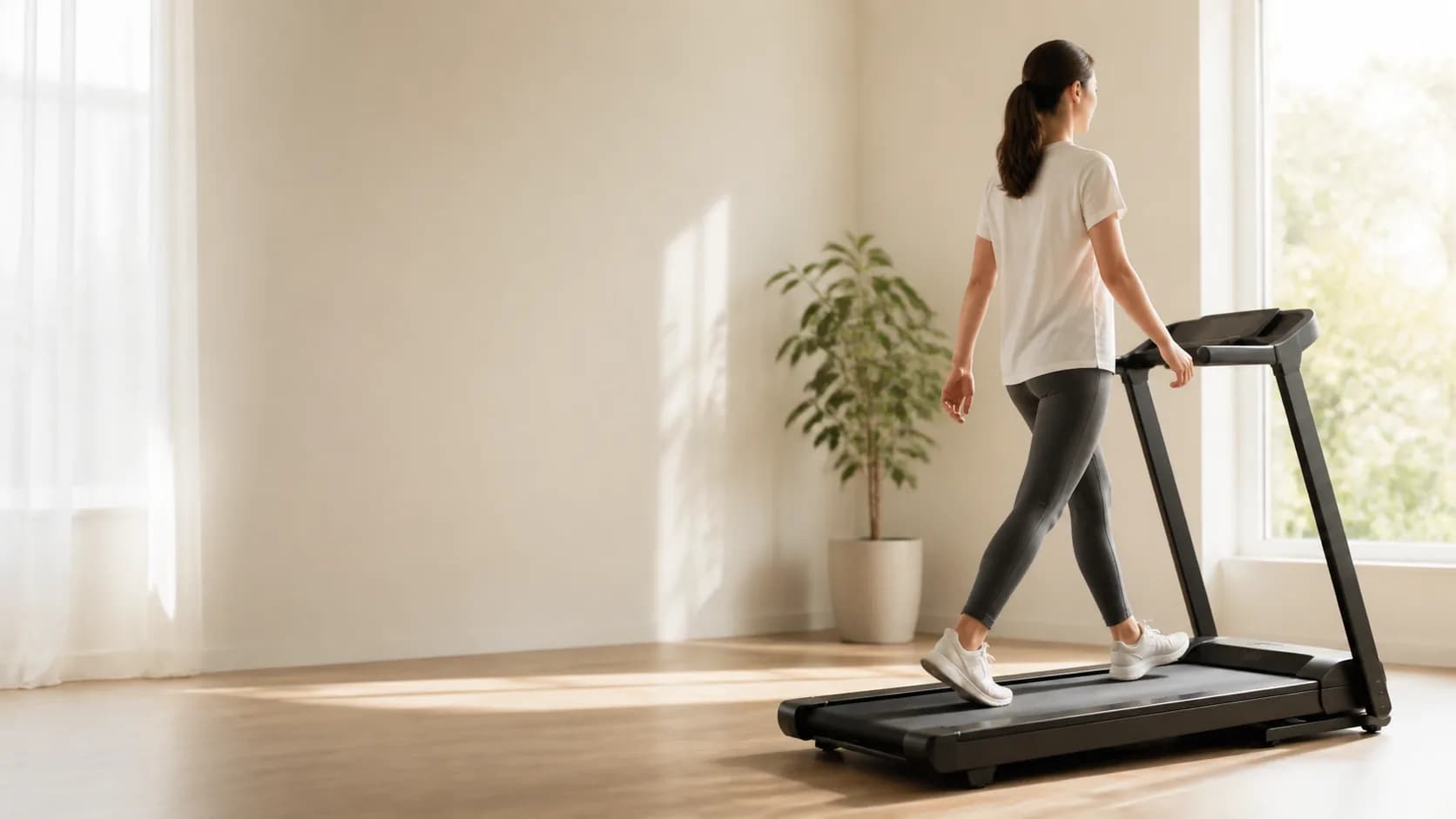
Fasted walking means walking before eating, often first thing in the morning. Some people enjoy it because it is quiet, simple, and easy to schedule. It is not a requirement for fat loss, and it is not automatically a more effective workout.
The important question is whether it helps you keep a healthy routine. If it leaves you dizzy, ravenous, or unable to exercise consistently, eating first is the better choice.
What changes when you walk before breakfast
Your body uses a mix of fuel sources at all times. An overnight fast can change the proportion of fuel used during an easy walk, but that does not guarantee greater long-term fat loss. Weight change is influenced by the overall pattern of energy intake, activity, sleep, and adherence over time.
| Situation | A practical choice |
|---|---|
| You feel fine walking easily before breakfast | A short pre-breakfast walk may suit your routine. |
| You feel shaky, nauseated, or light-headed | Eat, hydrate, or choose another time. |
| You plan a hard or long workout | Fueling beforehand may support performance and comfort. |
| You use glucose-lowering medication or have diabetes | Get individualized guidance before fasted exercise. |
How to try it conservatively
Start with 15–20 minutes at a conversational pace. Bring water if weather or duration calls for it. Eat a normal balanced meal afterward rather than treating the walk as permission to skip recovery or overcompensate later.
Do not combine a first fasted walk with new hills, weighted walking, or hard intervals. You are testing a timing preference, not proving toughness.
A better way to judge results
After two weeks, ask:
- Did I complete more walks than usual?
- Did I feel alert and steady during them?
- Did it make breakfast, hunger, or mood harder to manage?
- Would I willingly repeat this next month?
If the answer is no, move the walk to another time. The “best” walking time is usually the one that keeps the habit intact.
Stepsly can help you observe the consistency of your walking through goals, history, and trends. It does not measure fasted state, calorie intake, or fat loss, so do not use a step total as proof that a fasting approach is working.
You may also find morning walk benefits, the best time to walk for weight loss, and the Walking Calorie Calculator helpful.
What fasted walking does not prove
Seeing a lower or higher calorie number, a particular heart rate, or a different feeling of hunger after a pre-breakfast walk does not prove that the walk caused fat loss. Short-term fuel use during activity and long-term body-weight change are different questions. The body adapts to activity, and food intake, sleep, stress, medication, menstrual-cycle changes, and normal water shifts all influence outcomes.
That is why a fasted walk should be treated as a scheduling preference. If it makes a morning routine easier, it may be useful. If it causes an evening overeating pattern, poor concentration, low mood, or skipped walks, it is not the “more disciplined” option—it is simply a poor fit.
| Common claim | More accurate way to think about it |
|---|---|
| “Fasted always burns more fat.” | Fuel use during one session does not guarantee long-term fat loss. |
| “Breakfast ruins the walk.” | Eating before activity may improve comfort or performance for some people. |
| “Feeling hungry means it worked.” | Hunger is a body signal, not a marker of exercise quality. |
| “I should walk longer because I fasted.” | Start with the same easy duration you tolerate at other times. |
| “Skipping food balances the calories.” | Compensatory patterns can make eating and movement less sustainable. |
Make the first test deliberately easy
Choose a familiar route near home, daylight if possible, and a conversational pace. Have water available in warm conditions. Do not make the first test coincide with a hard workday, travel, a long hike, a new treadmill workout, or a period of illness. The purpose is to learn your response, not to stack challenges.
Afterward, eat according to your normal routine. A balanced meal or snack that suits your preferences and needs is more useful than rigid rules about “earning” food. If you walk before breakfast because of time, prepare something portable the night before if that prevents an uncomfortably long delay in eating.
Who should not experiment without advice
Some situations require more than a generic walking article. People who use insulin or other glucose-lowering medication, have diabetes, are pregnant, have a history of hypoglycaemia, manage an eating disorder or disordered eating, have an illness that affects intake, or have been told to follow a specific nutrition plan should get individual clinical guidance before fasted exercise. In these contexts, the timing of food and medication can affect safety.
Stop and eat, hydrate, rest, or seek help as appropriate if you feel shaky, confused, faint, unusually weak, nauseated, or unable to continue safely. Chest symptoms, fainting, and severe shortness of breath deserve urgent attention. Do not try to finish the route because a plan or streak says you should.
A normal morning walk is enough
You can receive the general benefits of walking after breakfast, at lunch, after work, or in short bursts. The current physical-activity guidance does not require fasting or a specific time of day. A 10-minute walk that happens regularly is more valuable than an optimized morning ritual you avoid after one bad experience.
If tracking is helpful, use it to identify consistency: how often you moved, whether the route felt comfortable, and whether your schedule supported recovery. If tracking reinforces restriction, guilt, or compulsive behavior, reduce it and seek support. Health routines should leave room for meals, relationships, work, and rest.
Questions to ask before making it a routine
| Question | Why it matters |
|---|---|
| Am I choosing this because it is convenient or because I feel I must “earn” food? | Motivation can reveal whether the habit is supportive or restrictive. |
| Can I complete the walk safely without symptoms? | Comfort and stability are more important than timing. |
| Does it change my eating or mood later in the day? | A morning routine affects more than the first 20 minutes. |
| Can I walk after eating instead when necessary? | Flexibility is a sign of a sustainable habit. |
| Would I recommend this rigid rule to a friend with my health history? | It helps expose unrealistic expectations. |
For some people, a small snack before a longer or more intense walk feels better. For others, a brief easy walk before breakfast is comfortable. Both can fit a healthy routine. There is no need to label one approach virtuous and the other a failure.
Keep nutrition claims proportionate
No walking schedule substitutes for assessment of an eating pattern, medication plan, or health condition. If weight loss is a goal, gradual, multifactorial planning is safer than trying to create the largest possible fasting window. The NIDDK Body Weight Planner (opens in a new tab) can be an educational starting point for adults, but individual care from a registered dietitian or clinician may be more appropriate, especially where health conditions or eating concerns are involved.
The best time to walk is the time that supports nourishment, safety, and consistency—not the time with the strongest online claim.
Keep mornings flexible
Life changes the usefulness of a pre-breakfast walk. A poor night of sleep, travel, unusual heat, illness, a later-than-normal dinner, or an early appointment may make a different time more sensible. Build a routine with alternatives: an easy after-breakfast loop, a ten-minute lunch break, or a short after-dinner stroll. That flexibility protects the habit from becoming an all-or-nothing rule.
If you use a reminder, frame it as an invitation rather than a demand. “A short walk is available” is more sustainable than “I failed the plan.” It is also okay to choose rest. No single morning determines health, fitness, or weight change.
What to record if you are testing timing
For one or two weeks, note whether the walk happened, approximate duration, perceived effort, hunger or symptoms during and afterward, and whether it changed the rest of the day. Avoid recording every calorie or trying to compensate for the result. The goal is to identify a supportive time window, not to turn fasting into a performance metric.
When patterns are unclear or concerns persist, bring those notes to a clinician or registered dietitian. Individual advice is more valuable than extending a self-experiment that does not feel safe or manageable.
For additional planning context, see walking and a 10-pound goal and realistic walking weight-loss timelines.
Sources, notes & disclaimers
-
Planning doses use the Physical Activity Guidelines for Americans (opens in a new tab): 150–300 moderate weekly minutes plus strength work on 2 days for most adults who can safely do so.
-
The U.S. Physical Activity Guidelines (opens in a new tab) emphasize regular activity, not a required time of day or fasting state.
-
This article is general education, not nutrition or medical advice. Do not begin fasted exercise without individualized advice if you are pregnant, have diabetes, use glucose-lowering medication, have a history of disordered eating, or have another condition affected by fasting.