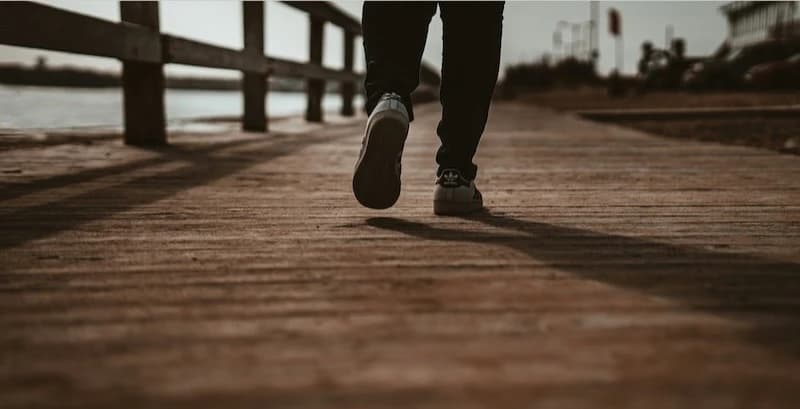
Walking 10 km, about 6.2 miles, can involve a large range of estimated calorie expenditure. No single number applies to everyone. It depends on body size, pace, elevation, terrain, weather, walking efficiency, and the algorithm or formula behind the number.
For most people, the most useful output is a transparent range. It can help you plan a long outing and understand how effort changes by route. It should not be used to prescribe food, guarantee weight loss, or prove that a day of movement was good enough.
10 km calorie estimates by body weight
Assumption: level-ground walking at 3.5 mph / 4.8 MET.
| Body weight | Estimated calories for 10 km |
|---|---|
| 120 lb / 54 kg | about 488 kcal |
| 150 lb / 68 kg | about 608 kcal |
| 180 lb / 82 kg | about 732 kcal |
| 200 lb / 91 kg | about 814 kcal |
Distance alone cannot calculate calories
Two walkers can cover 10 km in dramatically different ways. One may move steadily on a flat path; another may climb hills, stop often, or use a slower pace because of an injury or mobility aid. A model that only knows distance will miss important context.
| Input | Why it matters |
|---|---|
| Time and pace | Intensity and duration both influence the estimate. |
| Body-weight input | Many standard formulas scale estimates with body mass. |
| Route elevation and surface | Uphill and uneven routes change the work required. |
| Environmental conditions | Heat, wind, and cold can alter perceived and physiological effort. |
| Method | Device values and web calculators make different assumptions. |
Even high-quality tools estimate rather than directly measure energy use. A lab metabolic test is a different kind of measurement and still may not reproduce your everyday route.
Run a sensible estimate
Use the walking calorie calculator with your normal pace and realistic route. Then test one alternative scenario, such as a hillier day. Keep the outcome as a range in your notes rather than treating the center number as exact.
At 5 km/h, a 10 km walk is about two hours of moving time. At 4 km/h it is about two and a half hours; at 6 km/h it is around one hour forty minutes. The walking-time calculator can assist with planning, but water, shade, breaks, route exits, and weather deserve equal attention.
A 10 km walk is a long session for many people
Because of its duration, 10 km merits more preparation than a short neighborhood loop. If you are building toward it, add time gradually to one weekly long walk and make the route familiar first. Test shoes, carry water when conditions warrant it, and leave enough time to turn around or end early.
Do not use an estimated calorie figure to push past warning signs. Stop and get urgent help for chest pressure, fainting, or severe shortness of breath. Persistent or worsening pain, limping, swelling, or unusual fatigue deserves an adjusted plan and appropriate clinical advice.
Better uses for the number
| Instead of… | Try… |
|---|---|
| “I must burn a specific total.” | “I will choose a route and pace I can recover from.” |
| “I can eat exactly what the device reports.” | “I will follow a sustainable eating pattern and treat the estimate as uncertain.” |
| “More calories means a better walk.” | “I will consider comfort, safety, enjoyment, and consistency.” |
| “I should do 10 km every day.” | “I will make long walks one option in a varied week.” |
The general activity guideline is expressed in weekly time and intensity, not in a required calorie burn. A shorter walk can be valuable; a rest day can be appropriate; strength work and ordinary daily movement have roles too.
Plan the long walk around real conditions
Ten kilometres can be a long session. Before using a calorie figure at all, check the route, terrain, shade, water, bathrooms, daylight, communication, and a way to shorten the outing. A flat, familiar route at an easy pace may be sensible; a new hilly route in heat may not be. The estimate cannot account for safety or your current recovery.
| Situation | Better decision than chasing an estimate |
|---|---|
| You are new to longer walks | Build time gradually through shorter routes. |
| The weather is challenging | Change route, timing, distance, or activity. |
| You have an active job day | Consider whether recovery is more valuable than extra miles. |
| The device reports a surprising number | Treat it as a model result, not a food or fitness verdict. |
| Symptoms appear | Stop, adjust, and obtain appropriate advice. |
Use scenarios without pretending they predict the scale
Run one realistic flat-route scenario and one hillier or slower scenario. The difference is a reminder that the estimate has uncertainty. It is not a reason to select the largest value, to “eat back” the number, or to assume a particular amount of fat loss. Body weight responds to a wider, changing system that includes eating, sleep, stress, medication, illness, and many individual variables.
If a weight goal is important, focus on a sustainable activity and eating pattern over time, with individualized support as needed. If tracking starts to produce guilt, compulsive exercise, food restriction, or binge/restrict cycles, stop using calories as a target and seek help from a qualified professional.
Keep recovery in the plan
After a 10 km walk, look at ordinary function the next day. Are stairs, errands, and gait comfortable? Are there blisters, swelling, or pain that increases? These details matter more than the calculator’s output. Alternate longer outings with shorter walks, strength work, other movement, or rest as appropriate. Long-term consistency comes from a week that leaves you able to live normally, not from maximizing one route’s calorie display.
Give the estimate an appropriate job
The fairest use of a 10 km calorie estimate is to understand why two routes feel different or to plan a long day with reasonable expectations. It is not a receipt for eating, a daily minimum, or a prediction of body-weight change. Set that boundary deliberately before tracking, especially if numbers tend to make exercise or food feel rigid.
For a personal reference, compare several similar routes using the same calculator or device. Keep the output as a broad range next to practical details: moving time, pauses, surface, weather, footwear, and recovery. Over time, these notes may help you pick a route that is enjoyable and repeatable. They will not turn the model into direct metabolic measurement.
If a display creates guilt, pressure to compensate, or a belief that rest is undeserved, choose a different metric. Track minutes outdoors, a route completed, general effort, or the habit of taking a break from sitting. The most useful feedback is the kind you can look at without harming your relationship with food or movement.
Preserve the useful part of the plan
If the 10 km route proves too long to repeat often, you do not need to abandon walking. Retain a shorter segment, choose a flatter route, split the walk across the day, or use the long outing only occasionally. A lower estimated expenditure does not make the activity less legitimate. It may be the version that fits your feet, schedule, and recovery well enough to become a lasting habit.
Review the week rather than one display. Did you move in ways you enjoyed? Were you able to sleep, eat regularly, and meet your responsibilities? Did the plan support or undermine your wellbeing? Those questions are a better compass than trying to optimize an uncertain number.
Keep the estimate in its modest role: a rough educational input only, never a judgment about what you deserve to eat, how hard you should train, or whether the day was a success.
Stepsly is an iPhone app that uses Apple Health data to show steps, goals, history, and widgets. It can help you observe how a long route affects your step pattern. It does not directly measure calories, recommend a diet, or determine whether a 10 km route is right for you. View Stepsly on the App Store (opens in a new tab).
Explore how long a 12 km walk can take, calories from walking 5 miles, and how many miles to walk to lose weight for related planning.
Sources, notes & disclaimers
-
Planning doses use the Physical Activity Guidelines for Americans (opens in a new tab): 150–300 moderate weekly minutes plus strength work on 2 days for most adults who can safely do so.
-
Compendium of Physical Activities (opens in a new tab) provides activity-intensity references commonly used in calorie-estimation methods.
-
NIDDK: eating and physical activity for weight management (opens in a new tab) puts activity in the context of broader weight-management factors.
-
Physical Activity Guidelines for Americans, 2nd edition (opens in a new tab) sets general time- and intensity-based activity guidance.
-
This is general education, not medical or nutrition advice. Speak with a qualified professional about personal calorie needs, medical conditions, medication questions, symptoms, or disordered-eating concerns.