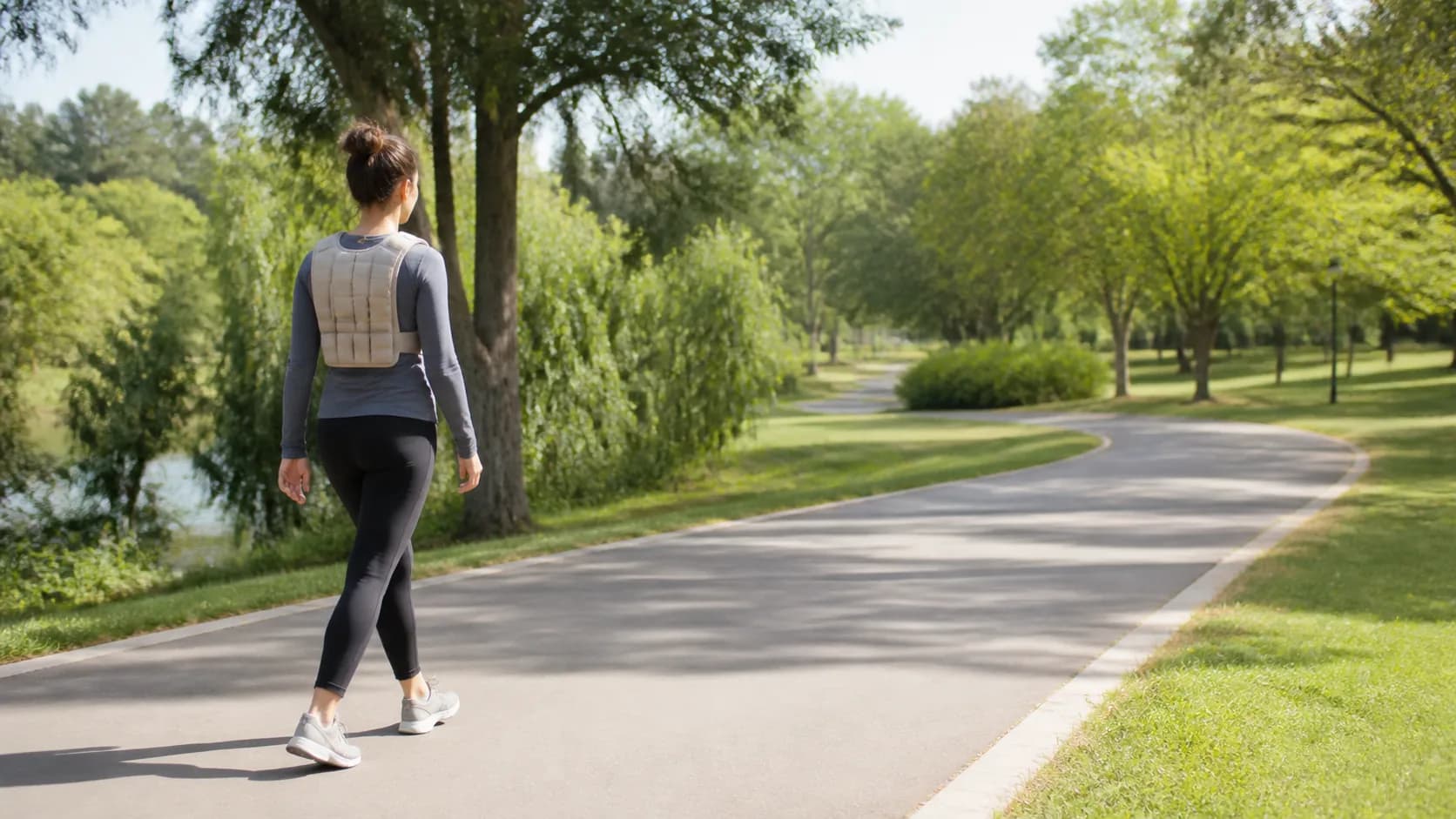
A HIIT walking workout alternates deliberately brisk walking with easier recovery walking. It can raise the challenge of a normal walk without requiring running, jumping, or a complicated routine.
The word “HIIT” is often overused. A useful walking interval session should contain real recovery. If every minute feels like a sprint, the workout is probably too hard to repeat safely or consistently.
The simplest interval structure
| Segment | Beginner | Intermediate | Treadmill option |
|---|---|---|---|
| Warm-up | 5 min easy | 5 min easy | Flat, easy pace |
| Work | 1 min brisk | 2 min brisk | Add a small incline or speed increase |
| Recovery | 2 min easy | 2 min easy | Return to flat/easier pace |
| Repeats | 5 | 6–8 | 5–8 |
| Cool-down | 5 min easy | 5 min easy | Flat, easy pace |
Brisk means you notice your breathing and can only manage short phrases. Recovery means you can regain control before the next work section. Use a timer with a gentle alert so you are not checking your phone constantly.
Why intervals can be useful
Intervals give a walk some structure. They can help people who get bored with one pace, have limited time, or want to practice walking briskly without holding that effort for an entire session. They are not a requirement for weight loss or fitness. A steady walk remains valuable.
Three ways to make the work interval harder
- Walk faster. Keep steps short and upright rather than overstriding.
- Add a gentle hill. Outdoors, use a short rise; on a treadmill, change only incline or speed at first.
- Lengthen the brisk block. Add time before adding more intensity.
Do not combine all three in a single progression. The most common mistake is increasing speed, grade, interval length, and weekly frequency at once.
A 20-minute outdoor routine
Walk easily for four minutes. Then repeat five times: one minute brisk, two minutes easy. Finish with one minute easy. The session is short enough to fit a lunch break and controlled enough to repeat twice weekly.
How often should you do it?
For most beginners, one or two interval walks each week is enough. Add easy walks on other days. If your calves, feet, knees, or hips are still unusually sore at the next planned session, choose an easy walk instead.
Stepsly can help you see the habit around the workout—daily movement, goals, streaks, history, and trends. It is not an interval timer or a clinical training tool, so use your own timer and adjust based on how your body responds.
For less intense options, read fun walking workouts for cardio, the benefits of walking in short bursts, or use the Walking Pace Calculator.
Use effort, not a borrowed speed
An interval that is brisk for one person may be an easy warm-up for another. That is why treadmill speeds, outdoor pace, and step rate should be chosen after you notice your own breathing and form. During the work segment, you should feel purposeful but controlled. During recovery, breathing should begin to settle before the next effort starts.
| Signal | Work interval | Recovery interval |
|---|---|---|
| Conversation | Short phrases are possible. | Full sentences are comfortable. |
| Posture | Upright, relaxed shoulders, natural arm swing. | Same form with less urgency. |
| Foot contact | Controlled steps, no rushing or grabbing rails. | Comfortable enough to reset. |
| Next-day response | Mild fatigue that resolves. | No need to “make up” missed work. |
If the work block turns into breath-holding, leaning heavily on handrails, or an unstable hurried gait, reduce speed or grade. Intervals work because effort changes; they do not require an all-out effort.
Three sessions that solve different problems
The return-to-movement session
Walk five minutes easily. Alternate 30 seconds a little faster with 90 seconds easy for six rounds, then cool down for five minutes. This is for someone who wants the variety of intervals but has not yet established a steady 20-minute walk. The faster section should feel like a purposeful crossing-the-street pace, not a sprint.
The lunch-break session
Warm up for four minutes. Complete six rounds of one minute brisk and one minute easy, then cool down for four minutes. Choose a route with fewer crossings if possible. If traffic lights interrupt the session, simply resume the next interval when it is safe rather than trying to compensate.
The gentle-hill session
After a five-minute flat warm-up, use four rounds of 90 seconds on a gentle rise and two minutes flat. Keep the uphill pace deliberately slower than you expect. This version changes resistance without needing to run, but it can be demanding on calves and Achilles tendons, so it is not the first choice for everyone.
Put intervals in a week that has easy days
A productive walking week has room for ordinary movement. A beginner can start with one interval session and two or three easy walks. Someone established with walking might do two interval days separated by easy days. More is not automatically better; interval work is valuable because it adds contrast.
| Example day | Purpose |
|---|---|
| Monday | Easy 20–30 minute walk. |
| Tuesday | Short interval walk. |
| Wednesday | Rest, strength work, or gentle everyday movement. |
| Thursday | Steady walk with no timed pressure. |
| Friday or Saturday | Optional second interval session only if recovered. |
| Weekend | Comfortable social or outdoor walk. |
If you are also beginning strength training, a long hike, or running, leave extra recovery room. Starting multiple new stressors at once makes it difficult to know what caused pain or fatigue.
How to progress without turning every walk into HIIT
Repeat a session until it feels ordinary. Then select one small progression: add one repeat, make one work block 30 seconds longer, or slightly increase a treadmill grade. Keep the recovery duration the same initially. If you cannot finish the added work with stable form, return to the previous version.
Use an easy walk as the default response to a poor sleep, unusual soreness, heat, illness, or a demanding week. Consistency includes knowing when not to intensify. An app’s streak or goal should never turn into a reason to override symptoms.
When to choose a different approach
Steady walking may be better than intervals if timing makes you anxious, you are learning to walk after a fall or injury, or you have a condition where intensity needs individualized advice. Get urgent help for chest pressure, fainting, or severe shortness of breath. For new joint swelling, worsening pain, unusual dizziness, or a health condition that affects exercise safety, stop and consult an appropriate professional before continuing.
Make the session easier to repeat
Preparation can determine whether an interval walk becomes a routine. Choose a route with a safe turnaround and fewer unpredictable crossings, use shoes you have already walked in, and decide the number of rounds before you start. On a treadmill, put water and a towel within reach, check that the safety key is attached if your model uses one, and make setting changes while holding a stable posture rather than while distracted.
After the session, write down just three things: total time, the work/recovery pattern, and how it felt one hour later or the next morning. This gives you useful information for the next session without turning exercise into elaborate tracking. If a repeat feels markedly harder under similar conditions, take an easy day. Changes in sleep, heat, stress, illness, and terrain are normal reasons for effort to vary.
Interval walking can support an active week, but it does not need to carry the whole plan. Easy walks, strength work, and rest are part of the same routine.
A calmer finish is a useful sign that the interval dose was right. Slow down for several minutes, let breathing return close to normal, and avoid judging the workout from the highest heart-rate or step number alone. The next session is the real test of whether this one was sustainable.
If you cannot comfortably repeat the session next week, it was too ambitious—not a missed opportunity.
For additional planning context, see undefined and walking 45 minutes a day.
Sources, notes & disclaimers
-
Planning doses use the Physical Activity Guidelines for Americans (opens in a new tab): 150–300 moderate weekly minutes plus strength work on 2 days for most adults who can safely do so.
-
Adults can meet weekly activity guidance through moderate, vigorous, or a combination of both: U.S. Physical Activity Guidelines (opens in a new tab).
-
This article is general educational information, not individualized training or medical advice. Stop for concerning symptoms or worsening pain, and seek professional guidance if health conditions or injuries affect safe exercise intensity.