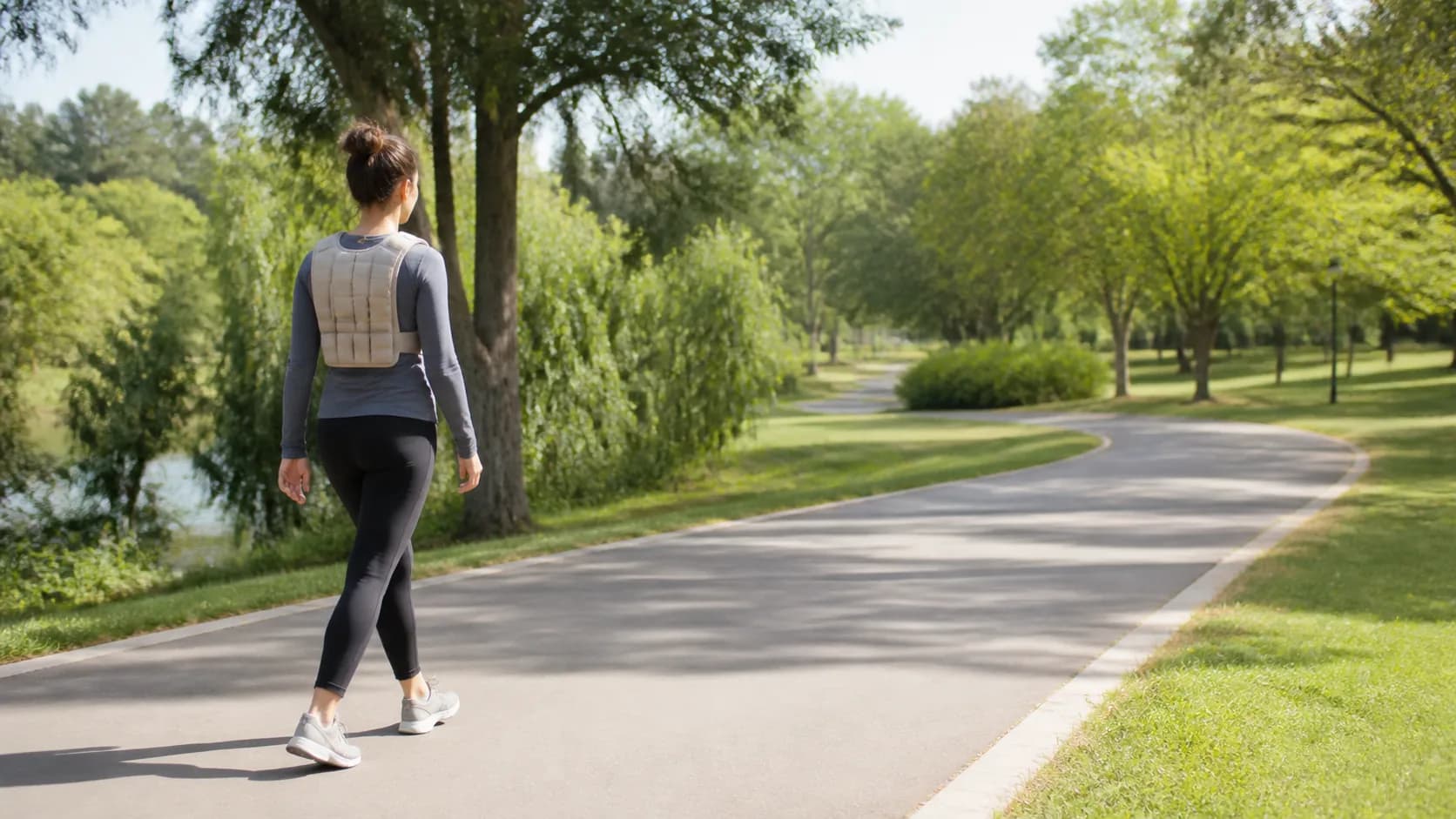
Japanese interval walking is an approachable way to make a walk feel more structured without running. The basic pattern is simple: alternate three minutes of comfortably hard walking with three minutes of easy walking, then repeat.
It is not a test of how uncomfortable you can make yourself. The fast sections should feel clearly more demanding than your usual stroll; the easy sections should leave you ready to repeat the next one with controlled form.
Where the method comes from
The approach is commonly associated with interval walking research that alternated low- and higher-intensity three-minute bouts. Research protocols are more precise than a casual outdoor walk: participants may receive intensity guidance based on testing, and studies are conducted under defined conditions. That is useful context, because copying a research schedule exactly is not required for a helpful personal routine.
For everyday walkers, the three-minute pattern is a memorable structure that can make a moderate walk less monotonous and easier to progress.
What one interval feels like
| Segment | Effort cue | You should be able to… |
|---|---|---|
| Easy, 3 minutes | Relaxed but moving | Speak easily and settle your breathing. |
| Brisk, 3 minutes | Purposeful and challenging | Speak in short phrases; maintain good posture. |
| Repeat | Controlled | Begin the next brisk block without sprinting to catch up. |
If three brisk minutes are too much, use one-minute or two-minute blocks. If you are already active, increase the number of repeats before making the brisk section harder.
Your first 24-minute session
- Walk easily for five minutes.
- Complete three rounds of three minutes brisk and three minutes easy.
- Walk easily for one final minute, then notice how your legs, breathing, and joints feel.
That is only 24 minutes, including warm-up and cool-down. It is enough to learn pacing without turning the session into an all-or-nothing workout.
Choose a route that lets you control your pace. A park loop, quiet sidewalk, treadmill, or indoor corridor is usually easier than a route with frequent crossings and unpredictable crowds.
How brisk is brisk enough?
You do not need a fixed speed. A 3.5 mph walk can be hard for one person and easy for another. Use effort instead:
- Your arms swing naturally rather than tensing at your sides.
- Your stride remains short enough that you are not reaching or leaning back.
- Breathing is stronger, but you can regain control during the easy interval.
- You finish the workout feeling worked, not wrecked.
Hills and treadmill incline can make the brisk portion harder without forcing a faster leg turnover. Introduce them only after the flat version feels comfortable.
Four-week progression
| Week | Frequency | Work intervals | Adjustment |
|---|---|---|---|
| 1 | 2 days | 3 x 3 minutes | Keep all brisk intervals below an all-out effort. |
| 2 | 2–3 days | 4 x 3 minutes | Add one repeat, not speed. |
| 3 | 3 days | 4–5 x 3 minutes | Use a slightly hillier route once if joints feel good. |
| 4 | 3 days | 5 x 3 minutes | Keep one ordinary easy walk on another day. |
Interval days do not replace every other kind of activity. Easy walking, strength work, rest, and ordinary daily movement still have a place in a sustainable week.
Who should scale back
Start more gently or seek personalized advice if you have new chest symptoms, dizziness, uncontrolled blood pressure, an unstable joint injury, or a condition that changes your safe exercise intensity. Pregnancy, recent surgery, and medication that affects heart rate are all reasons to use clinician-specific guidance rather than a generic interval target.
For sore knees or feet, shorten the brisk blocks, choose a flatter surface, and keep the easy walking truly easy. Pain that worsens as you continue is not a cue to push through.
Make the habit easier to repeat
Preparation matters more than a complicated tracker. Choose two recurring days, set out comfortable shoes, and decide where you will walk before your day becomes busy. A timer with gentle chimes is enough to run the intervals.
If visible progress motivates you, Stepsly can help you keep an eye on daily movement, goal streaks, history, and trends from your iPhone. Treat the app as a habit cue and record of consistency—not as a substitute for listening to your body.
You may also like fun walking workouts for cardio, a walking workout for people who hate exercise, and the Walking Time Calculator.
Turn the research idea into a personal plan
The three-minute pattern is memorable, but the research label should not make the session feel more exact than it is. You do not need laboratory testing, a prescribed cadence, or a perfect heart-rate reading for a useful walk. You need an effort change you can recognize and a recovery interval that actually restores control.
If you are new to exercise, start with two rounds instead of three. If you are already comfortable with a 30-minute steady walk, add a fourth round before making the brisk block faster. If a route has traffic lights or crowds, let the timer pause or accept the interruption. The method supports walking; walking does not need to serve the timer.
| Situation | Practical modification |
|---|---|
| Hot or humid day | Make the brisk segment shorter or choose an indoor option. |
| Hilly route | Use the rise as the brisk cue, but slow down enough to control breathing. |
| Treadmill | Change speed or incline, not both, and keep the rails free for emergencies. |
| Joint discomfort | Use shorter work blocks and a flatter surface, or choose steady easy walking. |
| Busy schedule | Do one or two rounds; a smaller session can still maintain the habit. |
Warm-up and cool-down are not filler
The easy minutes before and after the intervals help you assess how your body feels and transition out of higher effort. Start slow enough that you can notice any stiffness, balance issue, or unusual breathlessness before the first brisk block. End slow enough that breathing settles and your calves and feet can relax before you return to errands, driving, or desk work.
On a treadmill, do not step off until the belt has fully stopped. Outdoors, give yourself a few quiet minutes before crossing a busy road or heading into a cold environment. These ordinary details make the session safer without making it complicated.
Progress by quality, then quantity
Repeat a version until every brisk block feels controlled: no breath-holding, no overstriding, no grabbing railings, and no next-day pain that changes normal walking. Then add a single repeat or one extra session in the week. Avoid adding distance, incline, speed, and frequency together. The body does not care that the calendar calls it week three; it responds to the actual load.
Track a few notes—number of rounds, route, how the work intervals felt, and next-day recovery. Your phone’s step total will not show whether an interval was truly comfortable or whether a hill made the session disproportionately hard.
Fit it around ordinary life
An interval routine works best when it has a predictable place: perhaps a park loop on Tuesday and Thursday, a treadmill after work, or a walking meeting route with a timer. Pair it with easy days. A hard interval session after a long standing shift, a poor night of sleep, or a demanding hike may not be the right choice.
Use rest proactively. Severe shortness of breath, chest pressure, fainting, new joint swelling, or pain that worsens during the session are reasons to stop. For recurring pain, relevant heart conditions, medication changes, or other activity limits, choose individualized guidance rather than a generic three-minute formula.
Keep the goal modest and specific
Rather than deciding that interval walking must transform every metric, choose one outcome you can observe: complete two sessions this week, make the brisk blocks feel less rushed, or find a route that does not require constant stops. Once that is stable, decide whether a small progression is useful. This protects the method from becoming another all-or-nothing fitness rule.
The pattern remains useful even after you stop timing it exactly. A few purposeful minutes followed by easy walking can become a natural way to vary a familiar route.
For additional planning context, see HIIT walking and walking 45 minutes a day.
Sources, notes & disclaimers
-
Planning doses use the Physical Activity Guidelines for Americans (opens in a new tab): 150–300 moderate weekly minutes plus strength work on 2 days for most adults who can safely do so.
-
A randomized trial of interval walking used alternating three-minute low- and higher-intensity walking bouts in older adults: PubMed abstract (opens in a new tab).
-
U.S. activity guidance emphasizes accumulating regular moderate or vigorous movement over the week: Physical Activity Guidelines (opens in a new tab).
-
This is general educational information, not a medical prescription. Stop if you develop concerning symptoms, and ask a qualified clinician about a safe intensity if you have a medical condition, recent procedure, injury, or medication that affects exercise tolerance.