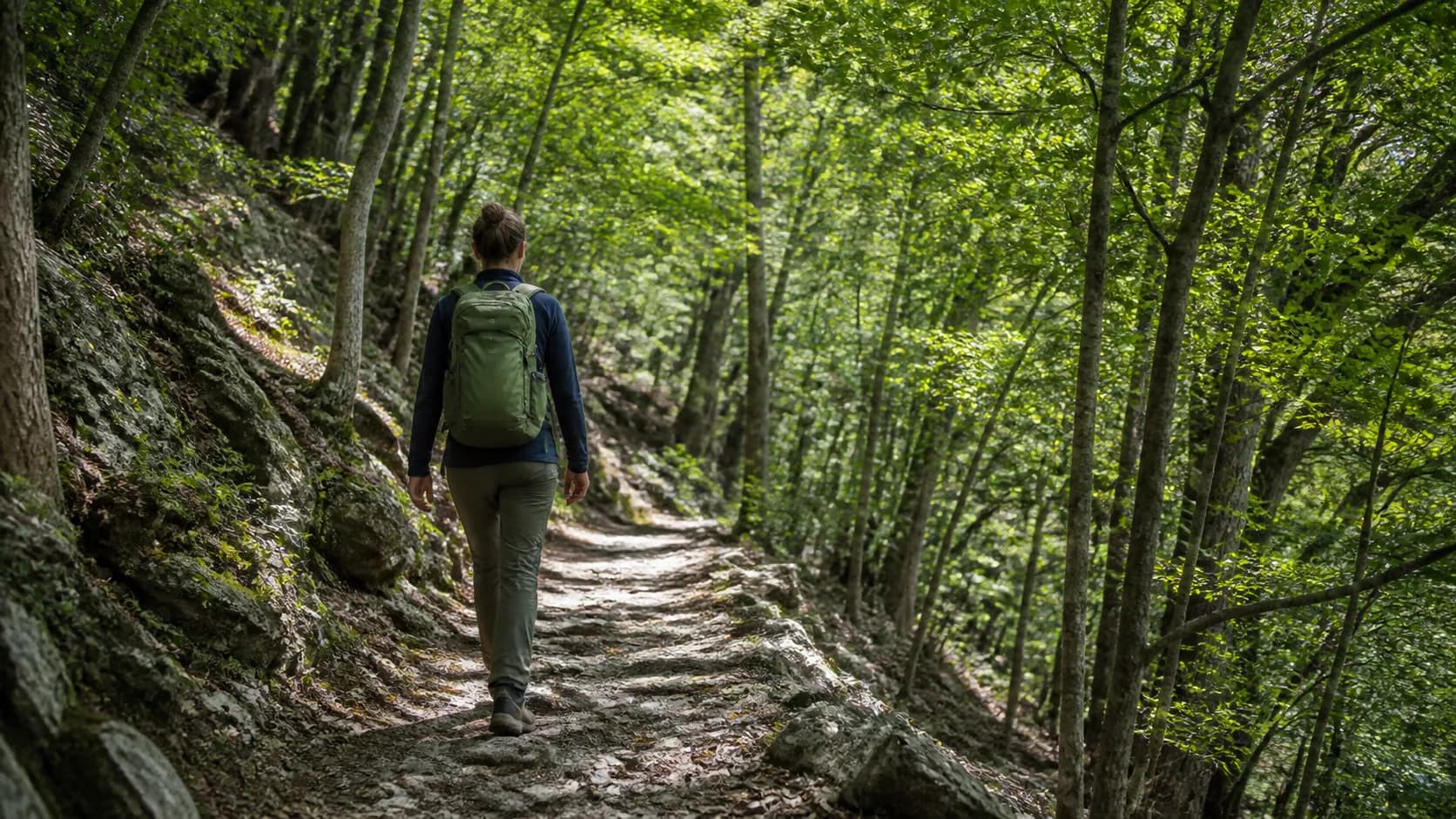
Hiking can burn very different amounts of energy from one trail to another. Distance alone is not enough to calculate it: elevation gain, uneven ground, pace, body size, pack weight, temperature, altitude, stops, and navigation all change the demand.
That is why a trail-app or wearable calorie total should be treated as a planning estimate. It can help you compare routes and prepare for duration; it cannot precisely measure your metabolism or justify a particular food intake.
Why hiking is harder to estimate than a flat walk
On a paved flat route, pace and distance already vary between people. Hiking adds terrain and elevation. A 5 km rolling woodland trail, a 5 km steep mountain climb, and a 5 km rocky descent can have similar map distances but entirely different duration and perceived exertion.
| Trail factor | What it can change |
|---|---|
| Elevation gain and loss | Climbing usually raises effort; long descents can load knees and muscles. |
| Surface | Roots, rocks, mud, snow, and sand affect pace, balance, and energy cost. |
| Pack and equipment | Carrying more can change the effort and fatigue of the outing. |
| Weather and altitude | Heat, cold, wind, and elevation may change perceived exertion and safety needs. |
| Stops and navigation | Moving time can be very different from the elapsed time of a hike. |
The Compendium of Physical Activities lists different intensity values for types of hiking, but those values are still population-level references. A single value cannot fully describe your terrain, body, and day.
Plan the hike before you estimate calories
Begin with route details: distance, total ascent, surface, weather, daylight, water availability, navigation, cell coverage, and turnaround options. For a new trail, route safety and duration should take priority over a calorie estimate.
The walking calorie calculator is more appropriate for ordinary walking than technical or steep hiking. If you use it for a gentle trail, label the result as a rough lower-context estimate. Do not use it as a substitute for trail-specific preparation.
Fuel and hydration are not a reward system
Long or warm hikes may require food and hydration planning. That need is driven by duration, conditions, your usual needs, and medical context—not by making an app number line up with a snack. Consider carrying water, choosing familiar foods for longer outings, and using local safety guidance for the route.
For people with diabetes, heart or kidney conditions, medications that affect fluid balance, pregnancy-specific needs, or prior heat illness, personalized clinical guidance can be especially important. A hiking calorie estimate cannot cover those circumstances.
Build time on your feet gradually
If you are new to hiking, choose a well-marked, short, low-technicality route. Increase only one challenge at a time: length, elevation, uneven surface, or pack weight. This makes it easier to learn what your knees, feet, balance, and recovery tolerate.
| Starting point | A useful first focus |
|---|---|
| Mostly indoor or paved walking | Try a short accessible trail with a known turnaround. |
| Comfortable local walks | Add gentle uneven ground before steep elevation. |
| Regular easy hikes | Test longer duration with water and route exits. |
| More technical ambitions | Learn local conditions and use route-specific safety resources. |
Do not push through chest pressure, fainting, severe shortness of breath, confusion, or heat illness symptoms. For persistent joint pain, swelling, repeated falls, or a new gait change, stop the progression and seek appropriate care.
Let route safety lead the plan
Before a hike, the key question is not the estimated burn. It is whether the route and conditions match your experience, equipment, time, and support. Check official local information for closures, weather, trail conditions, permits, water reliability, wildlife guidance, and emergency procedures. Tell someone where you are going when appropriate, carry navigation and communication tools you know how to use, and leave enough daylight margin for an unhurried return.
| Trail reality | Better planning response |
|---|---|
| Distance is short but elevation is high | Plan for slower progress and higher effort than the map distance suggests. |
| Route is unfamiliar | Choose a conservative turnaround and avoid relying only on a calorie or pace estimate. |
| Weather changes | Reroute, postpone, or turn back rather than forcing completion. |
| Pack is new or heavier | Test it on a shorter route before a long hike. |
| Group pace varies | Plan by the group’s needs, not the fastest person’s tracker. |
Use food and water as preparation, not a reward
Long hikes sometimes require specific food and hydration planning, especially in heat or over several hours. That is a safety and comfort issue, not a chance to make estimated calories “balance” a snack. Bring familiar items, know your own medical needs, and follow personalized professional advice where relevant. Alcohol, extreme restriction, or trying to compensate for food with extra distance can make a day outdoors less safe.
If you have diabetes, heart, kidney, or circulation conditions; use medication that affects hydration or blood sugar; are pregnant; have experienced heat illness; or have other health concerns, seek individualized guidance before undertaking conditions that may be demanding. A general article cannot replace that planning.
Review what the hike taught you
After a route, note elapsed time, elevation/terrain, weather, equipment, breaks, navigation needs, and next-day comfort. These observations are more useful for selecting the next hike than a calorie display. They can reveal that a shorter shaded trail is more enjoyable, that a pack needs adjustment, or that you need more recovery between longer outings.
The most sustainable hiking plan includes rest days, easier routes, and activities other than hiking. It does not treat a high estimate as proof that every trail should become longer or steeper. Enjoyment, safety, and a safe return are the real measures of a good day outdoors.
Make conservative decisions before the trail makes them for you
Set a turnaround time, not only a destination. Conditions, group pace, routefinding, and fatigue can make a planned distance impractical. Turning around while you still have time, water, energy, and daylight is a successful hiking decision. It is not wasted effort because a device did not record the distance or calorie total you expected. If the route is remote, unfamiliar, technical, or weather-exposed, the margin for flexibility should be larger.
After the hike, store the practical information for next time: the actual duration, water use, weather, terrain, equipment, and recovery. These notes help choose an appropriate next route and tell you far more about preparation than a calorie display. A helpful hiking record makes the next safe outing easier; it should never become a reason to eat less, carry more, or select a harder trail without the skills and conditions it requires.
Hiking plans also need permission to change on the trail. A slower pace, a group member’s needs, an unexpected closure, wildlife activity, or a worsening forecast may all make a shorter day the right call. That flexibility is an outdoor skill. The route is optional; making a safe, informed return is not. Let the calorie estimate remain background information while navigation, conditions, communication, and group wellbeing lead the actual decisions.
Choose companions, routes, and supplies that match the least-experienced or most cautious person in the group, not the most ambitious tracker. A well-managed shorter hike can build confidence and useful experience for the next outing. No estimate is worth pressuring someone into conditions beyond their comfort or preparation.
That approach also makes it easier to learn gradually, return safely, and keep hiking enjoyable for everyone involved over time.
Stepsly is an iPhone app that uses Apple Health data to show steps, goals, history, and widgets. It may help you see step trends on routes where you carry your iPhone, but it is not a hiking-navigation, emergency, elevation, or calorie-measurement tool. View Stepsly on the App Store (opens in a new tab).
Read calories from walking 10 km, how long a 12 km walk may take, and walking with a weighted vest for related context.
Sources, notes & disclaimers
-
Planning doses use the Physical Activity Guidelines for Americans (opens in a new tab): 150–300 moderate weekly minutes plus strength work on 2 days for most adults who can safely do so.
-
Compendium of Physical Activities (opens in a new tab) includes activity-intensity references for walking and hiking categories.
-
National Park Service: hiking safety (opens in a new tab) offers general preparation and trail-safety advice.
-
CDC: physical activity basics (opens in a new tab) summarizes the benefits of regular activity and general guidance.
-
This article is general education, not trail, wilderness, nutrition, or medical advice. Check local conditions and official trail information, and get individualized advice for medical conditions or questions about safe exertion.