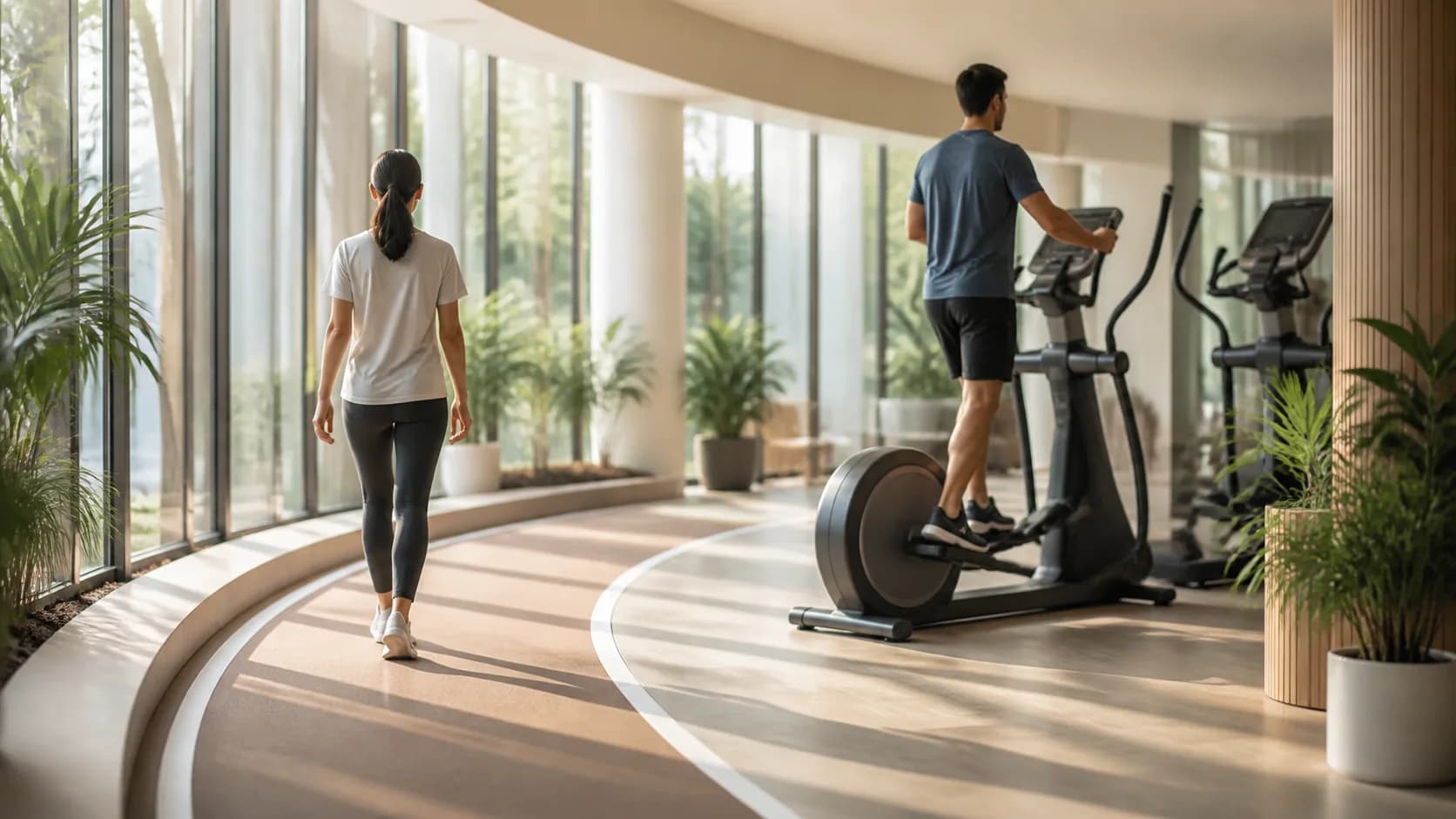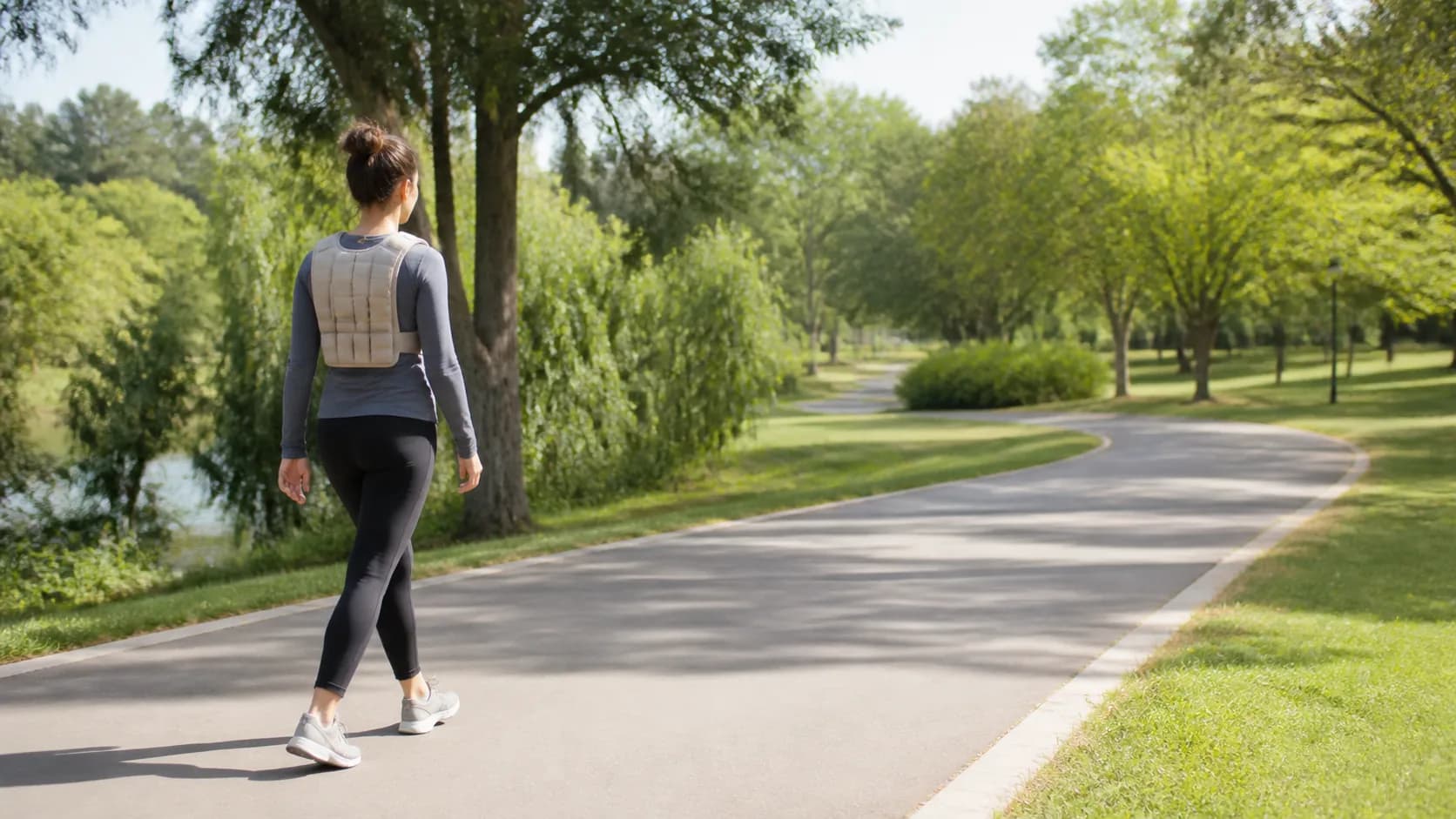
Walking and cycling are both useful forms of aerobic movement. Walking is easy to weave into normal days and naturally contributes to step totals. Cycling can cover more distance in less time and may feel more comfortable for some people who dislike walking impact.
The right choice is the one you enjoy enough to repeat.
| Consideration | Walking | Cycling |
|---|---|---|
| Setup | Shoes and a safe route. | Bike, helmet, maintenance, and safe route or trainer. |
| Daily movement | Easy to combine with errands and breaks. | Often a dedicated session. |
| Steps | Directly contributes to step totals. | Does not translate cleanly into steps. |
| Time | Usually slower over distance. | Can cover distance efficiently. |
| Environment | Sidewalks, parks, indoor routes. | Requires weather, traffic, or indoor-equipment planning. |
Pick walking when
You want an activity that is simple to start, social, and easy to break into short sessions. Walking is especially practical when the barrier is finding time rather than finding intensity.
Pick cycling when
You enjoy riding, want a lower-impact-feeling option, or need a faster way to cover a longer route. Begin with a familiar, safe route or indoor bike setup; the biggest limiter may be traffic confidence, not fitness.
Use both if you can
A mixed week can reduce boredom: walk on workdays, ride once on the weekend, and keep an easy recovery day. You do not need to force all activity into a single metric.
Stepsly is helpful for making iPhone walking progress visible through Apple Health-based steps, goals, history, and widgets. It should not be used to convert cycling distance into an exact step count.
See walking versus running for weight loss, walking versus elliptical, and the Activity to Steps tool for related planning.
Compare the skills and safety needs
Walking is familiar, but route safety still matters: surfaces, crossings, visibility, footwear, and heat can change the experience. Cycling adds equipment, traffic skills, braking, route selection, bike fit, and maintenance. A person may have strong aerobic fitness but not yet be ready to ride on roads, and a person may be comfortable cycling but find a long walk uncomfortable. Fitness is not the only variable.
| Topic | Walking | Cycling |
|---|---|---|
| Technique | Natural gait and route awareness. | Balance, braking, steering, shifting, and road/trail awareness. |
| Equipment | Stable shoes and weather-appropriate clothing. | A maintained bike, helmet, lights/reflectors when needed, and route-specific gear. |
| Route risk | Traffic, poor surfaces, heat, darkness. | All of those plus speed, intersections, and mechanical failures. |
| Indoor backup | Hallways, treadmill, walking pad, or indoor laps. | Stationary bike or trainer, if available. |
Do not choose cycling only because it is “lower impact” if the route makes you anxious or the bike does not fit. Do not choose walking only because it is simple if a persistent condition makes it uncomfortable. The safer option is the one you can perform with confidence and appropriate setup.
Intensity can look different
A casual flat walk, a brisk hill walk, a gentle bike ride, and a hard uphill ride can all feel very different. Time, effort, and recovery matter more than distance alone. Cycling can cover more kilometres quickly, which may make a long ride feel less time-consuming; walking can accumulate naturally through errands and breaks. Neither relationship turns distance into a direct calorie or step conversion.
Use a simple effort check. At moderate intensity, many people can talk but not sing. If breathing is so hard that only a few words are possible, reduce pace, gear, grade, or resistance. Beginners can start with 10–20 minutes and build frequency before chasing route distance or machine metrics.
A mixed week for a real schedule
| Day | Example option |
|---|---|
| Monday | Easy 20-minute walk after work. |
| Tuesday | Short, familiar bike ride or indoor cycling session. |
| Wednesday | Rest, strength work, or ordinary errands on foot. |
| Thursday | Brisk or hill-focused walk. |
| Weekend | Longer comfortable ride or social walk. |
This is a menu, not a prescription. Keep at least some sessions easy while you learn a new activity. If cycling makes you sore in unfamiliar places, adjust saddle/handlebar fit with qualified help rather than adding more time to “get used to it.” If walking brings persistent pain, choose a more comfortable option and seek assessment.
Use steps without diminishing cycling
An iPhone step goal can motivate walking, but it will not fairly represent a bike ride. You do not need to convert every kilometre cycled into an invented number of steps. Keep cycling in a separate activity log or use time and perceived effort as its main measures. The activity-to-steps tool can offer a rough planning comparison, but it cannot make one activity identical to another.
Stepsly is an Apple Health companion for steps and activity presentation. It may show walking trends well; it is not a bike computer, GPS route app, or substitute for cycling-specific safety preparation.
Review recovery, not only progress
Check whether the activity leaves you comfortable for normal movement the next day. New numbness, saddle discomfort that persists, knee pain, back pain, chest symptoms, dizziness, or a fall should change the plan. Get urgent care for chest pressure, fainting, or severe shortness of breath. For cycling, use a properly fitting helmet and follow local rules; for walking, use visibility and route choices appropriate to conditions.
The right answer can change by season, injury history, commute, and what you enjoy. Having both options may be useful, but choosing one regular activity is plenty.
Plan the first month, not the ideal year
If you are returning to activity, pick a baseline that feels almost too easy. Two walks and one short ride, or three walks without cycling, can establish the routine. Add time before speed, hills, or long weekend distance. This is particularly important if cycling is new: your cardiovascular system may feel ready before hands, neck, seat comfort, or bike-handling confidence catch up.
| Week | Walking option | Cycling option |
|---|---|---|
| 1 | Two 15–20 minute easy walks. | One short familiar ride or indoor session. |
| 2 | Add one short walk or five minutes. | Repeat the same ride before adding distance. |
| 3 | One purposeful but controlled walk. | Add a small amount of time if comfort is good. |
| 4 | Choose one longer easy route. | Keep one ride easy and practice safe skills. |
This is a flexible progression, not a standard you must meet. Repeat any week if fatigue, weather, travel, or soreness makes that the sensible choice.
Fuel, hydration, and weather deserve attention
An easy 15-minute walk rarely needs elaborate preparation. A longer ride or hot-weather outing may need water, route planning, sun protection, and a way to get home safely. Cold, heat, wind, and poor air quality can affect both choices. Do not use activity to offset meals or choose a route so long that you cannot respond to changing conditions.
For cycling, check tires, brakes, chain, lights, and helmet before a ride. For walking, check surface, visibility, footwear, and whether you have water and phone access when needed. These details are not extra—they are part of selecting an activity that fits real life.
Keep the comparison humane
Some people cycle because walking hurts; some walk because cycling is inaccessible or intimidating; some love both. You do not need to defend the choice that gets you moving safely. A lower-speed walk with a friend can be a better health habit than a solo ride that feels stressful, and an indoor bike can be the right tool when outdoor walking is unsafe. Function, enjoyment, and recovery are all valid decision criteria.
Keep a fallback route
Decide in advance what you will do when the preferred option is unavailable. A short indoor walk, a stationary ride, a nearby safe loop, or a rest day can all preserve the larger routine. This removes the pressure to ride in unsafe conditions or walk through pain just because the plan named one activity.
Over time, the activity you choose most often is usually the one with the smallest practical barrier. That is a useful discovery, not a failure to be versatile.
For additional planning context, see walking versus an elliptical and walking after 50.
Sources, notes & disclaimers
-
Planning doses use the Physical Activity Guidelines for Americans (opens in a new tab): 150–300 moderate weekly minutes plus strength work on 2 days for most adults who can safely do so.
-
Adults can accumulate activity through many moderate or vigorous activities: U.S. Physical Activity Guidelines (opens in a new tab).
-
This is general education. Use appropriate cycling safety equipment and choose an option that fits your health, skill, and environment.