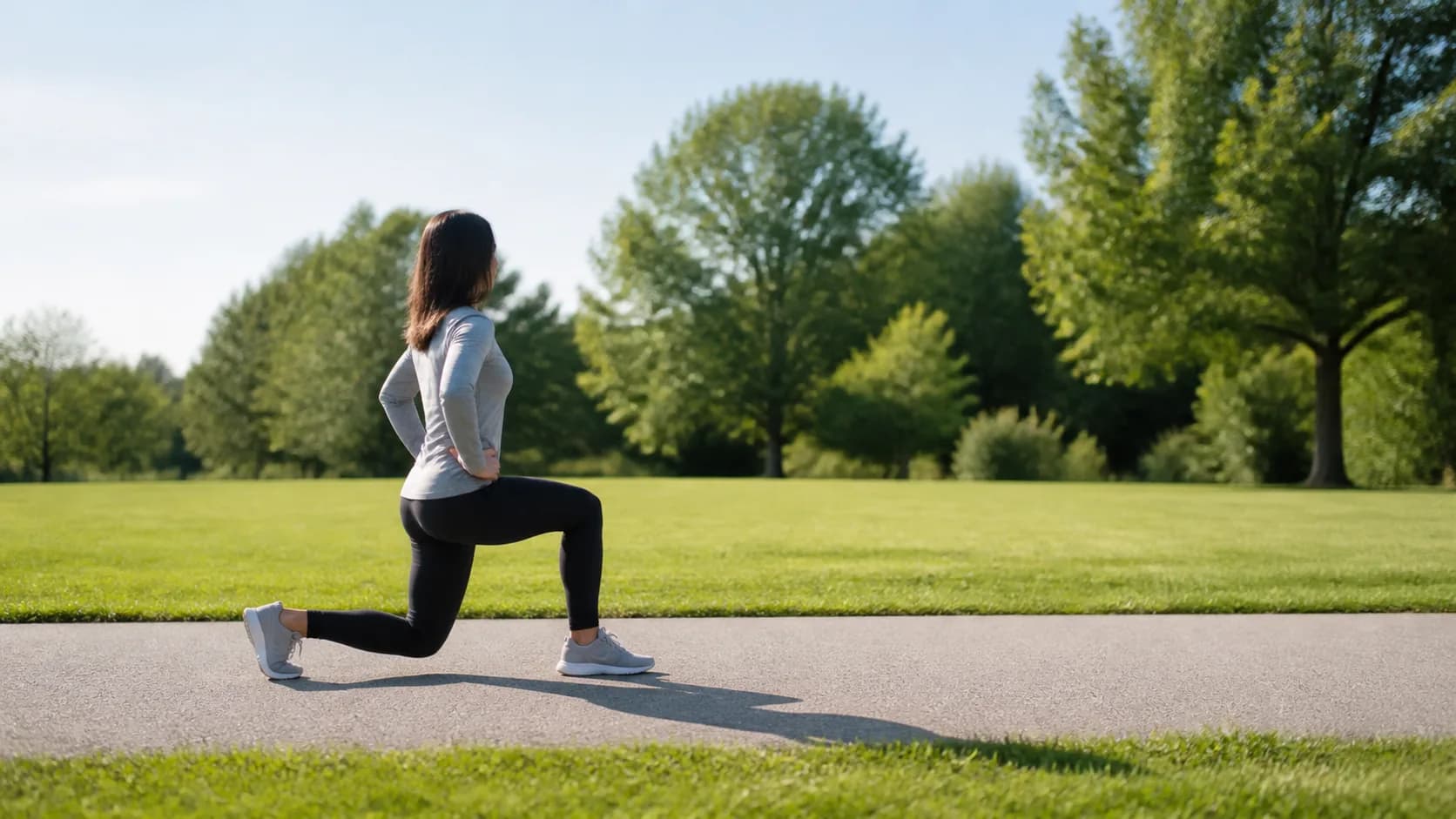
“Toning” is not a precise fitness term. People usually mean a combination of stronger leg muscles, improved endurance, and changes in body composition. Walking can support all of those goals, especially when it replaces inactivity, but it cannot target fat loss from one body area.
What walking changes
| Change | What to expect |
|---|---|
| Leg endurance | Often improves with consistent walking. |
| Strength | May improve for beginners; hills and stairs add challenge. |
| Body composition | Depends on overall habits, not a single exercise. |
| Visible definition | Varies by genetics, nutrition, muscle mass, and time. |
Make walking more leg-focused without overdoing it
Use a small hill, a modest treadmill incline, or occasional stairs one or two times a week. Pair that with basic lower-body strength work. A plan that alternates challenging days with easy walking is usually more sustainable than trying to make every walk intense.
A realistic weekly pattern
- Three to five regular walks at a comfortable-to-brisk pace.
- One hill or stair-focused walking session if joints tolerate it.
- Two short strength sessions using controlled lower-body movements.
- Enough food, sleep, and recovery to keep the plan repeatable.
Stepsly can help you see the consistency of the walking side through goals, history, trends, and records. It cannot measure localized fat loss or promise a visual outcome.
Read does walking build muscle, incline walking benefits, and walking for weight loss without dieting for more realistic planning.
Replace “tone” with useful goals
The word “tone” often bundles several different hopes: legs that feel stronger, better endurance on stairs, more visible muscle, a change in body fat, or a different relationship with clothing. Separating those goals makes the plan more honest and less punishing.
| If you mean… | A more useful focus |
|---|---|
| “I want my legs to feel stronger.” | Add progressive lower-body strength movements. |
| “I want walks and stairs to feel easier.” | Build walking duration gradually and include occasional hills if tolerated. |
| “I want more visible muscle.” | Strength training, adequate recovery, and realistic time horizons. |
| “I want less fat in one area.” | Recognize that spot reduction is not controllable; focus on sustainable whole-body habits. |
| “I want to feel better in my body.” | Choose movement that supports mood, function, and consistency without body checking. |
Walking can help several of these goals, but it does not decide where body fat changes or guarantee a particular visual result.
Build a leg-friendly week
Use walking for regular aerobic movement and strength for a clearer muscle stimulus. An example might be three to five comfortable walks, one modest hill or stair session, and two short strength sessions. Keep at least one easier day between new lower-body challenges.
| Session | Simple purpose |
|---|---|
| Comfortable walk | Build time on feet and routine. |
| Brisk or hill walk | Add a little cardiovascular/leg challenge. |
| Strength day | Practice controlled squats, sit-to-stands, step-ups, calf raises, or supported split squats. |
| Easy day | Let muscles and joints recover while preserving movement. |
Start with a range that does not cause pain or form loss. The next day should feel like normal life, not a recovery project. If hills or stairs aggravate calves, knees, feet, or back, use flat walks and choose a different strength variation.
Do not turn walking into body punishment
Walking is valuable even if it does not change your legs’ appearance. It can support cardiovascular health, daily mobility, time outdoors, and a break from sitting. Using it as a way to “fix” one body part can lead to excessive volume, food compensation, or disappointment when normal body changes are slow or uneven.
If you find yourself repeatedly pinching, measuring, or criticizing your legs after walks, consider stepping back from aesthetic metrics. Focus on a functional marker instead: complete a familiar route, feel steadier on stairs, or make time for a walk with a friend. A clinician, therapist, or registered dietitian can provide individual support when body-image or eating concerns are affecting activity choices.
Track what a step app can actually show
Stepsly can make walking consistency visible through daily steps, goals, streaks, history, and widgets. It cannot detect localized fat loss, tell you whether your muscles are “toned,” or prescribe a calorie deficit. Use the app as a habit tool: notice which routes you enjoy and whether your routine is becoming repeatable.
Signs to scale back
Pain, swelling, limping, numbness, or a change in balance are not evidence that a leg-focused plan is working. Stop and choose a lower-load option. Seek individual advice for persistent symptoms, a new injury, pregnancy-specific restrictions, or health conditions that affect safe activity. A sustainable plan is built around comfort and function, not discomfort as proof.
A beginner-friendly strength companion
If you want legs to feel stronger, add simple strength rather than endlessly increasing walking volume. Two non-consecutive sessions can begin with sit-to-stands, supported calf raises, low step-ups, or a shallow supported squat. Use a stable surface and an easy range. Repeat a dose until it feels controlled; then add a small number of repetitions or a little resistance.
| Movement | What it can support | Easier starting point |
|---|---|---|
| Sit-to-stand | Quads, hips, and everyday chair transfers. | Higher chair or hand support. |
| Calf raise | Calf endurance and ankle control. | Hold a countertop. |
| Step-up | Controlled stair-like strength. | Low step with rail nearby. |
| Supported squat | Hip and knee control. | Partial range behind a chair. |
This is not a beauty routine. It is a way to give muscles a clearer progressive task while walking continues to provide regular movement.
Give visual changes time—and no promises
Visible changes vary widely. Genetics, starting body composition, muscle size, nutrition, stress, sleep, hormones, medication, and time all contribute. No walking route can select where fat changes first. A plan that promises leg transformation from a fixed step count sets people up to feel they have failed when normal biology does not follow a marketing timeline.
Instead, use non-appearance markers: the hill you can now complete comfortably, the number of controlled sit-to-stands, the route you enjoy after work, or the fact that your legs feel less tired during errands. These changes are real and can make daily life easier.
Questions worth asking before increasing intensity
Are you adding hills because they feel good or because you feel pressure to change your body quickly? Can you recover for the next walk? Are meals and rest still flexible? Is discomfort turning into pain? Honest answers can prevent a useful habit from becoming compulsive. If body dissatisfaction, food rules, or exercise guilt are taking over, seek supportive professional help rather than escalating the plan.
Keep walking enjoyable
The most reliable leg routine usually has an enjoyable route attached to it. Walk with a friend, use a pleasant park, take a short post-meal loop, or choose a time that feels like a break rather than a test. This may sound unrelated to physical change, but it is what makes the weekly volume sustainable without turning every step into a calculation.
If you use hills, rotate them with flat routes. If you strength train, leave room for easy days. If you track steps, choose a goal that supports the routine rather than forcing late-night laps. Your legs adapt to repeated, appropriately dosed movement—not to a single punishing week.
A simple review each month
At the end of a month, review function before appearance. Can you walk farther or more comfortably? Do stairs feel different? Is your strength movement more controlled? Are you sleeping and eating normally around activity? If the routine helps, keep it. If it creates pain, pressure, or avoidance, make it smaller or change the tool.
This approach does not promise a body shape. It gives you a repeatable way to build strength and endurance while treating your body with more respect than a “toning” challenge can offer.
Choose compassionate measures
If you choose to track anything, track the actions you control: walks completed, strength sessions performed, recovery days honored, and routes that made you feel good. Avoid using daily photographs, tape measurements, or a scale as a verdict on whether your legs deserve rest or food. Bodies change on timelines that no app or workout can command.
Talk to a qualified clinician, therapist, or dietitian if appearance goals are driving unsafe exercise, restriction, or distress. Support can help you keep movement connected to health and life rather than a constant attempt to correct your body.
For additional planning context, see whether walking builds muscle and walking-lunge benefits.
Sources, notes & disclaimers
-
Planning doses use the Physical Activity Guidelines for Americans (opens in a new tab): 150–300 moderate weekly minutes plus strength work on 2 days for most adults who can safely do so.
-
Regular aerobic activity and muscle-strengthening work both support general health: U.S. Physical Activity Guidelines (opens in a new tab).
-
This is general education, not individualized nutrition, medical, or training advice. Seek qualified support if body-image concerns, pain, or health conditions make exercise planning difficult.