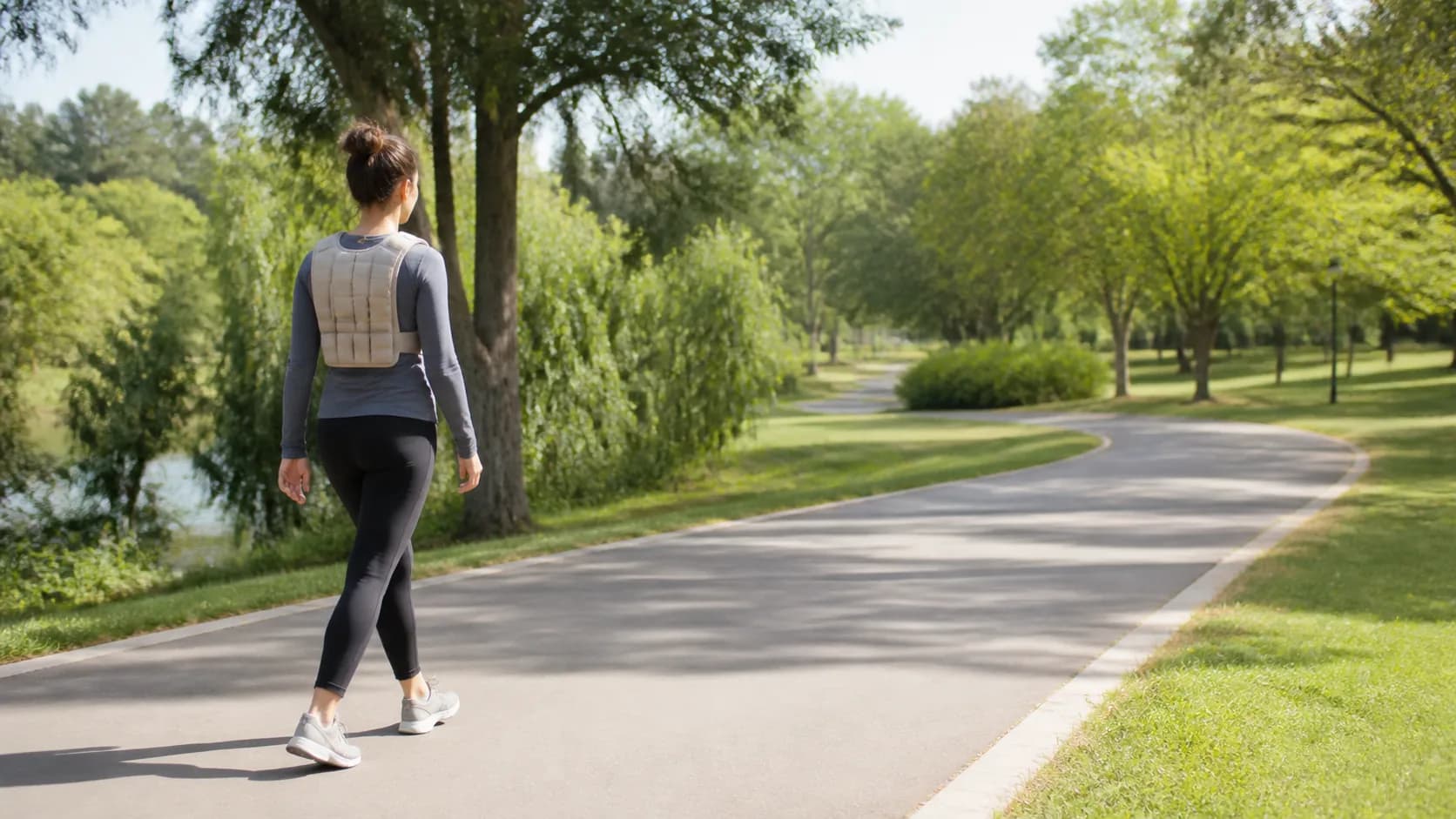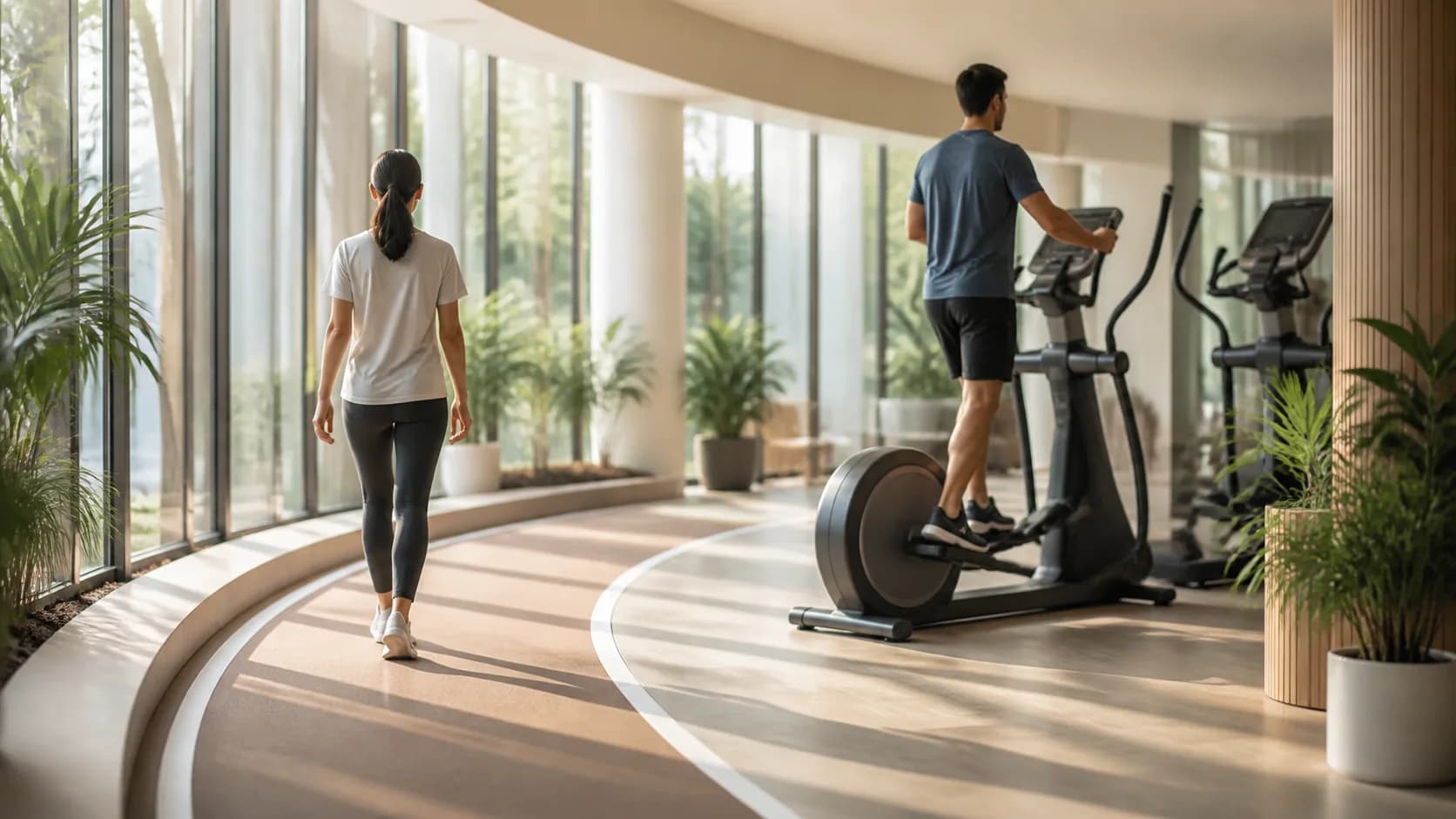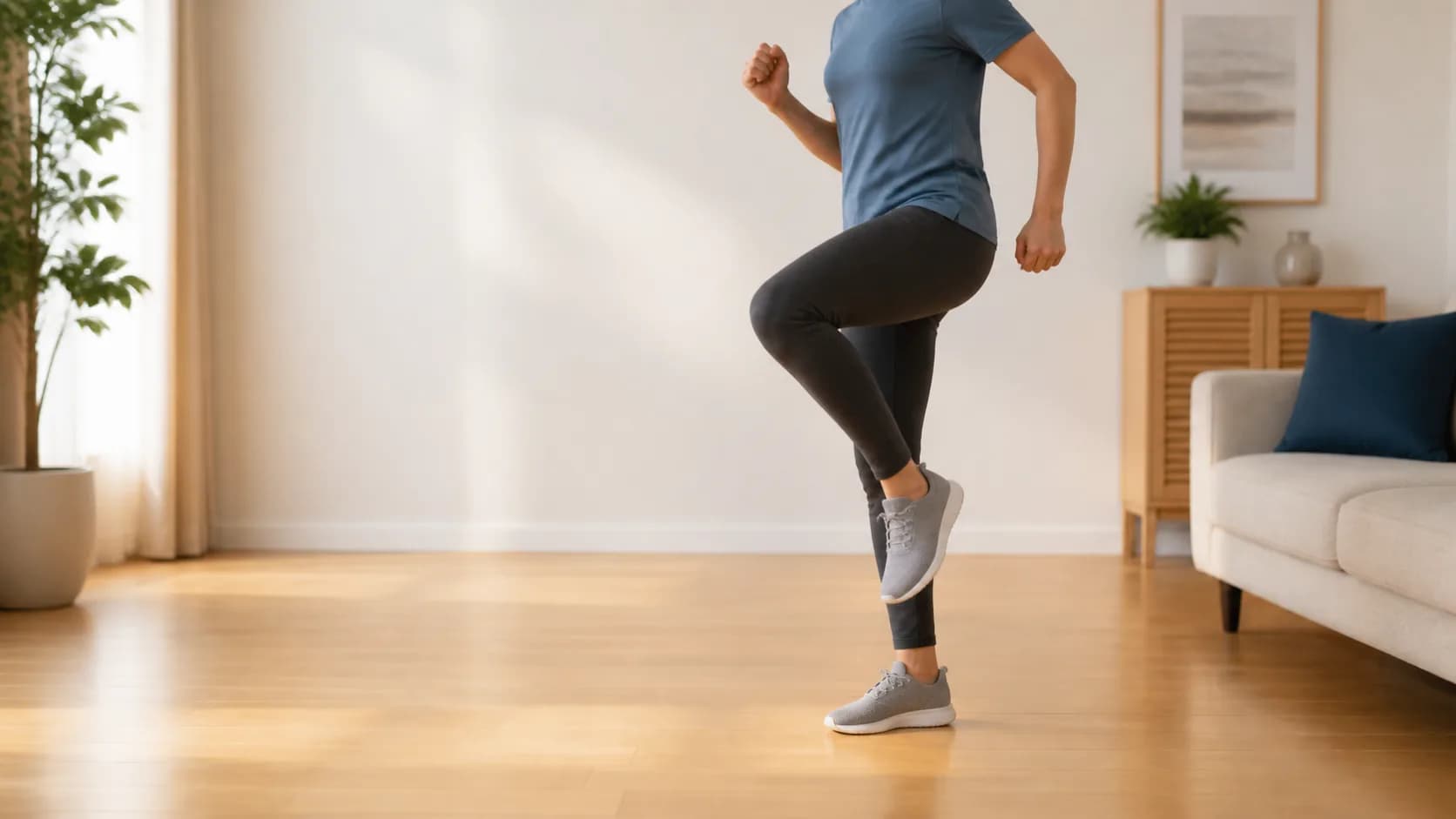
An at-home walking workout does not need a treadmill or a long hallway. The goal is to create a safe, repeatable movement session using the space you already have. Marching in place, careful laps through a clear room, and low-impact side steps can all contribute.
Set up the room first
Clear loose rugs, cables, toys, and low furniture. Wear stable shoes if the surface is hard or slippery. Keep enough space to turn without twisting quickly. If balance is a concern, choose a counter or sturdy chair nearby for support—but do not pull on unstable furniture.
A 20-minute indoor walk
| Minutes | Movement |
|---|---|
| 0–4 | Easy march in place or slow room laps |
| 4–8 | Purposeful walking with relaxed arm swing |
| 8–10 | Side steps or gentle heel raises, holding support if needed |
| 10–14 | Return to purposeful walking |
| 14–16 | Easy march and shoulder rolls |
| 16–20 | Comfortable cool-down pace |
You should be able to control your breathing and form throughout. Skip any movement that causes joint pain or makes you feel unstable.
Ways to progress without making it risky
- Add two minutes to the walking sections.
- Repeat the routine on an additional day.
- Use slightly more purposeful arm movement.
- Add a short, controlled brisk-walk block if the room is clear.
Avoid jumping, sharp pivots, and high-knee movements unless they suit your fitness and space. Indoor exercise is most useful when it removes barriers, not when it recreates a boot camp.
Stepsly can help you see the total daily movement around these short sessions, including goals, streaks, history, and trends. For more options, read the best way to track steps during indoor walking, walking in place for steps, and a walking workout for people who hate exercise.
Choose the format that fits your space
You do not need to march in place for an hour. Small rooms, hallways, stairs, and open living areas each support different low-impact options. The safest choice is the one that lets you move without hurried turns, reaching around furniture, or watching a screen while your feet are uncertain.
| Space | Low-impact option | What to avoid |
|---|---|---|
| Small clear room | Marching, step-touch, or short forward/backward laps. | Fast pivots or high kicks near furniture. |
| Hallway | Slow out-and-back laps with controlled turns. | Running toward doors, pets, or clutter. |
| Living room | Marching plus gentle arm swings and supported heel raises. | Using an unstable chair for balance. |
| Stairs | Only if stairs are already safe and familiar. | Treating stairs as an interval challenge when fatigued. |
| Shared space | A short scheduled routine when the floor is clear. | Moving while others cross the route unpredictably. |
A 10-minute version for busy days
An indoor workout can be short and still useful. Try two minutes of easy marching, three minutes of room laps or step-touch, one minute of gentle heel raises or a supported side step, three minutes of purposeful walking, and one minute easy. If you need to stop, stop. You can repeat a 10-minute routine later rather than forcing a full 20-minute session into a busy or crowded moment.
The difference between “exercise” and ordinary movement is less important than whether you are moving safely and regularly. An after-lunch indoor walk, a five-minute meeting break, or a few laps while dinner cooks can all make it easier to reduce long unbroken sitting periods.
Adapt intensity without jumping
Indoor walking becomes more demanding through time, arm swing, pace, and brief controlled intervals—not through dramatic movements in a tight space. Use a talk test: you should be able to speak in full sentences for a steady routine. If you add a brisk block, make it 30–60 seconds and return to easy marching. Keep turns slow enough to maintain balance.
| Goal | Safe first progression |
|---|---|
| More consistency | Add one additional 10-minute session per week. |
| More time | Add two minutes to the walking portions. |
| A little more challenge | Add two short brisk blocks on a clear floor. |
| More leg comfort | Keep pace easy and choose smaller steps. |
| Balance confidence | Stay near stable support and avoid simultaneous arm complexity. |
Do not add jumping, backward walking, weighted equipment, or rapid side movements simply to make the workout feel more impressive. Those are different skills with different risks.
Make indoor movement less repetitive
Use music if it helps, or go quiet if that feels better. Change direction only after fully stopping, alternate marching with laps, or pick an audio program that is short enough to mark the session. If you follow a video, position the screen at a height that does not make you look down while moving and pause rather than trying to keep up with a movement that does not suit you.
For people who work at home, make the routine an environmental cue: shoes by the desk, a cleared path before the day starts, or a calendar break after a recurring meeting. The easier it is to begin, the less you need motivation.
How to measure a home session fairly
Phone-based step counts can be imperfect for marching in place or short laps, especially if the phone is left on a table. Treat steps as a daily trend, not a test of whether the workout “counted.” You can also log minutes, number of rounds, and how you felt afterward. Stepsly can present Apple Health step trends and goals when the phone/device data is available; it does not verify indoor form or control an exercise session.
Stop for pain, dizziness, chest symptoms, new weakness, or instability. Get individual guidance before increasing an at-home routine if you have had recent falls, joint surgery, a condition affecting balance, or symptoms that make independent indoor exercise uncertain.
A four-week home routine
Use the following as a conservative template if you can already walk around your home safely. Repeat a week instead of progressing if it feels demanding.
| Week | Sessions | Main focus |
|---|---|---|
| 1 | 2–3 sessions of 10–15 minutes | Learn the room layout and an easy pace. |
| 2 | 3 sessions of 15–20 minutes | Add a few more walking minutes, not more complex moves. |
| 3 | 3–4 sessions | Include two 30–60 second brisk blocks if stable. |
| 4 | 3–4 sessions | Choose one longer session or one additional short break. |
The structure is flexible. A person working from home may prefer two ten-minute sessions; a parent may use four five-minute breaks; someone who enjoys a routine may choose one 20-minute block. All can be useful if the floor is clear and the movement feels controlled.
Set up a fallback for bad days
Motivation is not constant. Make the smallest version obvious: two minutes of marching near a stable counter, one song of room laps, or a short walk while waiting for water to boil. This does not replace a fuller session, but it protects the identity of someone who moves even when the day is crowded.
Avoid interpreting a missed day as a need for a longer catch-up workout. Resume the next planned short session. If the indoor routine is no longer appealing, use an outdoor loop, a seated mobility break, or a different activity. Consistency comes from options, not punishment.
Make the room safer over time
Review the path periodically: furniture moves, cords appear, pets change routines, and slippery floors can develop. Good lighting, non-slip footwear, stable support, and enough clear turning space are basic safety features. If you share the space, tell others when you plan to use it. A routine that is predictable is easier for everyone to navigate.
Treat comfort as useful feedback
An indoor plan is successful when you can return to it. If marching aggravates a joint, switch to slow laps; if turns feel awkward, use a longer straight path or fewer repetitions; if the room is too small, choose a separate outdoor or seated movement break. Changing the format is not quitting. It is how you make daily movement accessible in the space you actually have.
For additional planning context, see undefined and HIIT walking.
Sources, notes & disclaimers
-
Planning doses use the Physical Activity Guidelines for Americans (opens in a new tab): 150–300 moderate weekly minutes plus strength work on 2 days for most adults who can safely do so.
-
The U.S. Physical Activity Guidelines (opens in a new tab) support moving more and accumulating activity in ways that fit daily life.
-
This article is general education. Seek individualized guidance if you have balance limitations, a recent injury, or a condition that affects safe activity at home.